Author: Andrew Muhammad

  • How the Trade War Is Hitting American Beer, Wine, and Spirits in Canada

    How the Trade War Is Hitting American Beer, Wine, and Spirits in Canada

    We often forget that beer, wine, and spirits are fundamentally agricultural products, rooted in the cultivation of corn, barley, rye, wheat, grapes, and other farm commodities. As a result, disruptions to alcohol trade are not just shocks to beverage markets, but direct blows to farmers, rural communities, and the wider agricultural economy that supplies these products (Muhammad et al., 2025). This broader agricultural story now runs straight through Canada, where trade tensions transformed alcohol import demand into a geopolitical statement. Canada has long been an important export destination for U.S. beer, wine, and spirits, supported by geographic proximity, integrated supply chains, and decades of tariff‑free trade. In 2024, for instance, Canada was the leading market for U.S. wine exports and the second leading market for U.S. distilled spirits and beer exports (USDA, 2026). This relationship shifted abruptly in 2025 when trade tensions escalated beyond conventional tariff retaliation and entered the retail marketplace.

    At the heart of the disruption was Canada’s decision to remove American alcohol from store shelves entirely. Rather than relying solely on retaliation through tariffs, multiple provinces instructed their liquor authorities to stop purchasing and selling American beer, wine, and spirits. In early February 2025, the United States announced broad tariffs on Canadian imports. Canada responded in March with retaliatory tariffs on a range of U.S. goods, including alcohol (Kitamura, 2026). Provincial governments escalated further by directing liquor boards in Ontario, Quebec, British Columbia, Nova Scotia, and other provinces to halt purchases of U.S. alcohol and remove existing products from shelves and digital platforms. Throughout the spring and summer of 2025, these delistings remained largely in place, with only limited reversals in select provinces (DISCUS, 2026).

    Figure 1 summarizes the year‑over‑year change in U.S. beer, wine, and distilled spirits exports to Canada between 2024 and 2025, reflecting the impact of the trade war on each product category. As shown in the figure, wine and related products experienced the largest decline, falling from $460 million in 2024 to $103 million in 2025, a 77.6% reduction or a $357 million loss. Distilled spirits exports declined from $238 million to $89 million, a 62.7% decrease, resulting in a $149 million loss. Beer exports also dropped sharply, falling from $47 million to $17 million, a 64.4% decline or $30 million loss. Taken together, total U.S. alcohol exports to Canada fell from $744 million to $208 million, a 72% decrease amounting to an overall dollar loss of $536 million. 

    These shelf removals sent a clear political signal to U.S. policymakers while simultaneously encouraging Canadian consumers to substitute toward domestic or non‑U.S. products. It also exposed the vulnerability of exporters operating in markets where governments control distribution infrastructure, demonstrating how trade wars can extend beyond borders and tariffs to reshape retail availability itself. Even as some punitive measures were later eased, this episode underscored how quickly trade relationships built over decades can be disrupted when retaliation targets market access rather than prices alone.

    Figure 1. U.S. Beer, Wine, and Spirits Exports to Canada: 2024 and 2025

    Source: U.S. Department of Agriculture, Foreign Agricultural Service, Global Agricultural Trade System (GATS) (USDA, 2026)

    References

    Distilled Spirits Council of the United States (DISCUS) (2026). Annual Economic Briefing https://distilledspirits.org/wp-content/uploads/2026/02/FINAL-DISCUS-Annual-Economic-Briefing-Presentation-2026-2.5.2026-11-AM.pdf

    Kitamura, K.H. (2026) U.S.-Canada Trade Relations. Report IF12595. Congressional Research Service. https://www.congress.gov/crs-product/IF12595

    Muhammad, A., Menard, R. J., and Smith, S. A. (2025). “Tennessee and Kentucky Distilled 

    Spirits: What’s at Stake from a New Trade War?” Choices 40(3). https://doi.org/10.22004/AG.ECON.358876

    U.S. Department of Agriculture (USDA) (2026). Global Agricultural Trade System. Foreign Agricultural Service. https://apps.fas.usda.gov/gats/default.aspx


    Muhammad, Andrew. “American Beer, Wine, and Spirits in Canada and the Fallout of the Trade War.” Southern Ag Today 6(15.4). April 9, 2026. Permalink

  • U.S. Agricultural Export Trends: Stability, Growth, and a China‑Driven Rollercoaster

    U.S. Agricultural Export Trends: Stability, Growth, and a China‑Driven Rollercoaster

    Now that the December 2025 trade data have been released, we can look back over the past fifteen years to evaluate how U.S. agricultural exports have evolved across major markets and how shifting global dynamics, especially the dramatic rise and subsequent decline of exports to China, have shaped overall performance. U.S. agricultural exports from 2010 through 2025 reveals a story of both stability and notable volatility. Total agricultural exports rose from $119 billion in 2010 to a high of $196 billion in 2022, before settling at $171 billion in 2025. Exports in 2025 were more than $5.0 billion lower than the previous year, driven primarily by reduced soybean shipments, along with declines in coarse grains, beef, wine, and rice. Much of the variation in U.S. agricultural trade can be traced to the dramatic rise and fall of U.S. exports to China, a market that transformed from the leading U.S. destination to a source of sharp decline. Indeed, the widening U.S. agricultural trade deficit, which grew from –$37.6 billion in 2024 to –$41.7 billion in 2025, stems largely from the steep collapse in exports to China (USDA, 2026). 

    Figure 1 shows U.S. agricultural exports to the major destinations—China, Mexico, Canada, the European Union, and Japan. With the exception of China, most major U.S. export markets exhibit steady or gradually increasing demand, even during periods of heightened trade tensions and uncertainty. However, it’s hard to ignore the extremely volatile path of U.S. agricultural exports to China. Beginning at $18 billion in 2010, exports to China climbed substantially, peaking at $38 billion in 2022, primarily due to rising exports from the Phase One Trade Agreement and relatively high commodity prices. However, exports to China have significantly declined since, falling to just $8 billion in 2025, representing a loss of $30 billion in only three years. No other major market exhibits such a rollercoaster pattern. This deterioration also helps explain why total U.S. exports fell from $196 billion in 2022 to $171 billion in 2025, despite persistent exports elsewhere.

    In contrast, exports to nearly every other major destination remained stable or even trended upward. Mexico increased from $15 billion in 2010 to $31 billion in 2025. Canada remained consistently strong, rising from $18 billion to $28 billion over the same period. The EU and Japan both show moderate, incremental increases, with none experiencing sharp swings comparable to China. Overall, recent trends illustrate two simultaneous dynamics: the inherent volatility of U.S. agricultural trade with China and the remarkable stability of U.S. exports to virtually every other major market. While the collapse in Chinese demand resulted in a noticeable drop in total exports after 2022, the resilience of other destinations helped buffer the decline. These trends highlight both the opportunities and the vulnerabilities that come with relying heavily on a single, now‑unpredictable trading partner.

    Figure 1. U.S. Agricultural Exports to the Top Destination Markets: 2010–2025

    Source: U.S. Department of Agriculture, Foreign Agricultural Service, Global Agricultural Trade System (GATS) (USDA, 2026)

    Reference

    U.S. Department of Agriculture (USDA) (2026). Global Agricultural Trade System. Foreign Agricultural Service. https://apps.fas.usda.gov/gats/default.aspx


    Muhammad, Andrew. “U.S. Agricultural Export Trends: Stability, Growth, and a China‑Driven Rollercoaster.Southern Ag Today 6(11.4). March 12, 2026. Permalink

  • When China Stops Buying: Is this the New Reality for U.S. Cotton?

    When China Stops Buying: Is this the New Reality for U.S. Cotton?

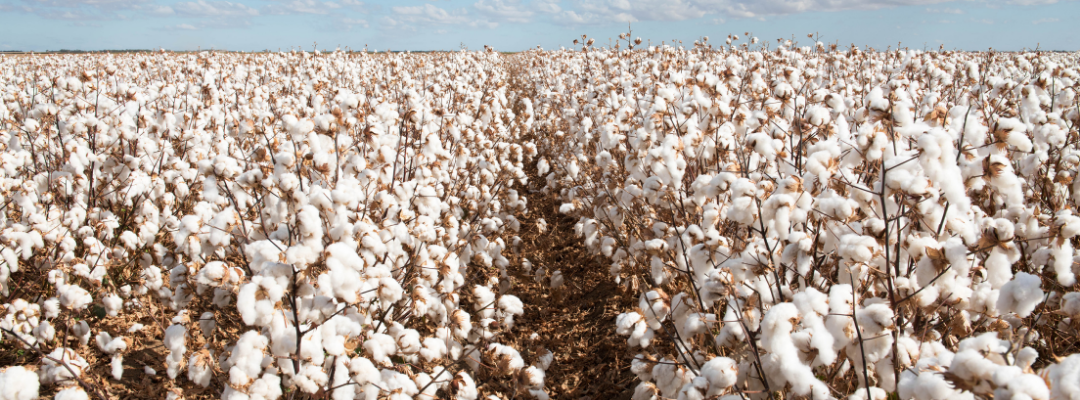
    U.S. cotton is among the most export‑dependent agricultural commodities, with more than 80% of annual production moving into global markets rather than being used domestically (U.S. Department of Agriculture, 2026a). Although China has not always been a consistent buyer, importing less than 15% of U.S. cotton exports in some years and more than 30% in other years, it has nevertheless remained a somewhat reliable partner, accounting for nearly 30% of U.S. cotton exports in more recent years (2020–2024) (U.S. Department of Agriculture, 2026b). 

    Once the most important market for U.S. cotton, China has become a far less reliable partner in 2025, as recent import patterns show greater volatility and reduced engagement with the U.S. agricultural sector. In 2025, China’s purchases of U.S. cotton fell from $1.5 billion to just $0.2 billion, an 85% decline, while its import volume dropped at nearly the same rate, from 0.8 million metric tons (MMT) to 0.1 MMT. In contrast, exports to markets outside China expanded substantially over the same period. The value of U.S. cotton exports to non‑China destinations rose from $3.5 billion to $4.6 billion, a 32% increase, while quantities surged 51%, from 1.7 MMT to 2.6 MMT (Table 1) (U.S. Department of Agriculture, 2026b). 

    Why did China sharply reduce its imports of U.S. cotton? While the trade war and subsequent political tensions certainly accelerated the decline, the underlying shift runs deeper than tariffs. China’s overall import strategy has fundamentally changed as its domestic cotton sector has undergone major structural adjustments since 2010. Over the past decade, China has increased production, drawn down its massive state-held stockpiles, and reduced its dependence on foreign fiber. Since 2021 alone, domestic output has risen by more than 30% (U.S. Department of Agriculture, 2025a). As a result, China is increasingly able to meet the needs of its textile and apparel industry with domestic cotton rather than imports. Taken together, these developments suggest that China’s reduced reliance on U.S. cotton is not simply a temporary response to trade tensions but part of a longer-term realignment. 

    Table 2 makes clear that the steep decline in U.S. cotton exports to China was not simply the result of tariffs or bilateral tensions, but part of a much broader contraction in China’s overall import demand. China’s total cotton import value fell from $5.3 billion in 2024 to $1.9 billion in 2025, while import volumes dropped from 2.6 million to 1.1 million metric tons. Every major supplier experienced significant losses: Brazil’s shipments fell by more than 50%, India’s collapsed by over 90%, and Australia also recorded substantial reductions.

    The across‑the‑board declines underscore a structural shift in China’s sourcing strategy rather than a U.S.-specific outcome.

    Table 1. U.S. Cotton Exports: 2024 and 2025

     20242025Change% Change
    Value ($ billion)
    China$1.5$0.2-$1.3-85.1%
    Total (w/o China)3.54.61.132.0%
    Total (w/ China)5.04.8-0.1-2.8%
    Quantity (million metric tons)
    China0.80.1-0.6-84.6%
    Total (w/o China)1.72.60.951.0%
    Total (w/ China)2.52.70.29.6%
    Source: U.S. Department of Agriculture (2026b)

    Table 2. China’s Cotton Imports (Major Exporting Countries): 2024 and 2025

    20242025Change % Change
     Value ($ billion)
    Total$5.3$1.9-$3.4-63.6%
    Brazil2.20.8-1.4-63.4%
    U.S.1.90.2-1.6-87.8%
    Australia0.70.6-0.1-13.8%
    India0.10.0-0.1-91.1%
    Turkey0.10.10.03.7%
    Quantity (million metric tons)
    Total2.61.1-1.5-59.2%
    Brazil1.10.5-0.6-57.8%
    U.S.0.90.1-0.8-86.8%
    Australia0.30.30.00.2%
    India0.10.0-0.1-90.9%
    Turkey0.10.10.0-4.1%
    Source: Trade Date Monitor®(2026) 

    References

    Trade Data Monitor®. (2026). https://tradedatamonitor.com/

    U.S. Department of Agriculture (USDA) (2026a). PSD Online. Foreign Agricultural Service. https://apps.fas.usda.gov/psdonline/app/index.html#/app/advQuery

    U.S. Department of Agriculture (USDA) (2026b). Global Agricultural Trade System. Foreign Agricultural Service. https://apps.fas.usda.gov/gats/default.aspx


    Muhammad, Andrew. “When China Stops Buying: Is this the New Reality for U.S. Cotton?Southern Ag Today 6(9.4). February 26, 2026. Permalink

  • Trade War Fallout: The Collapse of U.S. Spirit Exports to Canada in 2025

    Trade War Fallout: The Collapse of U.S. Spirit Exports to Canada in 2025

    In 2025, U.S. spirit exports to Canada collapsed as a direct consequence of escalating trade tensions, marking one of the sharpest declines in cross-border alcohol trade in recent history. Prior to 2025, Canada accounted for about 11% of U.S. distilled spirit exports. Between 2022 and 2024, Canadian imports exceeded $250 million annually, making Canada the second-largest market for American whiskey, bourbon, rum, and other distilled spirits (USDA, 2025). In March 2025, Canada effectively halted imports and sales of U.S. wine and spirits in retaliation for tariffs imposed by President Trump on Canadian goods. Provincial liquor boards removed American products from shelves, triggering a dramatic plunge in U.S. spirit exports (DISCUS, 2025). Canada also imposed a 25% retaliatory tariff on U.S. distilled spirits and other products in March 2025, which was lifted in September (Government of Canada, 2025). However, the impact far exceeded what would be expected from a 25% tariff alone, underscoring the severity of the trade dispute.

    Figure 1 shows monthly U.S. spirit exports to Canada (in million proof liters), comparing the 2022–2024 three-year average with 2025. The data show a sharp and sustained decline in 2025 relative to historical levels. From 2022 to 2024, monthly exports typically ranged between 1.2 and 2.3 million proof liters, peaking during summer months. In stark contrast, exports in 2025 fell dramatically after February, dropping from 1.4 million proof liters in February to just 0.2 million in April, and averaging less than 0.4 million proof liters per month for the remainder of the year. Overall, 2025 marks an unprecedented contraction in Canadian spirit imports from the United States. In terms of value, U.S. spirit exports to Canada averaged over $160 million between March and September in years prior. However, exports in 2025 during the same period were only $35 million (USDA, 2025). Comparing March through September, American distilled spirit sales to Canada were down approximately almost 80% compared to the prior three-year average, underscoring the severe impact of trade restrictions.

    Such a steep decline signals fundamental shifts in cross-border alcohol trade that may not be reversed by tariff removal alone. The restrictions on U.S. spirits were not merely retaliatory; they appear to have stimulated domestic production and potentially redirected Canadian consumers toward local and alternative sources. The long-term effects remain uncertain. However, it is noteworthy that imports of oak casks and barrels—essential for aging spirits—rose by 6% during this period (USDA, 2025), suggesting increased investment in Canadian distilling capacity.

    Figure 1. U.S. spirit exports to Canada: 2022-2024 and 2025

    Source: Global Agricultural Trade System (USDA, 2025). 

    References

    Distilled Spirits Council of the United States (DISCUS) (2025). Removal of U.S. Spirits from Canadian Stores in Retaliation to U.S. Trade Dispute Resulted in Sharp Sales Decline of U.S. Products, Canadian Products and Total Spirits Saleshttps://distilledspirits.org/news/spirits-canada-analysis-removal-of-u-s-spirits-from-canadian-stores-in-retaliation-to-u-s-trade-dispute-resulted-in-sharp-sales-decline-of-u-s-products-and-total-spirits-sales/

    Government of Canada (2025). https://www.canada.ca/en/department-finance/programs/international-trade-finance-policy/canadas-response-us-tariffs.html

    U.S. Department of Agriculture (2025). Global Agricultural Trade System. https://apps.fas.usda.gov/gats/default.aspx


    Muhammad, Andrew. “Trade War Fallout: The Collapse of U.S. Spirit Exports to Canada in 2025.” Southern Ag Today 5(51.4). December 18, 2025. Permalink

  • Recent Trade Tensions Cause U.S. Beef to Lose Ground in China, Spurs Gains for Australia and Brazil

    Recent Trade Tensions Cause U.S. Beef to Lose Ground in China, Spurs Gains for Australia and Brazil

    Over the past decade, China has gone from a minor player to the world’s largest beef importer, with purchases rising from around a $100 million in 2010 to nearly $18 billion in 2022, which is a staggering increase of over 17,000%. This surge isn’t just about spending more. The actual volume of beef purchased has grown by more than 8,000%, driven by rising incomes, urban lifestyles, and shifting diets that favor beef over traditional staples like pork. The outbreak of African Swine Fever in 2018, which devastated China’s pig population, further accelerated the shift, while government dietary guidelines have promoted beef as a healthier option. Due to rising demand and imports, coupled with lifting the import restriction on U.S. beef in 2017, China is now the third largest foreign market for U.S. beef—around $1.5 billion in 2024. This rise has been highlighted in previous Southern Ag Today articles (For example, see: https://southernagtoday.org/2025/04/17/high-tariffs-could-halt-u-s-beef-exports-to-china/).

    Rising trade tensions between the U.S. and China, which started earlier this year, raised concerns for U.S. beef exporters. Chinese tariffs on American beef soared as high as 145%, making it far more expensive than beef from countries like Brazil and Australia. Although those tariffs were later lowered to around 33%, the decline had already begun. On top of that, China let export approvals expire for nearly 400 U.S. beef processing plants in March, about 60% of all facilities allowed to ship beef to China, effectively blocking a large portion of U.S. supply (Marianetti, 2025). This move, seen as a non-tariff barrier, has created uncertainty, shaking confidence in the reliability of U.S. beef exports.

    In 2025, rising trade tensions quickly took a toll on American beef in China (see Figure 1). From January to September, U.S. beef exports fell sharply—from $814 million in 2024 to $442 million in 2025—a 46% drop driven mostly by lower volumes. The decline was even steeper in the second and third quarters, after China let key export approvals expire, with U.S. beef falling nearly 70%. This happened even as China’s overall beef imports grew in value. Meanwhile, Australia and Brazil gained ground: Australia’s exports to China rose 42%, and Brazil’s increased nearly 25%. In 2024, the U.S. held about 9% of China’s beef import market, compared to Brazil’s 48% and Australia’s 9%. By the third quarter of 2025, the U.S. share had dropped to less than 1%, while Brazil and Australia accounted for 59% and 13%, respectively. It’s a clear sign that when trade tensions rise, other suppliers are quick to take the lead.

    Figure 1. Chinese Beef Imports: 2024 and 2025 (Year-to-date: January–September) 

    Note: Imports are defined according to the Harmonized System (HS) classification HS 0202 meat of bovine animals, frozen. Frozen beef accounts for over 90% of China’s beef imports.
    Source: Trade Data Monitor®

    References

    Marianetti, J. (2025). USA Dairy Pork and Poultry Registrations Renewed while Beef Remains Overdue (GAIN Report No. CH2025- 0056). Foreign Agricultural Service, Washington, D.C.

    Trade Data Monitor. (2025). https://tradedatamonitor.com/


    Muhammad, Andrew. “Recent Trade Tensions Cause U.S. Beef to Lose Ground in China, Spurs Gains for Australia and Brazil.Southern Ag Today 5(44.4). October 30, 2025. Permalink