Category: Ag Law

  • Sysco Becomes Latest Beef Packer Antitrust Claimant

    Sysco Becomes Latest Beef Packer Antitrust Claimant

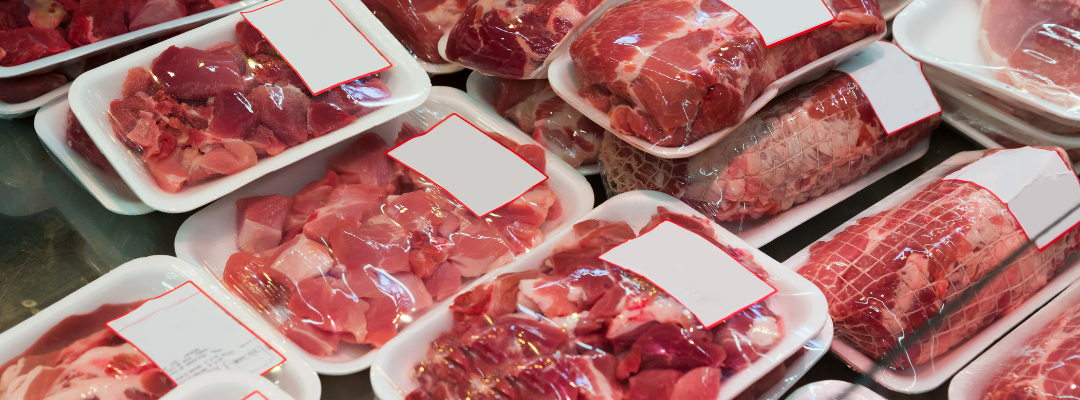
    In 2019, a series of class-action lawsuits were filed against JBS, National Beef Packing, Tyson, and Cargill, commonly known as “The Big Four” packers on behalf of direct purchasers, producers, and indirect purchasers as separate classes seeking class certification. These suits allege that The Big Four violated the Sherman Act, the main federal law protecting free market competition and prohibiting restraint on interstate commerce. In addition, these suits alleged violations of 25 different states’ antitrust laws and 21 states’ consumer protection laws totaling 48 claims in a single suit. The suits alleged that The Big Four have a tight oligarchy for both slaughter capacity and processed beef sales and that The Big Four conspired to artificially deflate the beef supply and drive up the cost of boxed beef. The suits also name a market forecasting service, Agri Stats, as a defendant. In 2021, JBS settled with the direct purchaser class only, for $52.5M, agreeing to provide “extensive cooperation” to plaintiffs in proving their claims against the other defendants. 

    In June and July of 2022, Sysco Corporation, along with other grocers and food distributors, filed similar lawsuits against The Big Four, alleging violations of the Sherman Act and conspiracy to artificially deflate cattle market prices while simultaneously causing boxed beef prices to soar. Sysco’s complaints quote a former employee witness who purported to have first-hand knowledge of the alleged conspiracies. 

    A search of public access court records shows 11 associated cases to Sysco’s suit against The Big Four. Two of the cases have already consolidated multiple suits with similar claims. As the U.S. Department of Justice continues its investigation of these allegations quietly, the litigation is heating up. The Defendants publicly and vigorously deny the allegations, and all testified before Congress in April of 2022, unequivocally denying any conspiracy as alleged between them. There’s a lot of smoke around this issue, and time will tell if it’s a smoke screen or an inferno. For now, the larger agriculture community is following closely as the poultry and swine industries wait in the wings. 

    Friedel, Jennifer. “Sysco Becomes Latest Beef Packer Antitrust Claimant“. Southern Ag Today 2(31.5). July 29, 2022. Permalink

  • Fixtures and Farm Leases

    Fixtures and Farm Leases

    Farm tenants often make improvements to the farm they are leasing. Building or repairing sheds or barns are an example, as is a tenant purchasing and installing irrigation equipment. However, before doing so, tenants should consider the legal status of these investments.  This issue is important as almost 40% of U.S. farmland is rented/leased (Figure 1).

    Legally, property comes in two forms, real and personal. Real property is land and everything growing upon or attached to it. Personal property is essentially everything else. A fixture, however, is personal property that becomes real property by being incorporated into or attached to real property.  Figure 2 provides an illustration of these concepts. 

    Whether an improvement qualifies as a fixture is important because fixtures are owned by the owner of the real property to which they become attached, regardless of who owned them before they were attached. Absent an agreement to the contrary, a landowner is entitled to keep fixtures at the end of a lease. Further, a tenant’s insurance may not cover a fixture, and if the landowner has a mortgage, the landlord’s lender may have a security interest in it, while the tenant’s lender may not.  

    Courts typically consider three factors when determining whether personal property has become a fixture. The first is whether the object is physically or constructively attached to real property. Constructive attachment occurs when the object comprises a necessary, integral, or working part of another object that is physically attached to real property. The second factor is whether the object is adapted to the use of real property. Thus, the more useful an article is to normal operations conducted on the property, the more likely it is to be considered a fixture. However, the most important of the three factors is whether there is evidence that the tenant intended to attach the object permanently. Courts are likely to presume such intent if removing the object would cause material injury to the real property or other fixtures. However, the best evidence of the parties’ intent is a provision in a written lease specifically stating who owns the improvement and what is to happen to it at the end of the lease. Tenants who make improvements without such language risk losing ownership and control of those improvements.

  • U.S. Supreme Court to Hear Proposition 12 Case

    U.S. Supreme Court to Hear Proposition 12 Case

    In the past 15 years, several states have passed laws regarding the amount of space that specific types of farm animals- pregnant sows, veal calves and laying hens- must be given.  The constitutionality of one of these laws, passed as a ballot proposal in California, will be considered in October by the Supreme Court of the United States (“SCOTUS”). 

    “Prop 12” was passed in 2018 and required that eggs produced and sold in California be from cage-free hens.  Additionally, it required that pork and veal sold in California come from farms without veal crates or gestation crates.  These requirements apply not only to California producers, but also to producers across the country (and the world) selling products into the large California market.  While Prop 12 took effect in January 2022, a California state court has prevented its enforcement until six months after the regulations outlining its administration are finalized.  

    Prop 12 was also challenged in federal court.  In one case, the National Pork Producers Council and American Farm Bureau Federation (“NPPC/AFBF”) argued that it violates the “commerce clause” to the United States Constitution.  The commerce clause gives Congress the right to pass laws affecting multiple states.  On the flip side, the “dormant commerce clause” limits state legislatures, with some exceptions, to only passing laws affecting people located in that specific state.  The NPPC/AFBF case argued that Prop 12 acted as a barrier to trade between states by imposing obligations on out-of-state competitors in order to assist local producers.

    The plaintiffs lost at both the federal district court and the Ninth Circuit Court of Appeals.  However, NPPC/AFBF requested that SCOTUS hear the appeal and that request was accepted.  It will be heard at SCOTUS on October 11th.  To see other states with similar statutes, click here.      

    Rumley, Elizabeth. “U.S. Supreme Court to Hear Proposition 12 Case“. Southern Ag Today 2(29.5). July 15, 2022. Permalink

  • How Right-to-Farm Laws Operate to Protect Ag Practices Used by Producers

    How Right-to-Farm Laws Operate to Protect Ag Practices Used by Producers

    Right-to-farm laws provide agricultural producers, forestry operations, and aquaculture producers a defense in a nuisance lawsuit under certain circumstances.  A 2022 Supreme Court of Mississippi decision highlights how the right-to-farm defense can protect agricultural operations.  In this case, two producers began using propane cannon scare guns to prevent deer from eating their cotton and soybean crops during summer. The propane cannons created loud noises, and the neighbors’ ensuing nuisance lawsuit tried to prevent the two producers from using the guns. The trial court agreed with the two producers that the state’s right-to-farm law barred the nuisance claim, and the Supreme Court of Mississippi recently upheld the trial court’s ruling in Briggs v. Hughes.

                On appeal, the neighbors argued that the Mississippi legislature did not create blanket protection for operations adding new practices on a farm, and the Court should look at when the practice began to be used.  The Court disagreed with this view of the state’s right-to-farm law.  The Court must only determine if an agricultural operation complies with all applicable state and federal permits and not when a new practice, such as a scare gun, was first used. 

                The Court then turned to the neighbors’ argument that using propane cannons was not a best management practice.  The neighbors argued that expert testimony demonstrated  propane cannons would become less effective over time and that propane cannons could not be a best practice because they are not always practical.  The court disagreed, relying on expert testimony showed the propane cannons were used appropriately for pest control, and the Court upheld the lower court’s finding.

                Importantly, each state’s right-to-farm statute is different in certain details.  With Mississippi’s law, the farm only needed to demonstrate that the operation complied with federal and state permits and that the practice was a best management practice. Here the producers’ use of scare guns adhered to the Mississippi law.  The analysis would have been different in states with different statutory provisions. Operations should pay attention to the language used in right-to-farm laws to ensure they can maintain the defense.

    Goeringer, Paul. “How Right-to-Farm Laws Operate to Protect Ag Practices Used by Producers“. Southern Ag Today 2(25.5). June 17, 2022. Permalink

  • Fence Laws for Rural Landowners

    Fence Laws for Rural Landowners

    Questions regarding fence disputes are a regular inquiry at the National Agricultural Law Center.  For such a common issue, one would assume that this area of the law is relatively straightforward, but that is not always the case!   All fifty states have passed laws relating to fences and livestock running at large, but there are significant differences between the states and sometimes even within the same state.  For example, Texas is an “open range” state which means that livestock owners are not required to fence in their livestock; however, counties can, and have, adopted local stock laws that effectively close the range in those counties.  It can be very difficult to determine whether a Texas county has adopted a local stock law closing the open range in that county because older records are often hard to find and may not be found online. 

    The confusing nature of fence laws causes numerous problems across the country, but a few general rules apply to most of the southern states.  If you have livestock, you typically have a duty to keep them on your property (except for some counties in Texas.)  What constitutes a legal fence is typically found in your state law, but the fence must be sufficient to keep your livestock on your own property.  The last area where significant questions arise covers maintaining and paying for the boundary fences between neighbors.  Once again, this area of the law is highly dependent on where your property is located.  It is dependent on the state, but some states have antiquated fence laws which further complicates the problem.  To read your state fence law, click here.  

    If you do have a fence issue with your neighbor, the cheapest way for both parties to resolve the dispute is to come to an agreement that everyone can accept.  Fences are not cheap, but lawsuits will typically cost more in the long run.  

    Source – the National Agricultural Law Center

    Rumley, Rusty. “Fence Laws for Rural Landowners“. Southern Ag Today 2(24.5). June 10, 2022. Permalink