Category: Farm Management

  • Prevented Planting and APH Reductions After Planting a Second Crop

    Prevented Planting and APH Reductions After Planting a Second Crop

    Commercial row crop production faces many risks that may result in actual harvest yields falling below yield expectations. Historical data from the USDA-RMA Cause of Loss indicate excess moisture and drought are the top weather risks faced by producers nationwide. In the mid-south, excess moisture early in the season is a prevalent risk affecting planting decisions (USDA-RMA, 2023). Producers with wet fields may be forced to plant later than anticipated, plant an alternative crop (e.g., soybeans), or forego planting altogether. If a producer is forced to forego planting altogether, not only will the producer experience the loss in revenue expected from harvesting the crop, but they also bear the cost associated with land preparation prior to the prevented planting. The prevented planting provision of federal crop insurance helps producers to reduce the financial uncertainty of navigating early season planting risks. 

    The prevented planting provision is unlike other crop insurance provisions since indemnities paid to producers are not intended to cover yield losses, but rather the sunk cost required to have land prepared for planting and, to a certain extent, the cost of invested capital needed for crop production. An insured producer is eligible to make a prevented planting claim if they are unable to plant a crop before the final planting date[1], which varies across counties and crops (USDA-RMA, 2021a). A producer will receive 100% of the prevented planting indemnity on the first insured crop if a second crop is not planted or if a cover crop is planted but not harvested for grain or seed. A producer may also receive the full prevented planting indemnity if the subsequent cover crop is grazed, cut for silage, hayed, or baled (USDA-RMA, 2021b).

    Importantly, the prevented planting indemnity itself does not affect a producer’s Actual Production History (APH), the 10-year average of an insured unit’s yields. However, the APH will be adversely impacted if a second crop is planted, grown, and harvested following the prevented planting claim of a first insured crop. If the producer decides to plant a second crop after the late planting period[2] of the first crop, the prevented planting indemnity is reduced to 35% of the full prevented planting payment, and the producer receives a yield of 60% of APH of the first crop to be included in future APH calculations (USDA-RMA, 2021a). Using long grain rice as an example, Figure 1 demonstrates how planting a second crop following a prevented planting claim can affect a producer’s APH over time. 

    Beginning with the Jackson County, AR, 2023 average APH for rice of 70.33 cwt/acre, Figure 1 shows that if insured rice is prevented from planting and a second crop for harvest is planted, the unit’s APH will be reduced by 4%. Figure 1 further shows that consecutive years of planting a second crop following prevented planting can have a compounding effect. If a producer planted a second crop in 2 of the previous crop years considered in the APH calculation, the producer’s 2023 APH is reduced by 8%. After planting a second crop in 4 of the historical crop years used in the APH calculation, the reduction in the 2023 APH will be as much as 16%. If this choice was made in 10 consecutive historical years, the unit’s APH would be reduced to nearly half its original value. In addition to losing insurable yield levels, a declining APH will impact insurance premium rates.  Special provisions exist for counties with approved double crop practices, and in certain cases multiple year prevented planting claims may be limited.  Always confirm your choice options and consequences with your crop insurance agent.

    Figure 1: Percent loss in APH rice yields after planting a second crop following prevented planting


    [1] For maps giving the breakdown of final planting dates by county and crop across the U.S., visit https://www.arcroprisk.com/data/crop-insuranceand look under “Final Planting Dates by Crop.”

    [2] The late planting period is generally 25 days after the final planting date of a given crop (USDA-RMA, 2021c).


    References:

    USDA-RMA (2021a, July). First and Second Crop Rules. Risk Management Agency Fact Sheet. Washington National Office, Washington DC.

    URL: https://www.rma.usda.gov/en/Fact-Sheets/National-Fact-Sheets/First-and-Second-Crop-Rules.

    USDA-RMA (2021b, July). Managers Bulletin: MGR-21-004. 

    URL: https://www.rma.usda.gov/en/Policy-and-Procedure/Bulletins-and-Memos/2021/MGR-21-004.

    USDA-RMA (2021c, July). USDA Risk Management Agency Fact Sheet. Prevented Planting Insurance Provisions Flood. 

    URL: https://www.rma.usda.gov/en/Fact-Sheets/National-Fact-Sheets/Prevented-Planting-Insurance-Provisions-Flood.

    USDA-RMA (2023, May). USDA Risk Management Agency Cause of Loss Historical Data Files. 

    URL: https://legacy.rma.usda.gov/data/cause.html.


    Biram, Hunter, and Lawson Conner. “Prevented Planting and APH Reductions After Planting a Second Crop.” Southern Ag Today 3(21.3). May 24, 2023. Permalink

    Photo by Tim Mossholder: https://www.pexels.com/photo/photo-of-green-field-near-mountains-974314/
  • Foreign Investment in Agricultural Land

    Foreign Investment in Agricultural Land

    Foreign land ownership has recently become a hot topic for politicians and the news media in the United States. Reasons given for interest in this topic include rising land values, added barriers for beginning farmers, and concerns about food security and national security due to non-U.S. ownership of agricultural assets. There is currently no federal law that prohibits the ownership of private agricultural land by foreign persons or entities. The federal government’s only involvement is the monitoring of land acquisitions and recording of information on those purchases through the passage of the Agricultural Foreign Investment Disclosure Act of 1978 (AFIDA).  Under AFIDA, qualifying foreign entities who buy or sell an interest in agricultural land are required to report the transaction within 90 days of the date of transition. Failure to comply with the AFIDA results in a civil penalty of up to 25% of the fair market value of the interest held in the land (USDA-FSA 2021). 

    Under AFIDA, the term agricultural land includes cropland, pasture, and timber. Foreign holdings of U.S. agricultural land increased by 2.4 million acres in 2020 (USDA-FSA 2021). However, these holdings represent a relatively small proportion of the overall base of farm and timber land in the United States. The total amount of U.S. cropland, pasture, and forest land under foreign ownership in 2020 was 37.6 million acres, which represents about 2.9% of all agricultural land. It is also important to note that more than half of US farmland held by foreign countries are long-term leases, often by energy companies, as opposed to outright ownership.

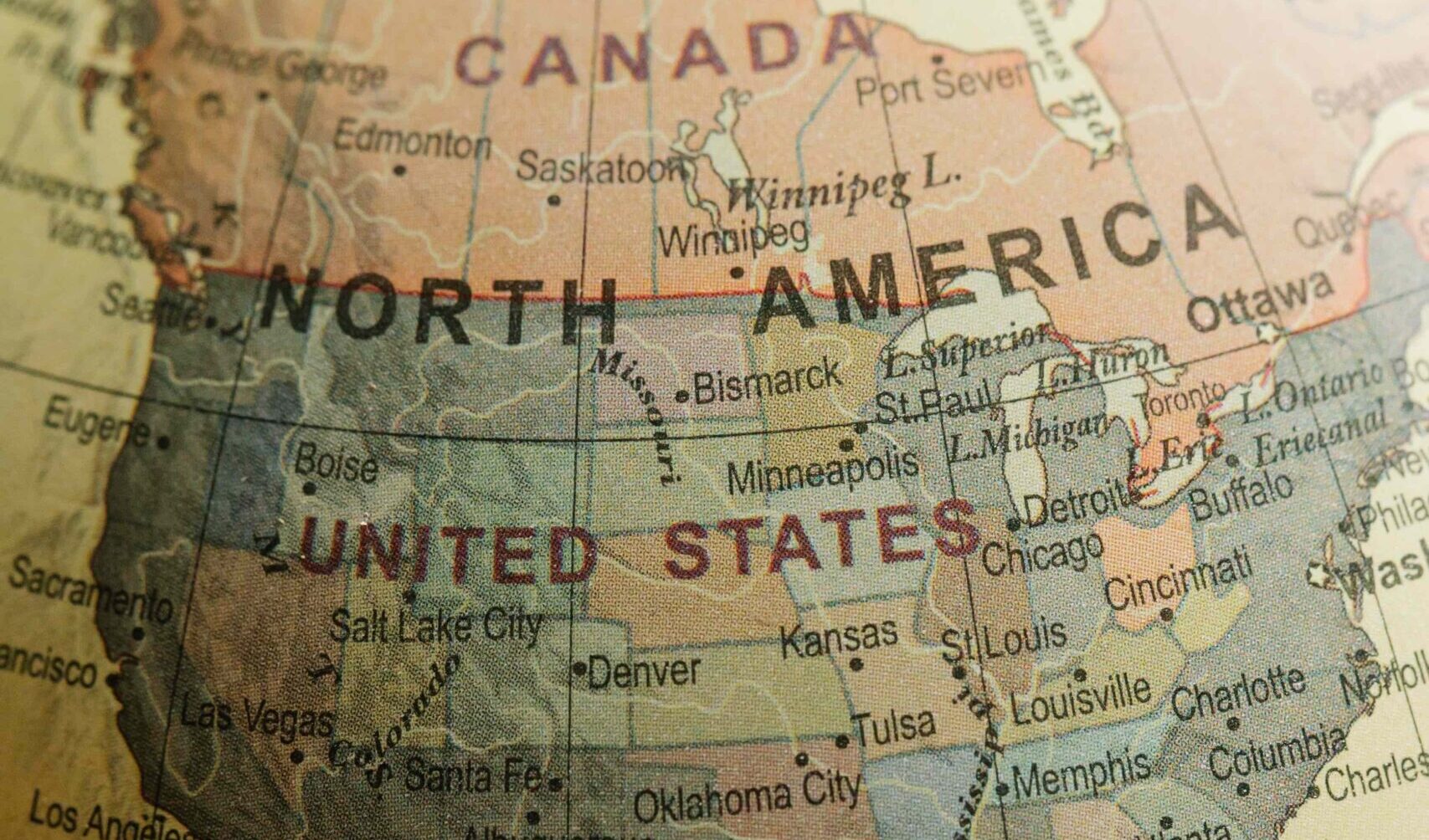
    The largest purchaser of U.S. agricultural land is Canada, representing 32% of land owned by all foreign buyers, or 12.4 million acres held. The next four countries holding U.S. agricultural collectively purchased 12 million acres or 31% of foreign-owned land. Those countries are the Netherlands (13%), Italy (7%), the United Kingdom (6%), and Germany (5%). In contrast, China owned 352,140 acres as of the end of 2020, which is less than 1% of foreign-held acres in the United States. As shown in Figure 1, China ranks 18th overall in U.S. land holdings among foreign countries and ranks 11th if we focus on U.S. farmland acquired between 2010 and 2020.

    The USDA does not have the authority to intervene in private land deals, but individual states can and have passed legislation that affects who can buy agricultural land and how much they can own. In the past two years, many states have proposed legislation limiting foreign ownership of farmland and sometimes all real property. Those bills have varied in detail affecting scope of limitations, countries affected, and differentiating between individuals and corporations. Similarly, at the federal level there were several proposed measures introduced seeking to control, prohibit, restrict, or increase oversight on foreign investments in the U.S. agricultural sector.  As this issue continues to evolve in legislative spheres, it is important to stay abreast of the details of proposed state and federal legislation.

    Figure 1. Top 25 Foreign Countries by U.S. Farmland Ownership in 2020

    Reference:

    Foreign Holdings of U.S. Agricultural Land through December 31, 2020, by the Farm Service Agency and the Farm Production and Conservation Business Center, U.S. Department of Agriculture. Available at http://www.fsa.usda.gov/programs-and-services/economic-and-policy-analysis/afida/index


    Taylor, Mykel. “Foreign Investment in Agricultural Land.Southern Ag Today 3(20.3). May 17, 2023. Permalink

  • Economic Uncertainty and Ways to Prepare for the Worst

    Economic Uncertainty and Ways to Prepare for the Worst

    The overall farm financial health remained resilient and strong in the past few quarters. The agricultural loan default rates for both production and farmland loans have decreased in 2022. Observation from the Farm Credit Administration (FCA) also shows that the percentage of nonperforming loans is at 0.47%, a very low number compared to previous years. The total number of farm bankruptcy cases (Chapter 12 bankruptcies) was 169 in 2022, the lowest number since 2004. However, the outlook appears less positive.

    Source: USDA ERS

    We just began the first quarter of 2023 with great uncertainty. On April 28th, it was reported that the GDP growth rate in the U.S. slowed considerably. The annualized rate of growth was only 1.1%, half of what was forecasted. March inflation rate was higher than the expectation and reached 4.2%. There are signs of recession, including the yield curve inversion observed in the U.S. treasury. There have been massive layoffs in the tech sector, reduced corporate investments, and major bank failures on the West and the East coasts. 

    The agricultural sector is expected to be affected by these uncertainties. USDA’s forecast made earlier this year shows net farm income is predicted to drop significantly in 2023, by more than 13%. If we do enter a recession and consumers tighten their budgets, there is a possibility that the impact will be even more severe and extend beyond 2023.

    What can we do in the face of all these economic uncertainties? If the farm business is expected to be under financial stress in the worst-case scenarios, taking certain actions can lessen the impact. These actions fall into three strategies to improve the financial situation of the farm business.

    Managing Cash Flow

    Control costs. Reducing costs is an ongoing challenge for agricultural producers. Evaluate all procedures and purchases and seek ways to improve cost efficiency. 

    Reduce or postpone capital purchases and family withdrawals. Critically evaluate purchases and consider repairing for another year rather than replacing.

    Other income sources. Consider ways to leverage any excess capital and labor. For example, do you have the equipment/labor/time to provide custom work for other producers?  

    Marketing.  Sharpen your marketing plan, and be ready to act on opportunities to lock in profitable prices. 

    Renegotiate leases. Approach the landlord with a proposal to reduce the lease payment or shift from a cash lease to a shared lease agreement.

    Managing Liabilities

    Renegotiate loan terms. Extending loan terms will ease cash flow pressures by lowering loan payments. Refinancing carryover debt or paying interest only for a short term could be negotiated. 

    Reduce debt. Reducing debt will certainly relieve some financial stress, but be careful about sacrificing valuable working capital. Although not easy to find, outside equity investment may be a viable source of capital and/or debt reduction.

    Refinance. Carefully weigh the advantages of extended loan terms vs. today’s higher interest rates.  Refinancing may not save as much as expected.  If the broader economy moves into recession, watch for declining interest rates and future refinancing opportunities.

    Managing Assets

    Liquidate cash and investments. If the farm business has maintained a financial reserve of cash or investments, this may be the time to use it to reduce or avoid debt.

    Sell inventory and capital assets. If the farm business is holding inventory and waiting for higher prices, consider selling that inventory to reduce debt. If you can do it without affecting operations, selling land or equipment that is seldom used may be a good strategy to generate funds.


    Kim, Kevin, and Brian E. Mills. “Economic Uncertainty and Ways to Prepare for the Worst.Southern Ag Today 3(19.3). May 10, 2023. Permalink

    Photo by Mikhail Nilov: https://www.pexels.com/photo/a-person-typing-on-laptop-7731373/

  • Mobile Apps in Farm Management

    Mobile Apps in Farm Management

    Have you ever found yourself wishing there was an app for something while using your smartphone? You’re not the only one. The development of mobile apps for various needs is happening at a rapid pace. Why? According to comScore, 89% of all mobile minutes are spent on mobile apps. The top two categories for mobile app users are social media and news/information. In agriculture, there are mobile apps available that deal with an array of topics. CropLife puts out a list of the best agriculture apps every year. The majority of those mobile apps, and the most popular, are often agronomic or weather related. In the economic space, most of the available apps provide pricing information for marketing.  However, there are a host of available apps that can assist with farm management.

    I often get asked, “What is the best farm management app out there?” My colleague had the best answer to that question, “the best farm management app for farmers is the one that you will actually use!” Each app serves a different purpose and provides a different user experience.  We’ve recently created an extension publication that outlines all of the mobile apps we could find that help farm management and their availability on Apple or Google smartphones (publication found here). If you want a more detailed description of each app, you can find it here. I encourage you to download several apps and try them to see which works best for your specific situation or need.

  • The Five Types of Risk in Agriculture

    The Five Types of Risk in Agriculture

    Agriculture is considered a stressful profession, not just because of the complexity of decisions that must be made to successfully run a farm or ranch operation but primarily because there is uncertainty. Whenever uncertainty is involved in the farm business, risks must be taken.

    There are five main areas of risk in agriculture: production, marketing, financial, legal, and human. The ability to identify risks in agriculture is the first step in managing those risks.

    Production risk is first because it involves the primary livelihood of the agricultural operation. Production risk impacts the ability to produce a crop, raise livestock and poultry, or provide a service. Production risk occurs because of the uncertainty of weather events, pest (weed, disease, or insect) problems, and the availability of inputs – from fertilizers to seed to production technologies.

    The second type of risk is marketing. Marketing risk brings the price component into play. Thinking back to when we took basic economics, we learned farmers were price takers who produce similar products. For example, a bale of cotton on your farm is not much different than a bale of cotton in the next county or neighboring state. Furthermore, the prices of agricultural products and inputs are impacted by things happening nearby and globally. Two recent examples include 1) the Covid pandemic, which caused prices to drop for many inputs and commodities, and 2) the war in Ukraine drove prices for some commodities like wheat up, as well as increased in the cost of fertilizer and fuel. These events were out of the producers’ control and difficult to predict.

    The third type of risk is financial. Financial risk involves the ability of the operation to cash flow and gain access to capital to maintain and expand the operation. In today’s environment, financial risk is impacted by inflation and interest rates. Inflation makes inputs “more expensive” to buy, and consumers are unable to purchase as much with their dollar. In addition, the Federal Reserve has increased interest rates to try to get inflation in check. Higher interest rates result in a higher cost to borrow funds. Farmers are seeing higher interest expenses, even without expanding their operations.

    The next area of risk is legal. Legal risk includes the knowledge of, and compliance with, regulations and laws related to the production and marketing of agricultural products and services. A recent example has been with the ability to apply dicamba herbicides which are regulated by the United States Environmental Protection Agency. Although laws vary by state, any certified applicator who plans to apply dicamba herbicides must be trained specifically on their application to ensure label compliance and stewardship. This training must be completed annually and prior to the use of any dicamba herbicides. Legal risk also encompasses the other two areas of risk: financial (requirements to follow the terms of debt) and human (labor rules and regulations). Those who do not comply with laws and regulations will be subject to liability. Liability occurs when a person or entity is held legally responsible for any potential damage or losses that result from the non-compliance. 

    The final area of risk is human. Although listed as the final area of risk, the figure shows it as the topmost circle in the stack of risk circles – meaning it is one of the most important areas of risk. Human risk involves the people of the agricultural operation, from management to employees to future heirs. Human risk includes the health and well-being of the people who maintain the day-to-day operations. It should also include plans to transition the operation if a change in management were to occur.

    For more information on risk in agriculture and how to manage it, refer to the handbook linked in the resources, titled: “Introduction to Risk Management. Understanding Agricultural Risks: Production, Marketing, Financial, Legal, and Human.”

    Five Types of Risk in Agriculture

    Figure Source: Author compiled.

    Resource: Crane, L., G. Gantz, S. Isaacs, D. Jose, and R. Sharp. “Introduction to Risk Management. Understanding Agricultural Risks: Production, Marketing, Financial, Legal, and Human.” Extension Risk Management Education Programs and USDA, Risk Management Agency. Handbook Second Edition, 2013. http://extensionrme.org/Pubs/Introduction-to-Risk-Management-ENGLISH.pdf

    Source: “Dicamba Training Reuirements – Frequently Asked Questions.” https://www.epa.gov/ingredients-used-pesticide-products/dicamba-training-requirements-frequently-asked-questions#additional-training. United States Environmental Protection Agency. Updated December 5, 2022. Accessed April 21, 2023.


    Smith, Amanda R. “The Five Types of Risk in Agriculture.Southern Ag Today 3(17.3). April 26, 2023. Permalink

    Photo by PUSCAU DANIEL FLORIN: https://www.pexels.com/photo/gray-asphalt-road-in-between-brown-orange-leaf-trees-during-daytime-217114/