Blog

  • Digital Divide in Rural Communities

    Digital Divide in Rural Communities

    Broadband access has increasingly become a basic utility, but it is still out of reach for many rural communities. While the Federal Communications Commission (FCC) claims that broadband internet is not available to 24.7 million people in the United States, data from Microsoft indicated that 162.8 million (almost half the population of the United States) do not use internet at broadband speeds. Digital Divide Index provides an overview of the disparity across the United States. COVID-19 pandemic further emphasized the need for broadband as schools and businesses shifted to virtual mode. The digital divide can be addressed by:

    1. Reducing Municipal broadband restrictions: As of 2021, municipal broadband was restricted in eighteen states across the United States. Some states have allowed electric co-operatives to provide broadband in their service territories.
    2. Providing Incentives for Internet Service Providers: Population density in rural areas is much lower than urban areas, thereby increasing the relative cost of installing fiber-optic cable. Providing incentives for internet service providers would help reduce the costs of providing internet to rural areas.
    3. Reducing the Burden on Right-of-way and Easements: Obtaining permissions for right-of-way and easements to lay fiber-optic cable are often difficult and slow. A public-private partnership that can reduce the costs and time delays in obtaining right-of-way and easement will expedite the process.
    4. Improving Adoption and affordability: Lower-income residents experience a higher economic burden due to lack of devices and affordable broadband subscription plans. Programs such as Emergency Broadband Benefit and the new Affordable Connectivity Program can help improve adoption of broadband. Further, demand-side management programs if offered through internet service providers can improve access to broadband.
    5. Supporting Broadband Programs: Library mobile hotspot lending programs, downtown wi-fi programs have been widely successful A public-private partnership promoting these programs will improve education, business development, healthcare, tourism and recreation opportunities across communities.

    Upendram, Sreedhar. “Digital Divide in Rural Communities“. Southern Ag Today 2(12.5). March 18, 2022. Permalink

  • A 2022 Review of the Farm Bill:  The Role of USDA Programs in Addressing Climate Change

    A 2022 Review of the Farm Bill: The Role of USDA Programs in Addressing Climate Change

    On March 16, I testified before the House Agriculture Committee at a hearing titled

    “A 2022 Review of the Farm Bill:  The Role of USDA Programs in Addressing Climate Change”.  Working closely with commercial producers has provided the Agricultural and Food Policy Center with a unique perspective on agricultural policy.  While we normally provide the results of policy analyses at committee hearings, on this occasion I was carrying the message from the nearly 675 producers we work with across the United States.

             In preparation for the testimony we emailed our representative farm members the following points that I planned on making and asked them to let us know if they agreed or disagreed with each of the 5 points.  In two days, we received 105 responses and several more after I had submitted my testimony.

    1. Having a strong safety net from Title I programs (ARC/PLC and the marketing loan) and Title XI (crop insurance) remains critical even with new carbon market opportunities. They unanimously agreed with this statement in spite of the fact they expect very little benefit from Title I programs this year. 
    2. USDA conservation programs (CRP, CSP and EQIP) that have incentivized a broad array of conservation practices have worked well in the past. They have just been under funded.  Producers much prefer this type of program to the current carbon program situation where the significant record keeping requirements, additionality requirements, uncertain soil tests, and very low financial benefits have the majority of our representative farm panel members not interested in participating. 
    3. Congress should strongly consider providing financial incentives to early adopters who are not eligible to participate in current carbon programs due to the additionality requirement. If it is good to sequester carbon it should also be good to keep carbon sequestered.  Many of the producers who responded to my request indicated that they are disgusted with a system that only rewards late adopters
    4. All producers regardless of size, region, or crops planted should have opportunities in any new USDA climate programs. This statement appears fairly benign but let me assure you it is not.  If all producers in the U.S. do not have some USDA NRCS identified practice they can undertake in the name of sequestering carbon then there will be regional winners and losers, and by crop, and by size as carbon programs are created.
    5. Congress should consider providing USDA the authority to safeguard producers from being taken advantage of in current carbon markets dealing with private entities. For example, signing a carbon contract with at least one current company would require a producer to forgo commodity and conservation program benefits on that land.  This is really the only point where many producers disagreed with me.  Several producers would rather not have the government get involved in the carbon market at all and asked me to point out that while they see a problem – it could be made worse.

    Link to Full Testimony

    Outaw, Joe. “A 2022 Review of the Farm Bill: The Role of USDA Programs in Addressing Climate Change“. Southern Ag Today 2(12.4). March 17, 2022. Permalink

  • Flex Leases for Crop Producers

    Flex Leases for Crop Producers

    One of the biggest challenges to farmers and landowners is negotiation of farmland leases in a manner that leaves both parties satisfied. Too often, fixed cash leases are negotiated and within a short period of time one person or the other is getting less than they think they should. One solution to this is to re-negotiate fixed cash leases on a regular basis and recognize that they will need to be changed to reflect the variability in the market and/or production conditions. Another solution is a flex lease.

    Flex leases are designed with a base cash rent amount (negotiated at the beginning of the season) and a flexible “bonus” amount that depends on either market prices, yields, or both. The idea is to guarantee the landowner a certain amount of rent and have both parties share in the good times as well as the bad times. When set up correctly, they will adjust for changing revenue conditions.

    The base rent needs to be calculated at the beginning of the season and is often tied to a published or well-documented measure.   A couple of options might be: a negotiated premium/discount from the county-average rent from USDA or a percentage of historical gross revenues from the leased farm (for example 15-20%). The flex component (determined at the end of the season) can be calculated as a percentage of actual gross revenue or a measure of gross margin (gross revenue less variable costs of production). For example, you might make the flex component of the payment 20-30% of gross margin.  Another flex component could be a discount in the base rent if total costs are not covered so the landowner shares in the downside risk.

    A few things to remember, as you negotiate a flex lease:

    1) WRITE IT DOWN, don’t rely on a verbal agreement,

    2) Keep the calculations simple and transparent to avoid misunderstandings, and

    3) Be willing to renegotiate if things get out of line, which can happen with big swings in farm profitability.

    Flex leases should encourage communication between landowner and tenant, which will help in overall lease negotiation.

    Taylor, Mykel R. . “Flex Leases for Crop Producers“. Southern Ag Today 2(12.3). March 16, 2022. Permalink

  • Cull Cow Prices Skyrocket

    Cull Cow Prices Skyrocket

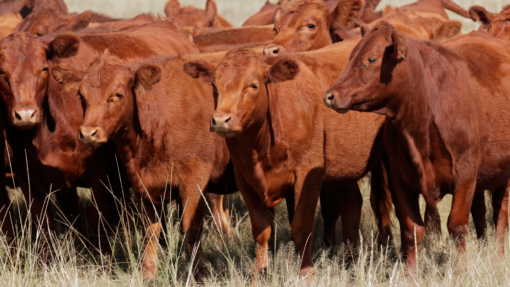
    War has contributed to cattle market uncertainty and sharply higher feed costs, record-high cattle on feed, and falling cutout values have hit heavy feeder prices hard.  But, cull cow prices have continued to skyrocket since the beginning of the year, shooting past $75 per cwt in the Southern Plains.  A year ago, 85-90% lean cull cows averaged about $46 per cwt.

    Cow prices are increasing in spite of large cow slaughter.  Cow slaughter during the first two weeks of February totaled 145,000 head, or more, per week.  That is the largest weekly slaughter since December 2012.  Beef cow slaughter is extremely large, rivaling peak Fall slaughter levels.  This large beef cow slaughter is coinciding with seasonally large dairy cow slaughter, which typically peaks early in the year. 

    High cow beef prices are providing some insight into beef demand.  Both the cow beef cutout and the wholesale 90 percent lean beef for ground beef are well above a year ago, at $229 and $284 per cwt, respectively.  But, wholesale middle meat prices have dropped in recent weeks with both wholesale ribeye and strip loin prices lower than last year.  Consumers may be shifting purchases to more ground beef and fewer steaks in response to high retail prices.

    Increasing milk prices should slow dairy culling in the coming weeks.  Beef cow culling is going to be greatly influenced by drought and costs.  The rate of culling over the last year should have already moved older, less productive cows.  Reduced dairy culling should pull down total cow slaughter and support prices in the coming weeks.

    Anderson, David. “Cull Cow Prices Skyrocket“. Southern Ag Today 2(12.2). March 15, 2022. Permalink

  • Ukraine-Russia Implications in Grain and Oilseed Markets

    Ukraine-Russia Implications in Grain and Oilseed Markets

    Global commodity markets have been affected by the Russian invasion of Ukraine on February 24, 2022. Energy prices have skyrocketed.  The American Automobile Association estimated the national average gas price in the United States at $4.32/gallon on March 10. Implications of the conflict are far reaching, affecting nearly all aspects of the global economy. Agricultural producers have been affected on two fronts, input prices (fuel, fertilizer, etc.) and commodity prices (wheat, corn, and soybeans). The focus of this article is the impact on grain and oilseed markets and marketing tools that producers may want to consider to help mitigate price risk.

    Ukraine is an important producer and exporter of wheat, corn, barley, and sunflower seed products.  Table 1 shows Ukraine’s share of world production and their share of world exports for these commodities. While Ukrainian corn represents only 3.5% of world production, it accounts for 13.8% of world exports.  Meanwhile, Ukraine produces almost a third of the world’s sunflower seed, which is then turned into about half of the world’s meal and oil exports.  Sunflower seed oil production and exports in Ukraine have some ramifications for soybean oil and soybean prices as imperfect substitutes.

    Table 1. Ukraine’s Share of World Production and Exports for Select Commodities, 2021/22

     WheatBarleyCornSunflower SeedSunflower Seed MealSunflower Seed Oil
    Production4.2%6.8%3.5%30.6%27.5%30.6%
    Exports9.8%16.7%13.8%4.8%58.0%47.3%

    Source: USDA PSD https://apps.fas.usda.gov/psdonline/app/index.html#/app/home

    Volatility in corn, wheat, and soybean futures markets have been extreme (Figures 1-3). For example, daily price changes for July wheat for the past ten trading days have been: -75, 67, 50, 74.25, 75, 59, 77.25, -57.25, -85, and -67.5 cents. Extreme volatility can make marketing decisions challenging and potentially expensive. However, volatility also often provides opportunities for profit. Three months ago, every farmer would have jumped at the ability to sell wheat futures at $9.00; now farmers can set a futures price floor at $9.62. Purchasing put options is expensive – $1.48 for an at-the-money put as of March 9. However, with a gap between the fall crop insurance price of $7.14 and current market offerings of $11.10, taking some additional downside risk off the table while leaving the top side open is a prudent move.

    Corn and soybean projected crop insurance prices were set 10 days ago at $5.90 and $14.33, respectively. Harvest futures prices on March 10 were $6.50 for corn and $14.95 for soybeans, an increase of 60 and 62 cents, respectively. Producers should be asking themselves at what point they should take some additional price risk off the table. Being too aggressive with setting prices (i.e. cash forward contracts and short hedges) should be approached cautiously as producers need to avoid exchanging price risk for production risk or selling their way out of a bull market. However, managing the downside price risk should be on every producer’s mind, particularly with input prices at elevated levels.

    Grain and oilseed markets are likely to remain unpredictable, due to uncertainty generated from the Russia-Ukraine conflict. Producers should consider how much of the 2022 crop they are comfortable pricing at this point in the year and how they can protect the downside of this market while keeping the upside open. Options strategies will be expensive but should be fully explored based on current market conditions.

    Figure 1. Daily July Wheat Futures, January 3 to March 10, 2022

    References and Resources:

    USDA – Foreign Agricultural Services. Production, supply, and distribution (PSD). Accessed at: https://apps.fas.usda.gov/psdonline/app/index.html#/app/home

    Barchart.com. Corn soybean and wheat historical futures prices. Accessed at: https://www.barchart.com/futures/grains?viewName=main

    AAA – https://gasprices.aaa.com/

    Smith, Aaron. “Ukraine-Russia Implications in Grain and Oilseed Markets“. Southern Ag Today 2(12.1). March 14, 2022. Permalink