Blog

  • Mid-Year Review and Planning

    Mid-Year Review and Planning

    We have now past the midway point for the 2023 calendar year. We are carefully and optimistically watching our crops develop as well as keeping tabs on global events. It has been another wild year with crazy weather and its effects around the country, from areas of drought and high heat, to areas where excessive moisture has produced standing water and flood warnings. The upheaval in Eastern Europe, Russia’s ongoing attempt to take over Ukraine, continues to create a variety of issues around the globe. With all the issues taking place, we are seeing variability and fluctuation in commodity prices, both positive and negative, and we can sometimes get dizzy thinking about all of the “what ifs.” When this happens, we choose not to want to think about it, and it simply creates management decision paralysis. We need to eat this elephant one bite at a time, and possibly request some assistance from the right individuals. Make sure you have the right information to make the best decisions that can be made to prepare for the rest of the season and year. 

    This is a good time to take a few steps to ensure you are on the right track for risk mitigation. 

    1. Have you scouted your crops to estimate yield, barring any late-season weather-related disasters? Does this match your marketing plan, or do adjustments need to be made? For livestock, do you have the feed necessary on hand/or being produced? Does additional feed need to be purchased? What options are available to lock in prices and supplies that allow for profit?
    2. Review your marketing plan and determine if any changes need to be made. Is it time to look at additional hedging or spreads opportunities to help mitigate price/marketing risk?
    3. Do you have labor available and can you afford what is needed? Is mechanization required to cut back on labor, and does it pay to do so? 
    4. Have you run cash flow estimates for where you believe you will be at the end of the year? Do you need to make adjustments, prepare for tax management strategies before the end of the year, cut back on expenses, increase sales of culls, other inventory to access cash, etc.?

    Although the above-mentioned situations are things that we normally think about, we typically don’t give the thought each of those deserves as we get overrun with daily tasks on the farm. However, a mid-year check to mitigate risk may offer the opportunity for the farm or ranch to increase its cash flow. There are a number of resources available to assist farms and ranches in understanding the decisions to be made, and possibly even performing a true analysis of the farm financials. You should begin by contacting your local farm management/agribusiness Extension staff, legal and tax professionals, and others. But it must start with a plan, the farm/ranch goals, objectives, and knowing your numbers. If you do not have a way to collect the “numbers,” including production, income, costs, etc. or able to produce an easy way to review the information, you may be making decisions based on information that is incomplete at best.

    With the variables presently at play today, it’s time to take a deep dive into what shocks your farm/ranch enterprise(s) can handle to determine the farm’s economic stability and sustainability.  But without knowing the farms’ “numbers” the owner/operator will not know how to appropriately plan for potential changes. 

    Reach out to your local Cooperative Extension service and your legal and tax professional. Additional resources and tools can be found through your local Cooperative Extension website, and at ruraltax.org (www.ruraltax.org), Center for Farm Financial Management (https://www.cffm.umn.edu), National Council of Agricultural Employers (NCAE) (https://www.ncaeonline.org).


    Kantrovich, Adam. “Mid-Year Review and Planning.” Southern Ag Today 3(28.3). July 12, 2023. Permalink

  • More Dairy Cow Culling

    More Dairy Cow Culling

    Dairy cow culling has increased this year due to low milk prices causing unprofitable conditions for many dairies.  In fact, milk supplies in excess of processing ability has caused some milk to be dumped out instead of being used in some regions of the country.

    Total dairy cow slaughter in the U.S. is up 5.5 percent (81,300 head) compared to last year.  Culling is higher in the big milk production regions of the country, including the Midwest (region 5) and the West Coast (regions 9 and 10) which are up 3.4, and 10.3 and 5.4 percent, respectively.  

    Three regions concern Southern dairy producers, regions 3, 4, and 6.  Region 3 includes Virginia and Maryland but, those states are likely swamped in the data by Pennsylvania, one of the largest milk producing states in the country.  Dairy cow slaughter for region 3 also likely includes a lot of cows from New York, another large milk producer.  Region 4 runs from Mississippi in the West to Kentucky, the Carolinas, and down to Florida.  Region 6 includes Texas, Arkansas, and Louisiana.  New Mexico is a large producer and is also part of region 6.  Slaughter in region 3 is actually 7 percent below last year.  Region 4 is about even with a year ago given that slaughter is only 600 head more than last year.  The big change is in region 6 where dairy cow slaughter is up 24.6 percent, or 42,800 head, over last year.  That represents more than half of the increase in total U.S. dairy cow slaughter this year.  

    High cull cow prices are likely adding a little encouragement to dairy cow culling.  But low milk prices are the driving factor.  We are likely to see larger culling than a year ago until milk prices show some improvement.  Dairy cow slaughter tends to decrease seasonally until this time of the year then begins to increase.  Increasing numbers of dairy cows going to market in coming weeks and months would not be a surprise.


    Anderson, David. “More Dairy Cow Culling.” Southern Ag Today 3(28.2). July 11, 2023. Permalink

  • The U.S. Corn Market: a Look Ahead and Lessons from the Past

    The U.S. Corn Market: a Look Ahead and Lessons from the Past

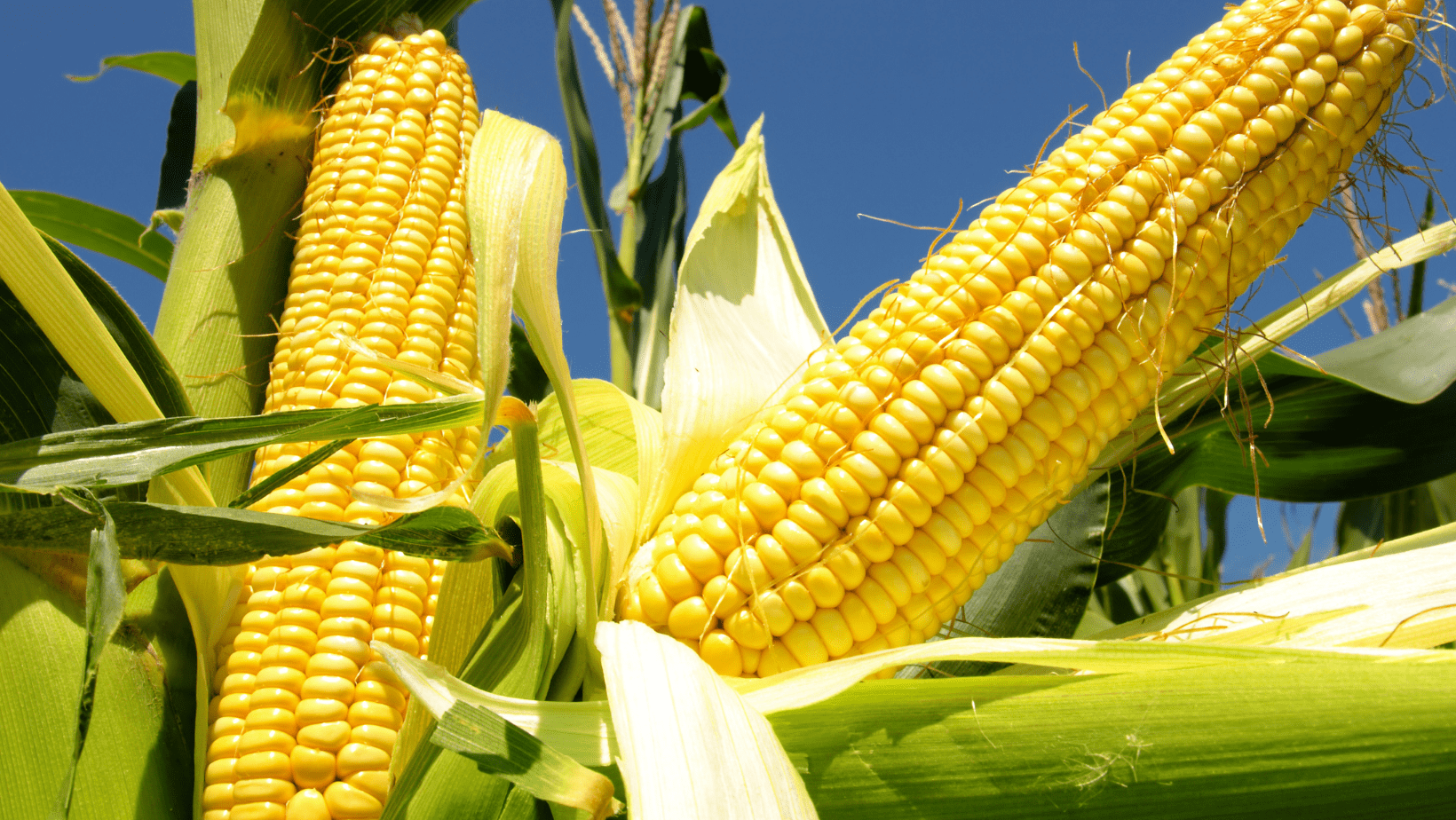
    USDA’s May 2023 World Agricultural Supply and Demand Estimates (WASDE) included the first official estimates for the 2023/24 marketing year. USDA’s forecast reflected the impact of economic fundamentals on the corn market: recent years of high corn prices have increased incentives for supply and disincentivized use.  

    The May 2023 WASDE projected a sharp increase in the stocks-to-use ratio for U.S. corn compared to the previous marketing year.  This ratio, measured by days of use on hand at the end of the marketing year[1], had been below the critical 40-day threshold for the past three years. But with a 3.4 million acre increase in planted acres and a record projected corn yield of 181.5 bushels per acre, corn supplies in 2023 were estimated to increase by more than 10 percent compared to 2022/23 (Table 1).  Total use was estimated to increase by about 5 percent (mostly feed use and exports, fuel use little changed) resulting in a 5% net increase in corn supply. The price impact of this increase was a 27 percent decrease in price, from $6.60 per bushel down to $4.80.

    Table 1.  U.S. Corn Supply and Use, World Agricultural Supply and Demand Estimates, May 2023

    *record high
    USDA, Office of the Chief Economist (OCE), May 12, 2023      

    Since the May 2023 WASDE, drought conditions have worsened considerably across the Corn Belt. While storms brought much-needed rain to much of the Midwest last week, hurricane-force winds also wreaked havoc, with the extent of the damage still being assessed.  Prior to last week’s storms, early season corn condition ratings were the lowest they have been in 16 years, even lower than the ratings of 2012. Near record low crop condition ratings make the likelihood of a record 181.5 bushel/acre yield highly improbable.  Looking at the relationship between days of use on hand at the end of the marketing year and the U.S. corn season-average farm price (current $2023) in the biofuel era (2006 and forward), we can derive an estimate of the resulting farm price from lower yield estimates (Figure 1).  

    USDA’s projected farm price with a 181.5-bushel crop is $4.80 per bushel. Holding all other supply and demand factors constant, a yield of 176.5 bushels per acre (very near the current record high corn yield of 176.7 bushels in 2021) lowers the carryover to a 45.4-day supply (compared to the May 2023 estimate of 56 days; Table 1). The price associated with that level of carryover would be about $5.00 to $5.50. A yield of 173.3 bushels, the same as 2022, lowers days of use on hand to a 38.6-day supply and a corresponding price of around $6.00 per bushel. 

    Figure 1. U.S. Corn Average Farm Price (real $2023) and U.S. Days of Use on Hand at the End of the Marketing Year

    Source: USDA, WASDE 5/12/2023

    Similar fundamentals in the corn market were in place in 2012. Prices reached succeeding record highs in 2010 and 2011.  In May 2012, USDA projected an increase in the corn carryover from an estimated 24.5-day supply in the 2011/12 marketing year to a projection of 49.8-days for the new crop (Table 2). The yield estimated at the time was a record 166-bushel/acre crop. The estimated farm price was $4.60 per bushel, down from $6.20 the prior year. 

    The drought of 2012 lowered the U.S. corn yield to 123.4 bushels and the 2012/13 marketing year carryover down to 27.1-days, below the realized 2012/13 carryover number of 28.8-days.  The drought of 2012 caused one more year of high corn prices before price fell to $4.46 in 2013, on the way to $3.36 by 2016 and 2017.

    Table 2.  U.S. Corn Supply and Use, World Agricultural Supply and Demand Estimates, May 2012

    *record high
    USDA, Office of the Chief Economist (OCE), May 10, 2012      

    Before we know the final carryover numbers and prices for the 2023 corn crop, we will have to see how the growing season progresses. If conditions improve, we are likely looking at price levels below those of 2022. However, if it stays dry, we may postpone downward price movement and be presented with profitable pricing opportunities during both the 2023/24 and 2024/25 marketing years. 


    [1] Days of use on hand at the end of the marketing year = ending stocks ÷ (total use/365 days)


    References

    USDA, Office of the Chief Economist. World Agricultural Supply and Demand Estimates (WASDE). May 10, 2012 and May 12, 2023, https://www.usda.gov/oce/commodity/wasde.


    Welch, J. Mark. “The U.S. Corn Market: a Look Ahead and Lessons from the Past“. Southern Ag Today 3(27.1). July 3, 2023. Permalink

  • Is the Transition from Conventional to Organic Kale Production Profitable?

    Is the Transition from Conventional to Organic Kale Production Profitable?

    As U.S. consumers become more health-conscious and cognizant of the impacts of their food choices on their health, they have started to recognize the importance of leafy greens and vegetables more fully for a well-balanced diet. This has led to an increase in consumption of products with these characteristics as seen in the figure below (USDA, 2017).  

    Figure 1: U.S Per Capita Loss-adjusted Vegetable Availability, 1970 and 2015

    Source: ERS, https://www.ers.usda.gov/data-products/chart-gallery/gallery/chart-detail/?chartId=85012

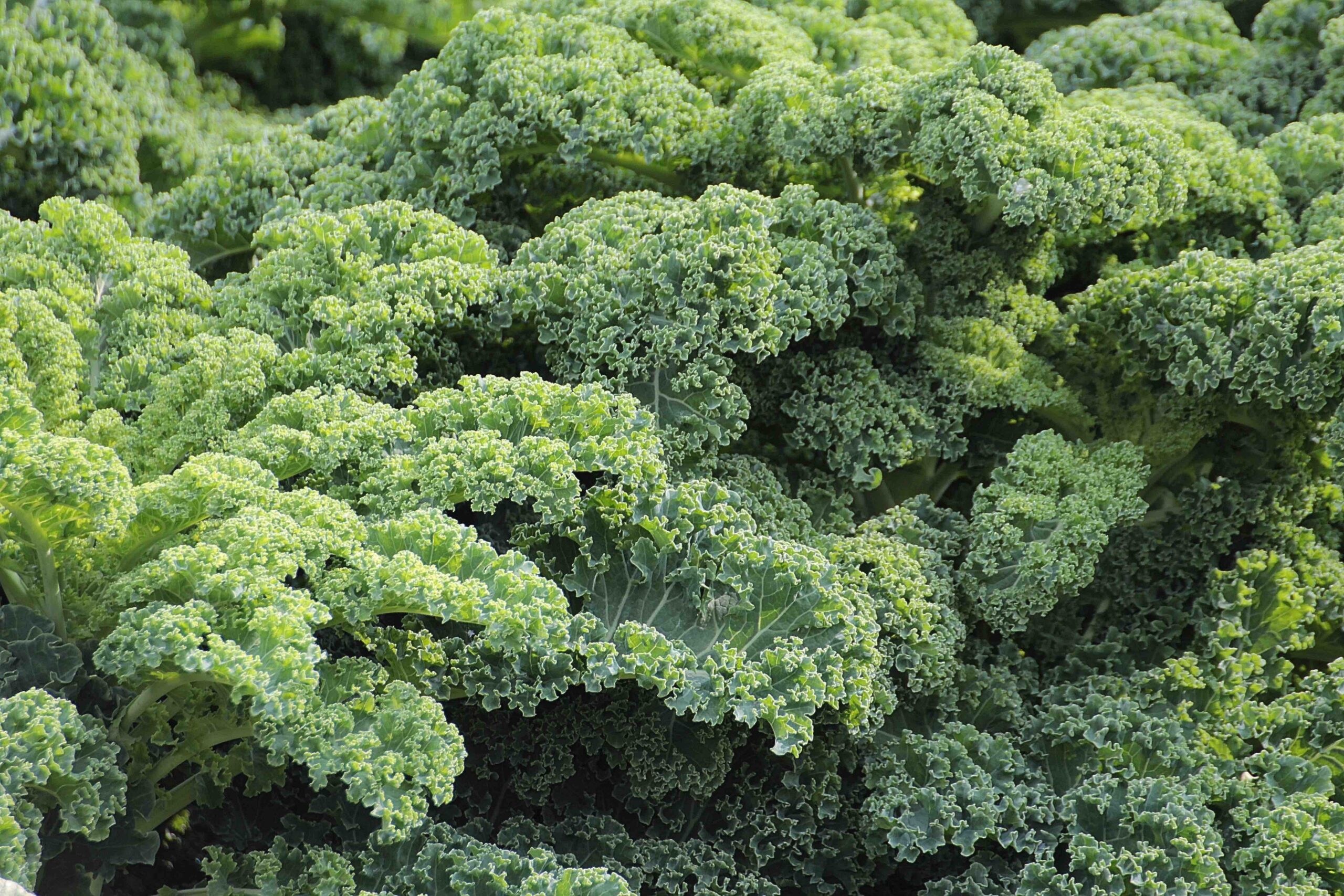
    As a result of this health trend, Kale (Brassica oleracea var. acephala), one of the oldest cultivated cabbage-like plants, is becoming more often consumed. Today, because of the rising popularity of kale, there is even a National Kale Day on the first Wednesday in October each year. Kale is sold for its leaves in a wide variety of options based on maturity stages. Compared to other leafy greens and vegetables most of the Kale sold in US is certified organic (Peda et al., 2021).

    However, there is limited information about the profitability of organic Kale production versus conventional one. Recently, Agricultural Economists at Clemson University, in collaboration with WP Rawl (a vertically integrated Kale farm in South Carolina) developed the first enterprise budget for organic Kale production. The findings indicate that the switch to organic production increased NPV by around 15% after 18 years. The break-even point was 4 years. In other words, one year after farmers who choose to transition to organic kale undergo the three-year mandatory transition period during which they must sell their kale as conventional they are able to break even with what they could have made if they had chosen to stick with conventional kale. The researchers’ analysis assumes that the kale is sold by the box with 24 bunches per box. The analysis also assumes a conventional yield of 800 boxes of kale per acre sold at $10 a box and organic kale with a yield of 700 boxes per acre at a selling price of $14 a box.  

    Funding Source: Project funded by USDA NIFA ORG program (Award Number:2021-51106-35495)

    References:

    Reda, T., P. Thavarajah, R. Polomski, W. Bridges, E. SHipe, and D. Thavarajah. 2021. “Reaching the highest self: A review of organic production, nutritional quality, and shelf life of kale (Brassica oleracea var. acephala) Plants People Planet 3(4): 308-318


    Francis, Samuel, Felipe de Figueiredo Silv, and Michael Vassalos. “Is the Transition from Conventional to Organic Kale Production Profitable?Southern Ag Today 3(27.5). July 7, 2023. Permalink

    Photo by Pixabay: https://www.pexels.com/photo/green-plant-51372/

  • How will Proposition 12 Ruling Impact the Farm Bill?

    How will Proposition 12 Ruling Impact the Farm Bill?

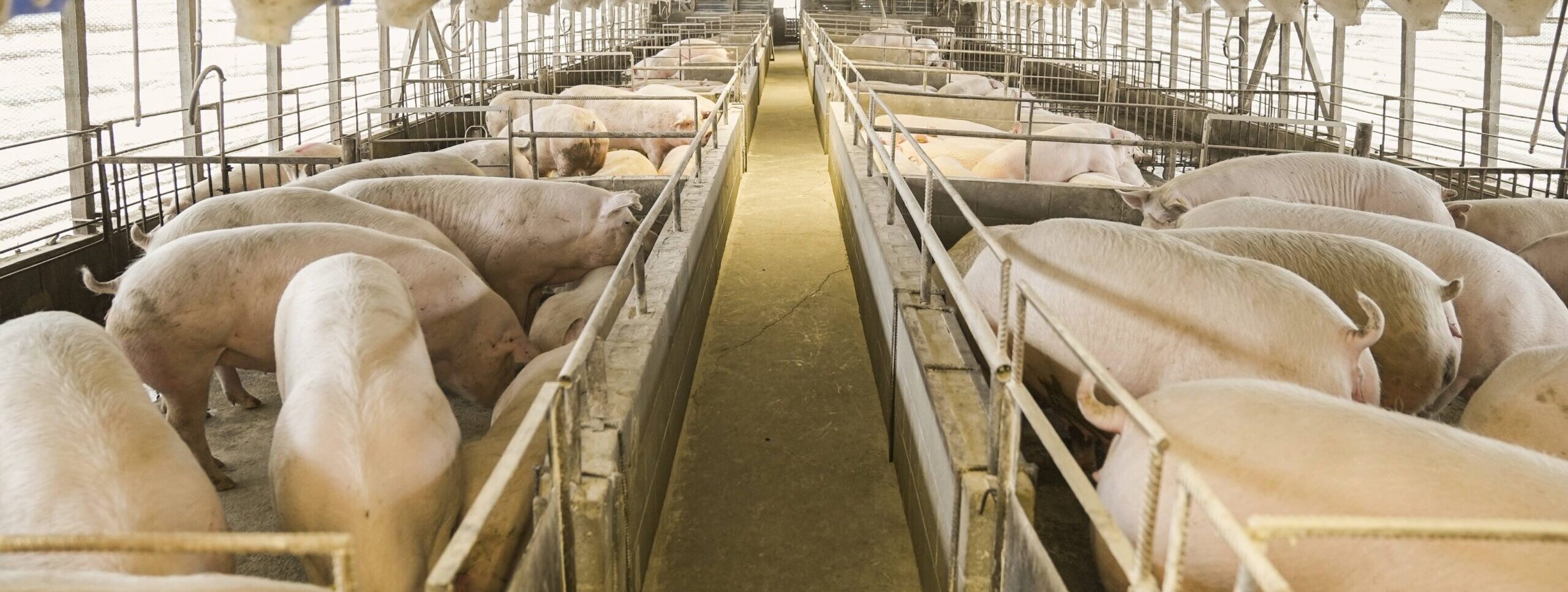
    Over the past 15 years, several states have passed laws regarding the amount of space that specific types of farm animals must be given. One such law – California’s Proposition 12 –imposes certain animal welfare requirements such as pen size and space on pork sold in California. These requirements apply not only to California producers but also to anyone selling products into the California market.[1] Proposition 12 was challenged in both state and federal court, and on May 11, 2023, the Supreme Court issued its opinion in National Pork Producers Council v. Ross, ultimately upholding California’s Proposition 12.[2] This raises the inevitable question of what impact, if any, the ruling will have on farm bill deliberations. To help address this question, we provide an overview of the historic federal legislative response to Proposition 12 and initiatives like it over the past decade.

    Several of the early federal legislative attempts to push back on these state initiatives came from former Rep. Steve King (R-IA-4).  

    • On July 11, 2012, at the House Agriculture Committee markup of the 2012 Farm Bill (H.R. 6083), King offered an amendment (Amendment No. 45) that was ultimately adopted as Sec. 12308 in H.R. 6083. The amendment prohibited a state or local government from imposing a standard or condition on the production or manufacture of any agricultural product sold or offered for sale in interstate commerce if the production or manufacture occurs in another State and the standard or condition is in addition to Federal standards and the laws of the State and locality in which production or manufacture occurs. Ultimately, that bill expired at the end of the Congress.
    • On May 15, 2013, at the House Agriculture Committee markup of the 2013 Farm Bill (H.R. 1947), King again offered his amendment (Amendment No. 71) that was ultimately adopted as Sec. 12314 in H.R. 1947 and as Sec. 11312 in H.R. 2642, the version of the 2013 Farm Bill that passed the House and was sent to conference with the Senate. Ultimately, the provision was dropped by the conference committee and was not included in the final version of the 2014 Farm Bill.
    • Rep. King introduced his amendment as the Protect Interstate Commerce Act in 2015 (H.R. 687) and 2017 (H.R. 3599). In 2018, he reintroduced the act as the Protect Interstate Commerce Act of 2018 (H.R. 4879), this time also including a private right of action to challenge state or local regulations relating to agricultural goods sold in interstate commerce.
    • On April 18, 2018, at the House Agriculture Committee markup of the 2018 Farm Bill (H.R. 2), King again offered his amendment, including the private right of action from H.R. 4879.  The amendment passed on voice vote and was adopted in H.R. 2 as Sec. 11701 (prohibition against interference by State and local governments with production or manufacture of items in other States) and Sec. 11702 (federal cause of action to challenge State regulation of interstate commerce).  The provision was ultimately included in the House-passed version of the 2018 Farm Bill but again was dropped by the conference committee and was not included in the final version of the 2018 Farm Bill.
    • On January 8, 2019, King again introduced the Protecting Interstate Commerce Act (H.R. 272), yet again including the private right of action provision.  

    Rep. King was ultimately defeated in the June 2020 Republican primary.  Following his defeat, others have picked up the mantle.  

    • On August 5, 2021, Sen. Roger Marshall (R-KS) and several other Senate co-sponsors introduced the Exposing Agricultural Trade Suppression (EATS) Act (S. 2619). On August 10, 2021, Rep. Ashley Hinson (R-IA-1) and several other House co-sponsors introduced the House companion (H.R. 4999).  Both closely track the Protecting Interstate Commerce Act.
    • Following the Supreme Court’s ruling, Senator Marshall and others again introduced the EATS Act, this time as the Ending Agricultural Trade Suppression (EATS) Act (S. 2019).  Substantively, the bill would again (1) prohibit interference by state and local governments with production of items in other states and (2) provide a private right of action to challenge state regulation of interstate commerce.

    While these legislative efforts over the past 10 years attempted to challenge the patchwork of state laws, they were largely dismissed while numerous legal challenges were making their way through the courts.  While Dr. Tiffany Dowell Lashmet recently noted that others may lodge additional challenges seeking to prove that Proposition 12 does impose a substantial burden, the Supreme Court’s recent ruling makes it hard to imagine a scenario where this issue is not front and center in the upcoming farm bill debates.  In fact, key leaders in the House have identified finding a solution as a priority.  This time around, “let’s wait and see how the Supreme Court rules” will no longer be a reason for kicking the can down the road.


    [1] Rumley, Elizabeth. “U.S. Supreme Court to Hear Proposition 12 Case“. Southern Ag Today 2(29.5). July 15, 2022.

    [2] Lashmet, Tiffany. “United States Supreme Court Upholds Proposition 12.” Southern Ag Today 3(20.5). May 19, 2023.


    [1] Rumley, Elizabeth. “U.S. Supreme Court to Hear Proposition 12 Case“. Southern Ag Today 2(29.5). July 15, 2022.

    [2] Lashmet, Tiffany. “United States Supreme Court Upholds Proposition 12.” Southern Ag Today 3(20.5). May 19, 2023.


    Fischer, Bart L., and Joe Outlaw. “How will Proposition 12 Ruling Impact the Farm Bill?Southern Ag Today 3(27.4). July 6, 2023. Permalink