Blog

  • Local Food Sales & Practices

    Local Food Sales & Practices

    USDA released the results of the recently completed 2020 Local Food Practices Survey in April 2022.  The survey results revealed continued growth in local food sales across the country.  Over one-hundred and forty-seven thousand farmers and ranchers across the U.S. sold $9 billion of local edible food commodities directly to consumers, retailers, institutions, and intermediaries.  The reported level of sales reveals a three percent increase from 2015.  While reported sales increased, the number of operations selling directly decreased by twelve percent (12%). Direct farm sales across different buyer types are shown in Table 1 for the U.S. and Southern region only. In 2020, direct sales to retailers represent 46% of U.S. total direct farm sales, yet account for only 27% of Southern Region direct farm sales. To explore all of the data from the results of this survey, visit https://www.nass.usda.gov/Surveys/Guide_to_NASS_Surveys/Local_Food/

    Table 1.  Total U.S. and Southern Region Direct Farm Sales, by Buyer Type, 2015 and 2020

                            SOURCE:  2020 AND 2015 Local Food Marketing Practices Survey, USDA NASS.

    While direct farm sales market continues to grow, farm operations using this marketing strategy have declined overall. A close examination of the data shows slight changes between producer locations and the targeted marketing channels.  For example, the Southern region reported an increase in the number of farms selling direct and a decrease in sales volume over the same period. Nationally, 77% of farms with direct sales (consumers, intermediaries, and retailers) sold through direct to consumer channels (Fig. 1). 

    Figure 1.  U.S. and Southern Region Direct-to-Consumer Sales by Marketing Practice 2020 ($ million).

    A majority (57%) of farms selling food directly were located in metropolitan counties, and these farms accounted for sixty-two percent (62%) of all direct food sales. Lastly, 78% of farms selling food directly marketed their products within a 100-mile radius of their farm operation.

    Rainey, Ron, and Celise Weems. “Local Food Sales & Practices.” Southern Ag Today 2(26.5). June 24, 2022. Permalink

  • Broadband Adoption and Impacts on COVID-19 Unemployment Recovery in the South

    Broadband Adoption and Impacts on COVID-19 Unemployment Recovery in the South

    Looking at unemployment rates experienced from February to December of 2020 paints a picture of the resiliency of southeastern states counties to the COVID-19 pandemic. As shutdowns took place and unemployment rates rose, telework became an important factor in recovery. Across the 1,206 counties of the 12 southeastern states, rates of telework ability – defined as the percentage of jobs that could be done remotely – ranged from 22% to 43%.  As the pandemic unfolded, the resiliency of each county was determined by industry composition, unemployment rates at the beginning of the pandemic, county demographic characteristics, and –  broadband adoption rates. 

    Household broadband subscription rates ranged from 34% to 94% across the counties in the sample, and the results demonstrate that these differences are vital. The ability to telework had no impact on unemployment rates from February to April in counties with broadband adoption rates under 50%. Although some individuals may have been employed in occupations that were telework-friendly, their home broadband situation may have prevented them from continuing work. Alternatively, telework increased resilience in counties with higher broadband adoption rates, with marginal effects of -0.21 percentage points. That is, counties with high rates of broadband adoption had more resiliency (lower increases in unemployment) during the first two months of the pandemic.  During the April to December period, areas where a high percentage of workers could telework – but had low broadband adoption – saw lower rates of recovery. 

    During the initial months of the pandemic, a high ability to telework and a high broadband adoption rate helped dampen increases in unemployment rates. However, the longer-term effects of broadband on unemployment recovery were diminished. Counties with a high ability to telework but low broadband adoption rates were held back in recovering from April to December.  This is a striking finding that local broadband adoption rates are crucial for the potential impact of telework. In particular, federal programs put in place to subsidize household broadband access (the Emergency Broadband Benefit and Affordable Connectivity Programs) likely came too late to influence resiliency during the initial phase of the pandemic. 

    To read more about these findings and other correlations corresponding to counties resiliency, check out the full journal article: Carvalho, Mckenzie, Amy D. Hagerman, and Brian Whitacre. 2022. “Telework and COVID-19 Resiliency in the Southeastern United States.” Journal of Regional Analysis & Policy, https://jrap.scholasticahq.com/article/36123-telework-and-covid-19-resiliency-in-the-southeastern-united-states

    Carvalho, Mckenzie, Amy Hagerman, Brian Whitacare, and Teresa Haddock. “Broadband Adoption and Impacts on Covid-19 Unemployment Recovery in the South.” Southern Ag Today 2(26.4). June 23, 2022. Permalink

  • To Irrigate or Not to Irrigate?

    To Irrigate or Not to Irrigate?

    In a year like 2022 evaluating profitable input application rates is extremely important but inputs that require ongoing application through the season can be difficult to evaluate. Crop and input prices change through the year, so each input application is an individual decision that is also part of the greater profit maximizing strategy. Consider producing irrigated corn in northern Texas. 

    With December futures trading at $7.31/bu., and the average basis in the region ($0.50/bu.), we’ll assume a producer can lock in $7.81/bu. At this point in the production calendar, recommended practices assume 9 acre-inches (AI) of irrigation have been applied to-date, which represents a sunk cost. With a high cost for natural gas (the primary irrigation fuel in the region), what is the most profitable irrigation amount for the rest of the season? Standard production practices for the remainder of the season call for irrigation at a rate of 6 AI in July, 5 AI in August, and 2 AI in September, totaling 22 AI for the year. The current futures price of the corresponding natural gas contracts is $6.94/MMBtu, $6.906/MMBtu, and $6.86/MMBtu, respectively, yielding a weighted average irrigation cost of $6.92/MMBtu. Given typical irrigation technologies in the region, once acre inch of irrigation typically requires one MMBtu, so the weighted average cost per acre inch for the rest of the season will equal roughly $6.92/AI. 

    The Marginal Cost (MC) of each additional AI remains the same ($6.92/AI, orange line) for producers who lock in their irrigation needs today in terms of weighted average. Using the regional irrigation yield curve (green line), we can estimate the incremental benefit, Marginal Revenue (MR, blue line), of each AI beyond the 9 AI already applied (e.g. 1 additional AI = 10 total acre-inches). Corn yield response is positively related to irrigation to a point but begins to lag and eventually declines with increasing application. As the yield response fades, Marginal Revenue (MR) diminishes.

    Using the rules of MR and MC (MR=MC is max profit, MR < MC is a loss per unit, MC < MR is increasing returns per unit), we can see that max profit occurs at approximately 7.5 additional AI for the remainder of the season, totaling 16.5 AI for the year. A function of very little yield response from additional irrigation after 16 AI, the outcome suggests that the most profitable irrigation amount may be less than the recommended 22 AI per year.  However, it is critical to talk to your agronomist and consider factors tangential to yield like test-weight and changes in expected weather conditions when making input decisions. 


    Benavidez, Justin. “To Irrigate or Not to Irrigate?“. Southern Ag Today 2(26.3). June 22, 2022. Permalink

  • Farm Level Milk Prices Set Record in Back-to-Back Months

    Farm Level Milk Prices Set Record in Back-to-Back Months

    After dealing with incredible volatility for much of 2020 and 2021, dairy producers are benefiting from a sharply stronger milk market in 2022. Prices for cheese, butter, and nonfat dry milk are running significantly higher than last year and are fueling farm level milk prices. The US All Milk price set a record in March of 2022, then exceeded that level to set a new record the following month. From March to April, prices rose by $1.20 to a record level of $27.10 per cwt. Prior to March of this year, the record high milk price was set in September of 2014.

    US All Milk Price

    January 2014 to April 2022, $ per cwt

    Source: USDA-NASS

    Like most all commodities, milk prices only tell part of the story this year. Dairy producers are dealing with higher production costs as feed, fuel, fertilizer, and other inputs are also much higher. While feed rations differ across all operations, the assumed ration for the Dairy Margin Coverage (DMC) program has become a common metric to estimate feed costs for dairy operations. DMC feed cost includes assumed quantities of corn, soybean meal, and alfalfa hay for a representative dairy operation. 

    From April 2021 to April 2022, the estimated cost of the DMC ration has increased by $2.28 per cwt or 18%. The US All Milk price has increased by more than enough offset that increase over the last year, but considering the increase in feed costs does put the historical price levels in a slightly different perspective. While milk prices are setting record highs, estimated returns above feed costs have reached levels comparable to what was seen at times in 2019 and 2020. And, they are not at the levels that were seen during 2014.

    DMC Margin – US All Milk Price Minus DMC Feed Cost

    January 2014 to April 2022, $ per cwt

    Source: USDA-FSA

    Burdine, Kenny. “Farm Level Milk Prices Set Record in Back-to-Back Months“. Southern Ag Today 2(26.2). June 21, 2022. Permalink

  • Shelled Peanut Product Disappearance Increasing

    Shelled Peanut Product Disappearance Increasing

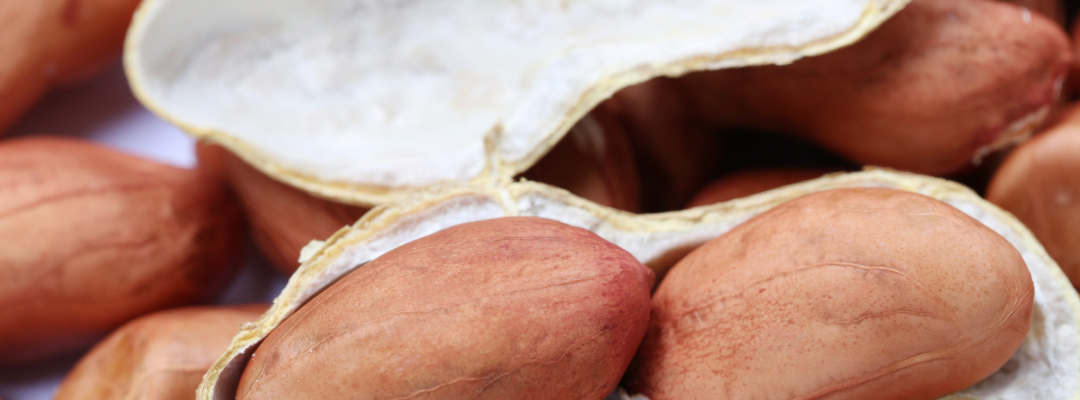
    Consumption of shelled peanut products has been strong through the third quarter of the 2021/2022 peanut marketing year (which began in August 2021). Ninety percent of peanuts produced in the U.S. are sent to shelling processors and end up being manufactured into food products or crushed for oil. Thus far, disappearance of the old crop is outpacing levels from previous marketing years. As shown in Figure 1, peanuts crushed for oil are at 218 million pounds this marketing year (through April), outpacing the same timeframe during the 2020/2021 marketing year by 5.8%. This marks a third consecutive year of increased peanut crude oil disappearance. Other U.S. oilseed crops such as soybeans have seen record oil crushings this year. This is likely an effort to offset disruptions to vegetable oil markets caused by the Russian invasion of Ukraine, which has led to reduced sunflower production by Ukraine, the world’s leading sunflower producer and sunflower-oil exporter. 

    Blue-Food Products / Green-Crude Oil
    Data source: USDA-NASS. Peanut Stocks and Processing. May 25, 2022. Available at: https://downloads.usda.library.cornell.edu/usda-esmis/files/02870v87z/z603s454w/m900pz82z/pnst0522.pdf
    Note: Peanut marketing year begins August 1st

    Similarly, disappearance of peanut food products has increased by 14.8% to start the marketing year compared to the same period last year, at 2.4 billion pounds. This follows relatively small changes each of the previous three years. The higher disappearance on the food side has been primarily driven by increases in peanut food used for candy production, which is up 15.4% compared to last year. Usage for peanut butter and peanut snacks are down 1.5% and 5.8%, respectively, from last year, continuing the trend observed over the first quarter of this marketing year.

    As we inch closer to the 2022 peanut harvest, it is unlikely that the increased peanut usage this marketing year will have a significant change on peanut stocks. This is because the 2021 harvest saw a 4% increase in peanut production, enough to meet this year’s high disappearance. Peanut production might also fall this year due to the lower projected planted acres, but the upcoming publication of the USDA Acreage report will provide more information at the end of the month.

    Sources:

    USDA National Agricultural Statistics Service. 2022. “Fats and Oils: Oilseed Crushings, Production, Consumption and Stocks.” June 1, 2022. Available at: https://www.nass.usda.gov/Publications/Todays_Reports/reports/cafo0622.pdf

    USDA National Agricultural Statistics Service. 2022. “Peanut Stocks and Processing.” May 25, 2022. Available at: https://downloads.usda.library.cornell.edu/usda-esmis/files/02870v87z/z603s454w/m900pz82z/pnst0522.pdf

    Sawadgo, Wendiam. “Shelled Peanut Product Disappearance Increasing“. Southern Ag Today 2(26.1). June 20, 2022. Permalink