Blog

  • Pricing Hay for Profit

    Pricing Hay for Profit

    Hay production is one of the largest and most economically significant agricultural enterprises in Alabama with 700,000 acres farmed producing 2,170,000 tons of product valued at $217,000,000 (USDA-NASS).  Hay is used as livestock feed for cattle, horses, and small ruminants. Hay can also be used as bedding, mulch, decoration, and numerous other uses. Price ranges for hay sales often depend on variety baled, the size and structure of bales, and the quality of the bale. 

    Prices of inputs used in agricultural production have increased in 2022 throughout the United States. Fertilizer, chemical, and fuel costs have increased significantly, leading to even more questions as to how producers should price hay to their hay consumers (and likewise what livestock producers should be willing to pay). The costs of nitrogen, phosphate, and potash used to produce a round bale of bermudagrass hay has increased 95% from May 2021 to May 2022. 

    Know Cost of Production

    Hay producers must know their cost of production, including both fixed and variable costs. They must also determine the minimum profit margin they are willing to accept for their product. Both cost of production and acceptable profit margin will vary greatly among producers and careful consideration should be given to both.

    Cost of production can be broken down into two segments: variable costs and fixed costs. Variable costs are the costs that change as our production changes, such as fertilizer. Variable costs only occur if we produce.  However, as producers increase production, the amount of nutrients removed from the soil will also increase and therefore the cost of maintaining production and fertility will increase significantly.

    Based on the ACES Enterprise Budgets for round bale bermudagrass hay, variable cost of production has increased 64% from May 2021 to May 2022.  While this is driven primarily from higher fertilizer prices, one can see that all other costs, except the price of the soil test, has increased.  We estimate the 2022 variable cost of production to be $71.88 per 1000-pound bale, up from $43.87 in 2021.

    Fixed costs on the other hand will occur whether producers are actively farming or not. An easy example of fixed costs would be land taxes and depreciation – both of these happen whether the producer spreads fertilizer, cuts hay, or doesn’t do anything.  Producers should take into account all of the equipment, land, tax, insurance and other fixed costs that are often ignored when budgeting costs for hay production.

    Consider Profit Margins

    There are factors beyond the cost of production that also need to be considered when pricing hay. The profit margin that producers are willing to accept is a necessary consideration. Margins can be a percentage of costs or a dollar value per unit of production and is based on the amount of profit one expects or needs on a given enterprise unit. This will vary significantly by producer and situation. Ultimately each producer must assess his own cost of production and his own acceptable profit margin when pricing their hay – and each producer might be different than his neighbor. 

    While a price should first consider the cost of production and profit margin, one must also consider what consumers will be willing to pay. Purchasers of hay are going to consider alternative feeds and the relative price of those alternatives. If the price of alternatives has not increased much, consumers may be willing to switch to other products. Calf prices will dictate what a buyer is willing to pay.  Competing products may also simply be hay from an alternative seller in a neighboring county or farther geographic location. Long-term relationships with buyers may also be circumstances where a producer may choose to limit their expected profit margin to keep current customers happy. Finally, dry weather that may reduce current or expected future supply of hay will lead to higher prices.

    Kelley, Ken, Adam Rabinowitz, Max Runge, and Wendiam Sawadgo. “Pricing Hay for Profit.” Southern Ag Today 2(23.2). May 31, 2022. Permalink

  • Managing the Price Risk Gap between December Corn Futures and Projected Crop Insurance Prices

    Managing the Price Risk Gap between December Corn Futures and Projected Crop Insurance Prices

    Since the projected crop insurance price was established at the end of February, a substantial price gap ($1.51 ¾ per bushel as of May 18th) has opened between the current December futures contract price and the projected crop insurance price (Figure 1). The futures rally has been fueled by numerous factors – Ukraine-Russia, drought concerns in the U.S., lower planted acreage in the U.S., high input prices, strong global demand, and reduced global stocks. The strong upward trend in price has made producers hesitant to make sales or hedge price risk. Many producers have been reluctant to cash forward contract a large portion of their 2022 corn due to fears of missing out on higher prices and production concerns in drought affected regions in the South. Additionally, producers that traditionally use futures to hedge price risk are concerned with the potential for large margin calls if prices continue to appreciate.

    Figure 1. December Corn Futures Contract Daily Close and the Projected Crop Insurance Price, January 3, 2022, to May 18, 2022. 

    A marketing tool worth considering is options. Options strategies can be made as complex or simple as the market participant desires. This article illustrates two examples. Alternative #1 is more complex, and Alternative #2 more basic.  For the two strategies, the goal is to manage downside price risk on 15,000 bushels (three 5,000-bushel contracts) while allowing upside mobility in the futures price. We do not include basis in the analysis and all prices and premiums are as of May 18 for the December 2022 corn futures contract.  Results shown are at option expiration when time value in the premium goes to zero.  

    The two alternatives examined are:

    Alternative #1:

    Sell one $7.50 put option for a premium of $0.75;

    Sell one $7.50 call option for a premium of $0.75; and

    Buy three $7.10 put options for $0.50. 

    The strategy results in a net zero premium to the producer (excluding transaction costs). Alternative #1 is subject to maintaining margin in a futures and options trading account.

    Alternative #2: 

    Buy three $7.10 put options for $0.50.

    The strategy costs the producer $0.50 per bushel up front (plus transaction costs), but no margin account is required.

    Figure 2 depicts the outcome for both alternatives if December corn futures trade between $4.00 and $10.00. If the red dotted line (Alternative #2) is above the black line (Alternative #1), then Alternative #2 has a preferable outcome to Alternative #1, and vice versa. Based on the analysis there are two key December corn futures prices when the preference between the two alternatives switch – $6.00 and $9.00. Simply stated, if the December corn futures contract price is between $6.00 and $9.00, Alternative #1 yields a greater outcome than Alternative #2.  

    Figure 2. Outcomes for two options strategies at December corn futures contract prices between $4.00 and $10.00.

    Both strategies can help manage price risk for corn producers. Alternative #2 sets a futures price floor at $6.60 ($0.70 above the projected crop insurance price) and allows the producer to participate if the December futures contract continues to strengthen. Additionally, the put options could be resold, and a portion of the time value recovered, prior to expiration if December corn futures prices remain high. Alternative #1 provides greater outcomes when the December corn futures contract is between $6.00 and $9.00; however, it does not set a futures price floor and comes with margin requirements. 

    The two alternatives described above are examples of how options can be utilized to reduce price risk in futures markets. For those producers new to trading futures and options, it is strongly recommended to work with a qualified broker or professional when examining potential strategies and outcomes. 

    Disclaimer: Comments are for educational purposes and are not meant as specific trading recommendations. The buying and selling of corn options involve risks and are not suitable for everyone. Working with a qualified broker or grain merchandiser is strongly suggested.

    References and Resources:

    USDA – Risk Management Agency. Price Discovery Tool. Accessed at: https://prodwebnlb.rma.usda.gov/apps/PriceDiscovery/GetPrices/YourPrice

    Barchart.com. Corn soybean and wheat historical futures prices. Accessed at: https://www.barchart.com/futures/grains?viewName=main

    Smith, Aaron. “Managing the Price Risk Gap between December Corn Futures and Projected Crop Insurance Prices“. Southern Ag Today 2(23.1). May 30, 2022. Permalink

  • Increased Demand and Persistent Resource Challenges for the Nursery Industy

    Increased Demand and Persistent Resource Challenges for the Nursery Industy

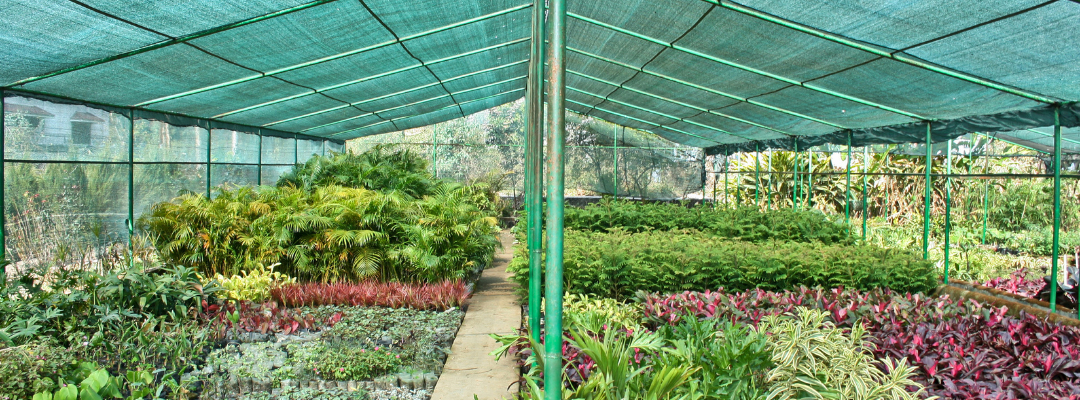
    Many specialty crops are cultivated in nurseries including flowers, shrubs, seasonal vegetables, and fruit trees. During the spring and early summer seasons nursery products are in high demand for landscape contractors, landscape architects, and people working on their yards and gardens. Nurseries also supply wholesale and retail distribution firms, such as garden centers, home stores and distribution centers. 

    The last couple of years nurseries face added stress to keep up with increased demand while securing key production resources. An increase in nursery products and services can be attributed to (i) a spike in demand that started during the pandemic as more people turned to home gardening, (ii) adapting to new production practices such as adopting sustainable practices, and (iii) switching to soilless systems such as container production. The nursery industry faces same increasing cost and input supply issues as other agricultural sectors. Figure 1 presents information on farm production expenses with labor and fertilizers being two inputs that we have seen increases the last year. Persistent supply chain disruptions, price fluctuations caused by the pandemic and volatile energy prices, as well as increased labor costs particularly for those operations depending on H-2A labor are well documented.

    In the nursery industry, labor costs, and fertilizers and pesticides are two costly production inputs. Jeb Fields reports that a $600 barrel of herbicide in 2021 now costs at least $1,500 so differences between 2021 and 2022 would be even more extreme. Another resource that is high in demand and low in supply is growing media and containers, with orders taking more than one year to be fulfilled. In nursery and greenhouse ~85-90% of all ornamental production nationally is containerized. The only non-container-grown ornamentals are some large trees, but even those are shifting to containers. 

    While the nursery products and services are high in demand, the challenges the industry faces are persistent, and the new ones are daunting with ripple effects experienced in the green industry.

    Figure 1: Selected US farm production expenses, 2020-2021F USDA, ERS 

    Maria Bampasidou is an assistant professor in the LSU AgCenter Agricultural Economics and Agribusiness Department, and Jeb Fields is an assistant research coordinator and extension specialist at the LSU AgCenter Hammond Research Station.

    Bampasidou, Maria and Jeb Fields. “Increased Demand and Persistent Resource Challenges for the Nursery Industry.” Southern Ag Today 2(22.5). May 27, 2022. Permalink

  • USDA Launches New Disaster Program for 2020 and 2021 Crop Years

    USDA Launches New Disaster Program for 2020 and 2021 Crop Years

    So far, 2022 has been a stressful weather year with large portions of the country suffering from first severe cold and then severe drought. Spring storms and tornados have destroyed farm equipment, buildings, and fence lines. Weather risk is something all producers think about and should manage in some way. This could mean diversification of crops, adoption of production practices to mitigate the impacts of extreme weather, and participation in crop insurance. 

    Weather risk management is more critical than ever. The number of extreme weather events has increased since the turn of the century. Between 1980 and 2019, states in the southern climate region (AR, KS, LA, MS, OK and TX) were affected by 182 weather-related disasters with multi-state impacts totaling $660B (NOAA). The average number of events per year increased to 6.6 disasters per year from 2000 to 2019 compared to 2.6 disasters per year from 1980 to 1999. These types of extreme weather events affect households and agricultural producers years into the future. 

    Ad hoc disaster assistance has been reported by USDA-Economic Research Service since 1998. From 2000 to 2019, ad hoc disaster programs resulted in $46B in payments to agricultural producers and averaged $2B per year. Ad hoc payments were about 15% of the total direct payments to producers on average but varied widely by year. Nationally, these programs have addressed damages due to hurricanes, drought, extreme heat and cold, flooding, blizzards, and severe weather. Programs include

    • Crop Insurance
    • Noninsured Crop Disaster Assistance Program
    • Tree Assistance Program
    • Livestock Indemnity Program
    • Emergency Assistance for Livestock, Honeybees and Farm-Raised Fish
    • Livestock Forage Program
    • Emergency Conservation Program

    In September 2021, as part of the continuing resolution to fund the Federal government, Congress provided an additional $10 billion in disaster assistance for crop and livestock producers.  In response, USDA launched a new Emergency Livestock Relief Program and Emergency Relief Program for producers affected by qualifying weather disasters in 2020 (ERP) and 2021 (ELRP and ERP). Like the recent Wildfire and Hurricane Indemnity Program-Plus (WHIP+), ERP is tied to risk management decisions. Row crop producers eligible for a Phase I ERP must have participated in crop insurance and received an indemnity in a qualifying event on their crop. Payment factors are tied to the level of coverage producers participated in, like WHIP+, as shown in the table. It is also tied to future risk management. To receive the Phase I ERP payment producers will also agree to purchase crop insurance for the next two crop years. Producers who participated in NAP will be addressed in additional phases of the ERP but no details are available at this time. As we draw closer to the 2023 Farm Bill discussions, these ad hoc disaster programs and the increased tie between risk management and program payments may be a point of further discussion.  

    Coverage Level   WHIP+ FactorERP Factor
    Uninsured   70% Not included at this time
    Catastrophic 75% 75%
    NAP Basic 75% 75%
    NAP 50 75% 80%
    NAP 55  75% 85%
    NAP 60 NA 90%
    NAP 65 NA 95%
    50% – <55%  77.5% 80%
    55% – <60%  80% 82.5%
    60% – <65%  82.5% 85%
    65% – <70%  85% 87.5%
    70% – <75%  87.5% 90%
    75% – <80%  92.5% 92.5%
    > = 80%  95% 95%
    Supplemental Coverage Option 95% Not included at this time

    Source: USDA FSA www.farmers.gov

    Hagerman, Amy. “USDA Launches New Disaster Program for 2020 and 2021 Crop Years“. Southern Ag Today 2(22.4). May 26, 2022. Permalink

  • Inflation and Farm Prices

    Inflation and Farm Prices

    The April U.S. Bureau of Labor Statistics Consumer Price Index (CPI) update confirms what anyone who has gone to the gas station or grocery store in the last few months already suspected: prices are rising rapidly, particularly on food and energy.  The CPI is a composite measure of the cost of consumer related products, and a number of different CPI measures include different types or bundles of consumer products.  The CPI which includes all-items was up 8.5% from March 2021 to March 2022.  The March index for food only was up a bit more than that year-over-year, increasing by 8.9%.  The March energy index was up 32.0% over the past twelve months.  

    While energy and food prices have clearly gotten a lot of attention, price inflation is occurring broadly throughout the economy.  The core inflation index (all items less food and energy) for March was 6.5% higher than the previous year.  This is the largest year-over-year increase in the core index since August 1982. So, while inflation may be most pronounced on energy and food at present, it is clearly not confined to those sectors.  The overall economy is experiencing the worst inflation in forty years.  Figure 1 illustrates the annual rate of inflation over the past half century, expressed as the year-over-year percentage change in the monthly all-items CPI.      

    Figure 1.  Inflation, Measured by Percentage Change (year over year) in Consumer Price Index (CPI)

    Data Source: St. Louis Federal Reserve Bank, FRED Economic Data, https://fred.stlouisfed.org/

    Rising prices are a challenge not only for consumers but also for businesses who must deal with rising production costs.  Many businesses will respond to increasing costs of labor, supplies, materials, or other inputs by raising the price of their output to maintain profits.  Competitive pressure can certainly constrain a business’ ability to raise prices, but many businesses generally have some latitude to adjust their product prices in response to higher input costs.  This is not the case for farmers and ranchers, who are price takers in both input and output markets.   That is, farmers and ranchers have no ability to influence the price they pay for inputs or to set prices on their output.  Thus, their ability to pass along increased costs to their customers is basically nonexistent.  

    Figure 2 illustrates the long term trends in consumer prices and farm product prices.  It is clear that farm prices have not kept pace with broad consumer prices.  Effectively farm products are losing buying power relative to broad consumer products.  An aggregate bundle of farm products today is sold for 5.25 times the price received in 1970.  On the other hand, a bundle of consumer products costs 7.5 times what it would have cost in 1970.  Farm commodities today will only buy about 70% of the consumer products they would have bought in 1970, and that is only after the gap has narrowed considerably since the spring of 2020.  

    It is important to note that the agricultural industry as a whole is in better shape than the chart alone would suggest.  To offset the erosion of buying power, farmers have increased the quantity of products they sell by relying on improved production efficiency, yield gains, and growing the size of their farm.  In other words, the erosion of purchasing power per unit of farm output has been offset by increases in the scale of production.  Necessarily over time, an increase in farm size also implies a decrease in the total number of farms (two trends that date back hundreds of years).  The challenge for the individual farm or ranch is to manage times of volatility and uncertainty while also navigating the normal long-term trend of attrition, and thus surviving to be one of the “fewer” farmers moving forward.  We appear to be in the middle of one of those times when price volatility is a significant management challenge.          

    Figure 2.  Consumer Prices and Farm Product Prices

    Data Source: St. Louis Federal Reserve Bank, FRED Economic Data, https://fred.stlouisfed.org/

    The warning on the horizon for agricultural producers is not the immediate problem of inflation.  Instead, the concern is what comes after.  Producers can weather inflation reasonably well, as long as, farm prices are moving more-or-less in conjunction with input prices.  Such a situation is not unprecedented: take the 1970’s as an example.  While the 10 years from 1973 to 1982 represent some of the worst inflation in this country’s history, we don’t talk about a 1970’s agricultural crisis because farm prices were mostly keeping pace.  In fact, in the face of extraordinary inflation, agricultural conditions encouraged farmer investment and taking on additional debt.  The crisis didn’t appear until the 1980’s.  As inflation moderated and commodity prices flat-lined, the burden of servicing debt at high interest rates (which were both a result of and the treatment for high inflation) became unsustainable for an industry that was not only highly dependent on short and intermediate term financing but that had also leveraged up to high debt levels.  The lessons moving forward in an uncertain economy where both inflation and farm prices are rising together: 1) farm prices are not likely to keep up with broader inflation rates indefinitely, 2) higher interest rates are very likely coming soon, and 3) don’t take on new debt based on the assumption that current conditions will continue. 

    Anderson, John D. , Steven L. Klose. “Inflation and Farm Prices.” Southern Ag Today 2(22.3). May 25, 2022. Permalink