Blog

  • Value of Bred Heifers in 2023

    Value of Bred Heifers in 2023

    Most livestock marketing and management discussions over the past six to nine months have focused on the drought, high feed prices, and increased cow and heifer slaughter. These discussions generally pertain to what cattle producers need to do in the immediate future. However, these same discussion points have longer term implications that should be discussed. Given that heifer slaughter year-to-date is nearly 5 percent higher than 2021 and that beef cow slaughter is more than 13 percent higher than 2021, there will certainly be opportunities in the bred heifer market as soon as drought subsides and cattle producers move into herd expansion mode.

    The million-dollar question is when should a person take the risk to try to meet this expected future demand for breeding females? There is no way to know, but one can have an idea of what bred heifers should be worth in the future. Based on research in Tennessee, bred heifer and weanling heifer (550 lb) values are highly correlated. Historically speaking, bred heifers sold in May to calve in the fall have been worth 2.5 times the value of a 550 pound heifer while bred heifers sold in November to calve in the spring have been worth 2.8 times the value of a 550 pound heifer sold at the same time. Thus, if feeder cattle futures are any indication of what can be expected for bred heifers in 2023, bred heifer values may be worth $2,400 to $2,600 per head. Producers should be asking themselves if there is an opportunity to breed and market bred heifers in 2023. It is certainly a big risk, but there is still money to be made if bred heifer values do not reach $2,400.

    Figure 1. Bred heifer price ($/head) and feeder cattle price ($/cwt) for 500- to 600- pound heifers at the time of the May and November bred heifer sale from 2008 to 2017. (Boyer et al., 2020)

    Boyer, C.N., A.P. Griffith, J. Thompson, J. Rhinehart, K.H. Burdine, and K. Laurent. 2020. Bred Heifer Price Determinants in the Southeast. Journal of Applied Farm Economics 3(2): Article 2. doi:10.7771/2331-9151.1042.

    Griffith, Andrew. “Value of Bred Heifers in 2023“. Southern Ag Today 2(41.2). October 4, 2022. Permalink
  • Refinement of U.S. Cotton Production Forecasts

    Refinement of U.S. Cotton Production Forecasts

    The picture painted by the U.S. Department of Agriculture (USDA) of U.S. cotton production has been reframed several times this year already.  In August, USDA cut a historically large three million bales off of their previous month’s forecast.  The direction of that adjustment was not a surprise to anybody, but the size of it surely was.  Then, in September, USDA’s National Agricultural Statistics Service (NASS) reversed themselves and added a million and a quarter bales back to their estimate of U.S. cotton production[1], now at 13.83 million bales of all cotton (i.e., upland and pima combined).   

    Hopefully, and happily, we can expect the forecast to get more accurate going forward.  The reason for this is rooted in three sources of future information.  First, as we saw in USDA’s September forecasts, available USDA Farm Service Agency (FSA) certified acreage data were used to revise forecasted planted acreage.  This was the main reason for the September upward revision to U.S. cotton production this year.  New data on certified acres from FSA sometimes arises later in the fall or winter, so this remains a possible source of refinement.

    Second, NASS surveyed more than 7,000 U.S. producers, including major cotton producing states.  This survey process includes what they call “objective yield surveys” for major crops.  For cotton, this means boll counts from randomly selected field samples in September, October, November, and December.  So again, this data flow suggests a more accurate forecast of U.S. cotton production over time.

    Third, NASS also reports monthly on cumulative bales ginned, which is another independent (albeit lagged) measure of U.S. cotton production.  Altogether, we can expect fewer surprises and an increasingly clearer production picture.  This expectation is supported by historical data in Figure 1.   Figure 1 shows the percent deviations of USDA’s U.S. cotton production forecasts in August, September, November, and December, relative to the final production estimate at the end of the marketing year (i.e., the following July).  As expected, the spread of the percent deviations shrink across the fall season, presumably informed by the previously described data flow.  It is also apparent from Figure 1 that USDA tends to overestimate the crop size, at least in the September through December time period.

    The marketing implication of this refinement is a fading production risk premium in U.S. cotton prices, all other things being equal. 


    [1] https://downloads.usda.library.cornell.edu/usda-esmis/files/tm70mv177/qr46s7546/kd17f282m/crop0922.pdf

    Robinson, John. “Refinement of U.S. Cotton Production Forecasts“. Southern Ag Today 2(41.1). October 3, 2022. Permalink

  • The Importance of Veterinarians in Rural Communities

    The Importance of Veterinarians in Rural Communities

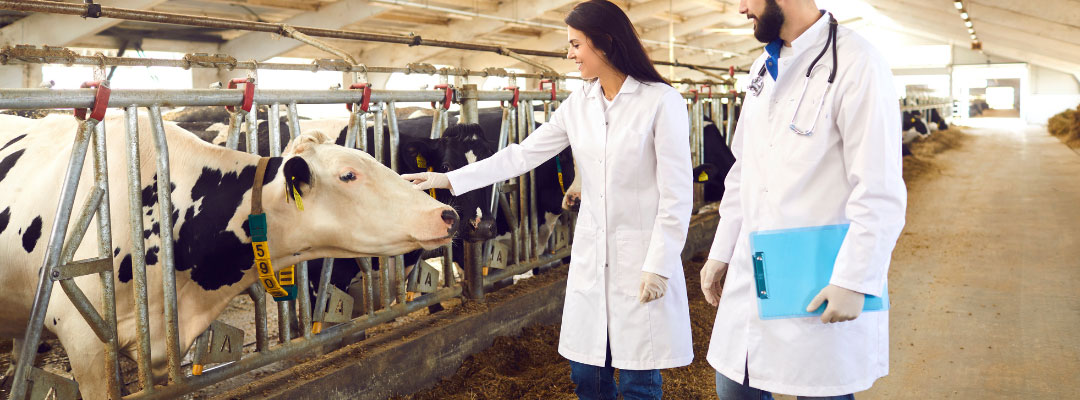
    Rural communities frequently lack access to veterinary care, for both companion animals and livestock. This unmet need poses a threat to animal health and wellness, as well as ranch and rural community viability. The demand for veterinarians in rural communities is strong; however, fewer veterinarians opt to start a career in rural areas. Concerns about reduced economic opportunities and social experiences in less populated areas contribute to veterinarians’ and their families’ hesitation to locate in rural communities. Distance, lack of accessibility, and concerns about both economic viability of rural practices and hours on-call also have an impact. 

    The use of telehealth in both animal and human health has been on the rise since the start of the COVID-19 pandemic, allowing many practices to expand and providing access to more clientele. Keeping up with the advancements of digital information is crucial for telehealth in rural areas and requires viable broadband internet services. Rural areas continue to lag urban areas in both broadband availability and adoption, but ongoing public and private efforts continue to build rural broadband capabilities.

    The need for veterinarians located in rural areas will remain. However, telemedicine may provide opportunities both for rural vets and for the ranchers and rural residents who need their services. For example, telemedicine may provide access to specialists in more populated areas. Ranchers may also be able to communicate with their vet virtually (after they have an established relationship), saving travel time.

    In recent work, stronger ranch-veterinary relationships supported higher net revenues of $128.25 per cow plus an additional $24/cow increase in profit from reduced death loss of yearlings. Across 5,000 head, higher ranch incomes created an estimated $338,700 in output, including $79,500 in additional labor income, and 2.4 jobs in the county economy.

    Gains net revenue were estimated after accounting for higher veterinary, feed, supplement, and other costs. In one rural Texas county (population under 15,000), an estimated $60,000 in additional veterinary expenditures resulted in $72,600 output and an additional job in the county. The largest dollar (output) impacts accrued to a wide range of businesses beyond veterinary services, including real estate, banking, restaurants, electric utilities, and general merchandise retail. Equally important, the presence of a veterinarian may help recruit and retain other economic activities.


    King, Kallie, and Rebekka Duddensing. “The Importance of Veterinarians in Rural Communities“. Southern Ag Today 2(40.5). September 30, 2022. Permalink

  • The Securities and Exchange Commission Proposed Climate-Related Disclosures and Unintended Consequences?

    The Securities and Exchange Commission Proposed Climate-Related Disclosures and Unintended Consequences?

    In a previous Southern Ag Today article, I discussed the concept of unintended consequences which is a topic we talk a lot about in agricultural policy.[1]  Generally speaking, unintended consequences result from a lack of knowledge and/or lack of analysis of the potential consequences of a policy change.  The previous article focused on the unintended consequences associated with government policies that created the U.S. ethanol industry.  This article looks at the Securities and Exchange Commission (SEC) proposed rule changes that would require climate-related disclosures of publicly traded firms.[2]

    On March 21, 2022, the SEC proposed rule changes that would require certain climate-related disclosures in their registration statements and periodic reports, including information about climate-related risks that are reasonably likely to have a material impact on their business, results of operations, or financial condition, and certain climate-related financial statement metrics in a note to their audited financial statements. 

    According to the SEC, the proposed rule “would require a registrant to disclose information about its direct greenhouse gas (GHG) emissions (Scope 1) and indirect emissions from purchased electricity or other forms of energy (Scope 2). In addition, a registrant would be required to disclose GHG emissions from upstream and downstream activities in its value chain (Scope 3), if material or if the registrant has set a GHG emissions target or goal that includes Scope 3 emissions.”  Required disclosures for each of the three scopes would be phased in over a period of time.

    This proposal generally requires publicly traded companies to provide investors more information about GHG emissions coming from business activities.  However, as reported by the American Farm Bureau Federation (AFBF), “While farmers and ranchers are not public companies and therefore not ‘registrants’ that are required to report directly to the SEC, their obligations through their regulated customers could be enormous….requirements for Scope 3 greenhouse gas emissions not only directly affects farmers’ and ranchers’ operations, but could create several substantial costs and liabilities, such as reporting obligations, technical challenges, significant financial and operational disruption and the risk of financially crippling legal liabilities.”[3]

    While the proposed rule’s focus is to provide investors more information about the GHG emissions of publicly traded companies, depending upon 1) if the rule is adopted and 2) how it is implemented, it could have implications for U.S. farmers and ranchers because as AFBF points out, “for agriculture, food, and forestry manufacturing alone, there are nearly 2,400 companies registered with the SEC that would be subject to reporting Scope 3 emissions from its farm suppliers.”

    Source: SEC data compiled by American Farm Bureau Federation (AFBF)

    [1] https://southernagtoday.org/2022/04/the-u-s-ethanol-industry-and-unintended-consequences/

    [2] https://www.sec.gov/rules/proposed/2022/33-11042.pdf

    [3] https://www.fb.org/market-intel/overreach-of-sec-proposed-climate-rule-could-hurt-agriculture

    Outlaw, Joe. “The Securities and Exchange Commission Proposed Climate Related Disclosures and Unintended Consequences?“. Southern Ag Today 2(40.4). September 29, 2022. Permalink

  • Peer Advisory Groups

    Peer Advisory Groups

    Agricultural producers use various resources to continue learning and implementing new practices and technologies. Peer advisory groups are an essential tool for progressive and business-minded farmers or ranchers who seek continuous growth and improvement of their ag businesses.

    Like most family businesses, agricultural managers make most business decisions alone. The lack of challenging and diverse ideas often means that producers miss business opportunities or fail to implement beneficial changes for their operations. A peer advisory group serves as a reciprocal advisory board that helps farm businesses generate knowledge and improve management strategies that can impact their operation. 

    A peer advisory group is formed by ranchers and farmers willing to share their experiences and make the most of each member’s talents to solve problems and make business decisions. They constantly exchange information, knowledge, ideas, experiences, and opinions. Each group usually consists of 8-12 producers who periodically meet on each member’s operation. This group size helps maintain the intimacy and trust necessary to obtain the best results from each group member.

    There are several peer group systems with methodologies for agricultural producers to achieve their goals. Argentina’s CREA groups are among the oldest and most experienced peer group associations (Regional Consortiums of Agricultural Experimentation). This association has more than 2,000 members and 60 years of using and perfecting the peer group methodology. CREA members have continuously improved their productivity and are at the forefront of new technologies and management practices. Thanks to the business management mindset generated within these groups, its members are among the top 20% of their country. 

    Although not as popular as in Argentina, a few agricultural companies use this methodology in the U.S. and several private consulting companies offer these services. Through the leadership of the Texas A&M AgriLife Extension Service and funding from Southern Risk Management Education, a peer advisory group has been developed with ranchers from North Texas and Oklahoma, using a similar methodology as CREA groups. This peer advisory group focuses on the production risk associated with new production systems and the business’s economic, financial, and organizational aspects.

    Abello, Francisco “Pancho”. “Peer Advisory Groups“. Southern Ag Today 2(40.3). September 28, 2022. Permalink