Blog

  • Cow Slaughter in the South

    Cow Slaughter in the South

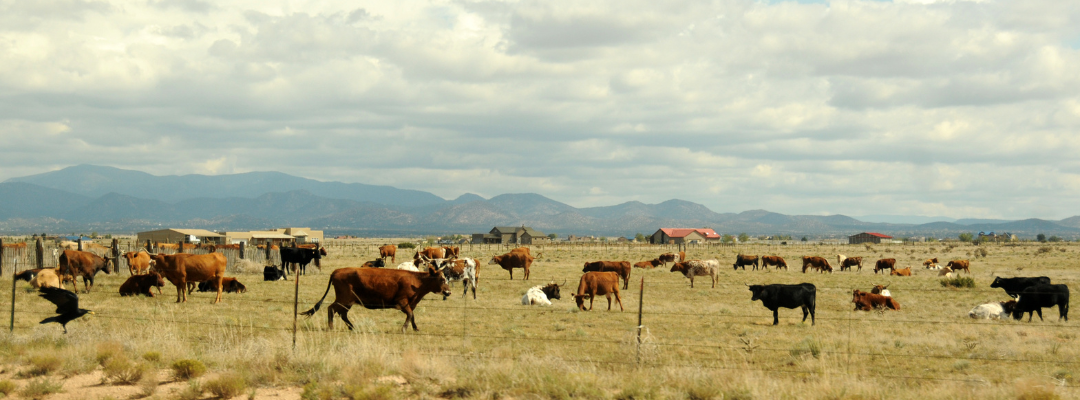
    There has been a lot written about beef cow culling this year due to drought and high costs and most of that has focused nationally.  This article looks at cow slaughter in the South.  Federally inspected beef and dairy cow slaughter is reported regionally.  The two regions that cover most of the South are regions 4 and 6.  Region 4 is comprised of 8 states including Alabama, Florida, Georgia, Kentucky, Mississippi, North and South Carolina, and Tennessee.  Region 6 includes Louisiana, Arkansas, Texas, Oklahoma, and New Mexico (a little further afield than the traditional South).  These two regions only leave out Virginia, which is in region 3.  

    Region 6, the Southern region most affected by drought, has culled 668,000 beef cows this year, up 31 percent from last year (157,000 head).  Beef cow slaughter in region 4 is up 55,000 head, or 18 percent, over 2021.  In 2022, these states contained 44 percent of the nation’s beef cows.  Dairy cow slaughter in both regions is slightly below last year.  

    A comparison of cow culling this year to that of 2011, during the last major drought in Texas and other parts of region 6, indicates that 8,000 more beef cows have been culled this year than in 2011.  About 24,000 more beef cows have been culled in region 4 this year than in 2011.  Both regions began 2022 with fewer cows than they had at the beginning of 2011. 

    Significant rainfall in parts of Texas over the last couple of weeks may curtail culling in the near future.  Watch beef cow culling over the next 6 weeks heading into, seasonally, the largest cow culling weeks of the year nationally in October and November.

    Anderson, David. “Cow Slaughter in the South“. Southern Ag Today 2(37.2). September 6, 2022. Permalink
  • High Abandonment Acres for U.S. Cotton Projected Due to Drought

    High Abandonment Acres for U.S. Cotton Projected Due to Drought

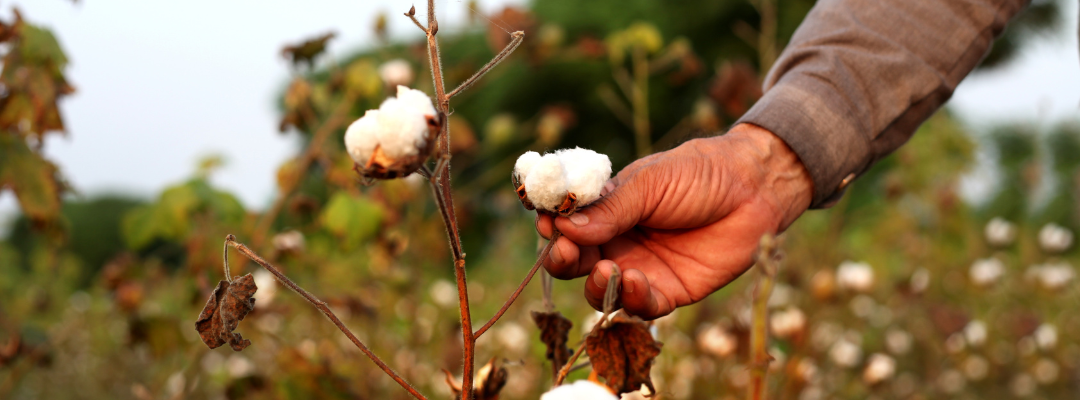
    Every year, the U.S. Department of Agriculture’s (USDA) National Agricultural Statistics Service (NASS) releases its projected harvest acres for U.S. cotton starting in August. The report provides updated information about expected U.S. cotton production. In 2022, the U.S. planted 12.3 million acres of upland cotton, the highest in 3 years, which was mainly due to historically high cotton prices during the decision-making and planting window. 

    However, in 2022, the overall U.S. abandonment rate for upland cotton is estimated at 43.4%, which is the highest on record since 1953. The abandonment rate, which measures the percentage of unharvested acres compared to total planted acres, provides an estimate of the number of failed acres versus the number of acres that will be harvested. Severe drought conditions hit the largest cotton production regions in the Southwest (Texas, Oklahoma, and Kansas) and the West (California, Arizona, and New Mexico). The abandonment rate for Texas (Figure 1A) reached 69%. Texas planted 7.1 million acres of cotton in 2022 –  by far the largest of any state – representing 57.6% of total U.S. planted acres (Figure 1B). By contrast, drought impacts were less severe in the Delta (Missouri, Arkansas, Louisiana, Mississippi, and Tennessee) and Southeast (Alabama, Georgia, Florida, South Carolina, North Carolina, and Virginia). 

    As a result of the drought conditions this year, upland cotton harvested acreage in the U.S. is projected at 7.0 million acres, which is the lowest amount of harvested acreage in over 150 years. The projected high abandonment rate in the U.S. reduced expected cotton production to 12.2 million bales, compared to the 10-year average of 16 million bales, according to USDA’s Foreign Agricultural Service. If realized, it would also be the smallest U.S. crop since 2009. U.S. cotton demand (mill use plus exports) for the 2022 crop is forecast at 14.3 million bales, exceeding production. As a result, ending stocks in the U.S. are expected to decline to 1.8 million bales, the lowest on record since 1960. The low supply of U.S. cotton provides support for domestic cotton prices. For the 2022/2023 marketing year, upland cotton prices are forecast at 97 cents per pound. If realized, it would be the highest price on record since 1909. 

    Figure 1A. Abandonment rate for cotton-producing states in the U.S. in 2022

    Figure 1B. Planted acres and harvested acres of the cotton-producing states in the U.S. in 2022 Abandonment Rate = 1 – Harvested Acre/Planted Acre

    References and Resources:

    U.S. Department of Agriculture. 2022a. Production, Supply, and Distribution Database. Washington, DC: U.S. Department of Agriculture, Foreign Agricultural Service. Available online: https://apps.fas.usda.gov/psdonline/

    U.S. Department of Agriculture. 2022b. Quick Stats. Washington, DC: U.S. Department of Agriculture, National Agricultural Statistics Service. Available online: https://quickstats.nass.usda.gov/

    Liu, Yangxuan. “High Abandonment Acres for U.S. Cotton Projected Due to Drought“. Southern Ag Today 2(37.1). September 5, 2022. Permalink

  • Heirs Property and Agriculture

    Heirs Property and Agriculture

    Heirs property has become an important topic in agriculture. The term “heirs property,” describes a form of ownership where at least some of the owners have acquired the property through inheritance. As the property passes down through the generations, more and more people are co-owners, making the property unmanageable. As time passes, some owners may not be able to be found or may not be known. 

    In most states all owners would have to agree to, for example, farm the property. If consensus among heirs is not reached, the on-farm heirs may not be able to obtain a farm number to participate in United States Department of Agriculture programs. When a disaster strikes and landowners seek federal or state government assistance, the inability to prove ownership or have all owners sign can bar any assistance.

    If the land is already classified as heirs property, the first task is to identify and locate all persons with an ownership interest, which can be very time-consuming and expensive. Once all owners are identified and located, the farm can be placed in a business entity like a limited liability company, or a co-tenancy agreement can be entered into for easier management. However, all owners need to agree, which can be problematic. 

    If all owners cannot be identified or located, title must be “cleared”- the proper owners must be determined. In most cases, this process involves a court case. The process of clearing title can be extremely expensive and take years to accomplish.

    Any owner of the property can also file a partition suit to have the land either physically divided among the heirs, or sold and the proceeds, after costs, divided among the heirs. As a practical matter, a partition suit most often results in sale of the property. 

    The latest Farm Bill contains two provisions to attempt to address these issues. First, the bill provides alternative ways for owners of heirs property to obtain a farm number. Second, the Farm Bill provides for a relending program where owners of heirs property can borrow money to clear title and develop business entities or other documents to manage the farm. 

    Careful estate planning can prevent your property from becoming heirs property. If you own land, consult an attorney to prevent and/or address heirs property issues.

    For more information see:

    https://www.calt.iastate.edu/article/problem-heirs-property

    https://wvleap.wvu.edu/additional-tools/highlight-heirs-property

    Richardson, Jesse. “Heirs Property and Agriculture“. Southern Ag Today 2(36.5). September 2, 2022. Permalink

  • Agricultural Provisions in the Reduction Act of 2022

    Agricultural Provisions in the Reduction Act of 2022

    In a recent report by the Agricultural & Food Policy Center (AFPC), we provided an overview of the agricultural provisions included in the recently-passed Inflation Reduction Act (IRA) of 2022.  The IRA was a Senate-led compromise that broke the months-long logjam over the Build Back Better (BBB) Act that had been stalled in the Senate.  As noted in Figure 1, the funding for agriculture in the IRA was less than half of what had been proposed in the BBB.

    As noted in Figure 1, roughly half of the funding for agriculture goes to conservation.  Specifically, the IRA provides an additional $8.45 billion for the Environmental Quality Incentives Program (EQIP), $3.25 billion for the Conservation Stewardship Program (CSP), $1.4 billion for the Agricultural Conservation Easement Program (ACEP), $4.95 billion for the Regional Conservation Partnership Program (RCPP), $1 billion for Conservation Technical Assistance, and $300 million for USDA to collect “field-based data” to quantify carbon sequestration and greenhouse gas emissions.  Importantly, beyond the temporary funding increases, the authorizations for all of these programs – including the Conservation Reserve Program (CRP) – were extended through fiscal year 2031.

    The IRA also provided $3.1 billion for loan relief to borrowers with “at-risk agricultural operations” and almost $3 billion in assistance and support for “underserved farmers, ranchers, and foresters,” of which $2.2 billion is for financial assistance – including the cost of any financial assistance – to producers determined to have experienced discrimination prior to January 1, 2021, in any USDA farm lending programs.  As noted in a recent Southern Ag Today article, initial versions of the IRA had left out debt relief, but the version that was signed into law ultimately addressed the issue.  

    Finally, the IRA provided over $13 billion for rural development programs – most of which is for rural electric cooperative loans – and almost $5 billion for forestry-related provisions.

    We are frequently asked about the impact that this will have on the next farm bill.  While one can argue that an additional infusion for farm bill conservation programs is helpful, it is important to note that the additional funding dries up in fiscal year 2026, which will likely coincide with the mid-point of the next farm bill.  This undoubtedly will complicate what are already guaranteed to be complicated farm bill deliberations next year.

    Figure 1. Comparing Estimated Outlays for Agriculture under the Build Back Better (BBB) Act and the Inflation Reduction Act (IRA), FY2022-31.

    Source:  https://afpc.tamu.edu/research/publications/files/719/BP-22-06-inflation-reduction-act.pdf

    Fischer, Bart L., and Joe Outlaw. “Agricultural Provisions in the Inflation Reduction Act of 2022.” Southern Ag Today 2(36.4). September 1, 2022. Permalink

  • Economic Culling Criteria

    Economic Culling Criteria

    Low feed resources during winter are the primary driver of culling, but the widespread drought that is slowly expanding into the deep South is also driving historic beef cow liquidation. As we approach prime culling season (September through December) and continue to cull to manage through drought conditions, it is important to be strategic, and to keep the economics of culling in mind rather than heading to the sale with whatever was easy to load that day. 

    Remember that profit per head is simply; 

    Profit per head = Total Revenue per head minus Total Cost per head

    Any traits or performance issues that make a cow cost more or generate less revenue should be factored into keeping or culling her. Knowing the details of a cow’s performance when culling is a prime example of the need for good, cow level records. It’s also important to remember that culling can serve as an opportunity; if done strategically, culling can reshape the genetic profile of your herd and increase its profitability over time. 

    What are the factors influencing a cow’s revenue generation? The number one factor is her ability to wean a live calf. If she has ever failed to wean a live calf, she is already behind in terms of paying for herself and statistically is more likely than the remainder of the herd to fail to wean a live calf again. These cows should be near, if not at the top of the list for culling. Beyond raising a live calf to weaning weight, matching the appropriate calving season, stage in productive life, and progeny traits like low weaning weight can all influence revenue and should be considered when culling. 

    Cull cows can also generate revenue through their own sale. Cull cow values are at historic highs. Combined with the expectation of high feed costs through the upcoming winter, some marginal cows may even be worth consideration for ‘another career,’ as my animal science colleague likes to say. 

    Finally, don’t forget to factor in individual cow’s costs. Cows that need assistance during calving, cows that have structural or confirmation issues that might impact their ability to breed, and cows with temperament problems should all warrant consideration come time to go to town. 

    Benavidez, Justin. “Economic Culling Criteria“. Southern Ag Today 2(36.3). August 31, 2022. Permalink