Blog

  • Wholesale Beef Prices

    Wholesale Beef Prices

    On livestock market Tuesdays, the authors normally highlight events in livestock markets.  Today we are looking beyond the farmgate to examine wholesale beef prices (we’ll look at pork, poultry, and dairy products in future SATs).  The boxed beef cutout is the value of the primal cuts making up a carcass.  The cutout is below last year across all USDA quality grades.  Digging a little deeper into individual cut prices paints a pretty interesting picture of beef prices this year and provides some price evidence of changing consumers.

    We can think of the middle meats of a beef carcass as the expensive, high value cuts – the steaks from the loin and the rib.  The end meats are the chuck and round and are, generally, lower valued.  With consumers facing higher costs and budget pressures we might expect them to buy fewer steaks and more ground beef.  The wholesale price data tends to support that idea.

    Wholesale ribeye prices have been below last year’s prices since the end of January.  Last week ribeyes averaged $9.40 per pound compared to $14.51 per pound the same week last year.  Ribeyes, traditionally, tend to peak late in the year as a holiday item and have been increasing over the last several weeks.  It’s likely that they will continue to trend higher as an alternative to high priced turkeys.  

    Strip steaks normally peak in value during early grilling season.  That peak was a little later this year at $8.81 per pound back in July.  They have since dropped sharply to $6.48 last week, below last year’s $7.67 per pound in the same week.  Tenderloins last week were 26 percent lower than this point a year ago.  

    In contrast, 90 and 50 percent lean boneless beef prices have remained above a year ago until just recently.  Even in the face of large cow slaughter, lean beef prices have remained relatively high. 

    Wholesale beef price data certainly suggest consumers, through retailers, have likely shifted around a bit, buying fewer steaks and more ground beef.  It’s also likely that the overall demand for beef has remained quite good.  We continue to produce large amounts of beef and retail prices have not begun to decline.  All in all, this is not bad news for calf and cattle prices this fall.

    Anderson, David. “Wholesale Beef Prices“. Southern Ag Today 2(38.2). September 13, 2022. Permalink
  • On-Farm Grain Storage in Southern States

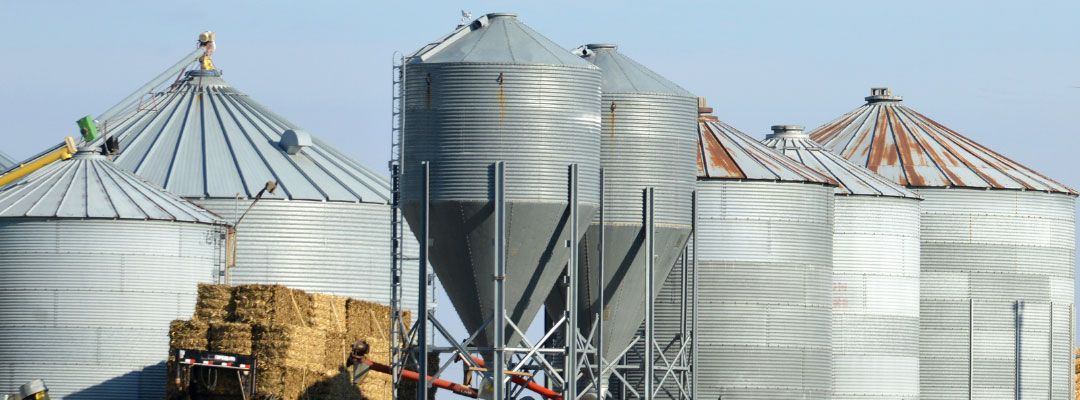
    On-Farm Grain Storage in Southern States

    On-farm grain storage can provide multiple benefits to producers. One of the major benefits is increased marketing flexibility. Grain storage allows producers to take advantage of the seasonal nature of grain prices. Typically, grain prices are at the lowest point shortly after harvest when supplies are the greatest, and then prices increase as supplies draw down throughout the rest of the marketing year. Figure 1 shows this seasonal change in grain prices in the Mid-South Delta for corn and soybeans. On average, from 2014-2021, corn prices were nearly 25% higher in the month of June compared to October, and soybean prices were nearly 15% higher in June compared to October. While the idea of seasonal grain prices holds, on average, each year is different. For example, in 2019, June corn prices were 19% lower than October, and June soybean prices were 3% lower. The next year, 2020, saw large returns to storage — corn prices increased by 79%, and soybean prices increased by 43% from October to June. Having the ability to include storage in a marketing plan provides the possibility for higher returns for most years.

    Figure 1. Monthly Delta Corn and Soybean Cash Price Indexes as a Percent of October Prices, 2014-2021 Average

    Source: Barchart, Delta Corn Price Index, Delta Soybean Price Index

    On-farm grain storage also provides greater flexibility where grain can be sold. Many southern states have large poultry, distilling, ethanol, and livestock industries that buy grain throughout the year but may not have substantial on-site storage. Having on-farm storage allows producers to take advantage of these on-demand markets. It is important for producers to know the on-demand markets in their area and be on contact lists for those purchasers. 

    Harvest can also be completed faster with the addition of on-farm storage. Given harvest risks, such as hurricanes in the Southeast, valuable time can be saved by not having to transport grain to an off-farm storage facility or wait in lines at elevators, barge points, or other end users. 

    While on-farm storage provides greater flexibility, it does come with some disadvantages. The biggest disadvantage is the size of the initial investment needed to build a storage facility. Additional considerations must be given to the cost of extra drying, shrinkage, quality deterioration, and increased handling costs.    

    Since 2000, southern states have added 28.5 million bushels of on-farm storage capacity. Figure 2 shows the on-farm storage capacity as of December 2021, and the average total corn, soybean, and wheat production from 2017-2021 for each southern state. Kentucky has the highest on-farm capacity with 240 million bushels, which is 66% of the state’s average corn, soybean, and wheat production. Georgia has the highest percentage of on-farm storage capacity as a percent of production at 87% followed by Arkansas at 81%, likely driven by historically well-established poultry industries in each state. On-farm storage capacity is not reported for Florida, Louisiana, and South Carolina. Overall, many southern states have room to expand on-farm storage opportunities given the current level of grain production. 

    Figure 2. 2021 On-Farm Storage Capacity and Average Total Corn, Soybean, and Wheat Production from 2017-2021 by State

    Source: USDA-NASS Quickstats: USDA/NASS QuickStats Ad-hoc Query Tool
    Note: On-Farm storage capacity not reported for Florida, Louisiana, and South Carolina.

    Maples, William E.. “On-Farm Grain Storage in Southern States“. Southern Ag Today 2(38.1). September 12, 2022. Permalink

  • Amendments to the Federal Crop Insurance Basic Provisions

    Amendments to the Federal Crop Insurance Basic Provisions

    In June, the Federal Crop Insurance Corporation (“FCIC”) published a final rule amending the basic policy provisions of the federal crop insurance program. See 87 Fed. Reg. 38883 (June 30, 2022). Specifically, the rule brings more flexible production record requirements for producers obtaining crop insurance. Before this rule, producers were generally required to provide production records from disinterested third parties—such as sales receipts, storage records, or settlement sheets—or obtain a pre-harvest appraisal to verify their actual crop production to support their production report. The reports are submitted to an insurance provider to obtain insurance coverage, report annual production, and file loss claims.

    However, not all producers have third-party records. For example, producers that are vertically integrated or market their insured crop directly to consumers do not use an intermediate party to store or sell their crop, eliminating access to these types of records.

    In response, the rule incorporates new recording procedures, allowing producers to support their production report with farm management records; or records documenting the actual production “at the time of harvest, storing of the crop, or use of the crop for feed.” 7 C.F.R. § 457.8, Section 1. In other words, producers may be permitted to use some of their own records when generating required reports.

    Further, the rule adopts a new section addressing situations for producers without either third-party production records or an intention to direct market their crop. These producers must notify their insurance provider or FCIC and complete a marketing certification form. Id. at Section 38(a). The goal of this section is to encourage producers without verifiable records to discuss available records with their insurance provider in advance, with the goal of decreasing pre-harvest appraisals.

    This amendment is applicable for the 2023 and subsequent crop years for crop insurance policies with a change date on or after June 30, 2022. For all other crops, the final rule revisions are applicable for the 2024 and subsequent crop years.

    Brown, Micah. “Amendments to the Federal Crop Insurance Basic Provisions“. Southern Ag Today 2(37.5). September 9, 2022. Permalink

  • USDA: U.S. Agricultural Exports are Projected to Decrease $2.5 Billion in Fiscal Year 2023

    USDA: U.S. Agricultural Exports are Projected to Decrease $2.5 Billion in Fiscal Year 2023

    Given the delay in how U.S. trade data are reported (two-month delay), the value of U.S. agricultural exports for fiscal year (FY) 2022 (October 2021 – September 2022) will not be available until November. However, the latest USDA trade outlook has projected that agricultural exports in FY 2022 will reach a record $196 billion. Which is a 14 percent increase when compared to the previous year (USDA, 2022a). With year-to-date (October 2021 – June 2022) exports at $152.5 billion (USDA, 2022b), it looks like U.S. agricultural exports for FY 2022 are on pace to reach or exceed the projected record. Although FY 2022 is projected to be a record year, the latest projections also indicate that U.S. agricultural exports in FY 2023 will be $193.5 billion, down $2.5 billion when compared to FY 2022 (See Figure 1). 

    The reason for this projected decline is that the global economic outlook for 2023 is growing more uncertain. For instance, global GDP is projected to increase by 3.2 percent in 2022, a downward revision from the prior forecast of 3.6 percent, but is projected to increase by even less in 2023 (2.9 percent). The Russian invasion of Ukraine is still ongoing and continues to impose economic disruptions. The disruptions have thus far led to elevated energy prices that continue to disproportionately affect the European market. Supply chain complications have slowly abated, but spot shipping rates remain elevated compared to pre-pandemic levels. Finally, central banks around the world have begun monetary tightening cycles to combat rising inflation. While this tightening can counter inflation, it can also result in short-term barriers to economic growth and spending.

    USDA is projecting lower exports of cotton, beef, and sorghum in FY 2023. But USDA is also projecting that these decreases will be partially offset by higher exports of soybeans and horticultural products. Cotton exports are projected to decrease by $1.8 billion due to drought-lowering export volumes. Beef exports are forecast down $1.1 billion due to tight U.S. supplies. Overall livestock, poultry, and dairy exports are projected at $41.1 billion, down $1.5 billion. Sorghum exports are forecast at $2.0 billion, down $700 million, on sharply lower supplies. Total grain and feed exports are forecast down $1.3 billion to $46.5 billion and wheat exports are forecast down $300 million, mostly due to an expected fall in prices. That said, soybean exports are forecast up $2.2 billion to a record $35.2 billion based on higher prices, and horticulture exports are projected to rise by $400 million to $39.5 billion as higher exports of fresh and processed fruits and vegetables more than offset a decline in tree nut exports. Exports to major destinations are essentially unchanged. U.S. agricultural exports to China are forecast at $36.0 billion, unchanged from FY 2022, and exports to Canada and Mexico are forecast at $28.5 billion each, also unchanged from FY 2022.

    Figure 1. U.S. Agricultural Exports (Actual and Forecast): FY 2011 – FY 2023

    Note: FY is the fiscal year (October – September) 
    Source: U.S. Department of Agriculture, Foreign Agricultural Service, Global Agricultural Trade System (GATS) (2022) 

    Reference

    U.S. Department of Agriculture (USDA). 2022a. Outlook for U.S. Agricultural Trade: August 2022. Situation and Outlook Report AES-121, Washington, D.C. https://www.ers.usda.gov/webdocs/outlooks/104622/aes-121.pdf?v=8728.2

    U.S. Department of Agriculture (USDA). 2022b. Global Agricultural Trade System (GATS). Foreign Agricultural Service, Washington, D.C. https://apps.fas.usda.gov/GATS/default.aspx

    Muhammad, Andrew. “USDA U.S. Agricultural Exports are Projected to Decrease $2.5 Billion in Fiscal Year 2023“. Southern Ag Today 2(37.4). September 8, 2022. Permalink

  • Farmland Leasing for Young and Beginning Operators

    Farmland Leasing for Young and Beginning Operators

    Farmers and ranchers have been leasing land as a strategy to expand their operations for generations. Today, approximately 39% of farmland operated in the United States is leased, with most farmers operating a mixture of leased and owned land (Bigelow 2016). Leasing farmland is also an affordable way for young and beginning farmers to get started and gain economies of scale in a capital-intensive business where they may not have enough money to buy farmland early in their careers (Katchova and Ahearn, 2016).

    While advantageous from a financial standpoint, the actual process of getting in touch with landowners and developing relationships with them can be a daunting task. Many young farmers develop a relationship with a landowner through parents and grandparents, who facilitate “handing down the farm” from one generation to another within the leasing relationship. Other young and beginning farmers contact potential landowners directly and propose to build a business relationship that starts from scratch.

    The most common claim that young and beginning farmers make about entering the land leasing market is that it is all about being price competitive. In other words, you have to have the highest bid to win over a landowner. But that turns out to be only part of the picture. Information gathered from talking to landowners in focus groups about their preferences for leasing their land suggests that many are interested in helping the next generation of farmers and are just looking for the right fit. 

    As a complementary strategy to being competitive with their lease bids, farmers must consider marketing themselves as a quality tenant to landowners. One way to do that is by building a resume with your farming credentials presented in a professional way (see example). Resumes should include personal and business references, farming experience, and your farming philosophy (e.g., conservation practices you want to employ, and improvements you could contribute to the land). Presenting a resume to the landowner as part of your negotiation strategy could be the effort that makes the leasing relationship happen.

    References:

    Bigelow, D., A. Borshers, and T. Hubbs. (2016) U.S. Farmland Ownership, Tenure, and Transfer. Economic Research Service, Bulletin Number 161.

    Katchova, A. L, & Ahearn, M.C. (2016). Dynamics of Farmland Ownership and Leasing: Implications for Young and Beginning Farmers. Applied Economic Perspectives and Policy, 38(2), 334-350.


    Arnold, Chelsea J., and Mykel R. Taylor. “Farmland Leasing for Young and Beginning Operators.” Southern Ag Today 2(37.3). September 7, 2022. Permalink