Blog

  • High Voltage, Higher Stakes: When Data Demands Your Dirt

    High Voltage, Higher Stakes: When Data Demands Your Dirt

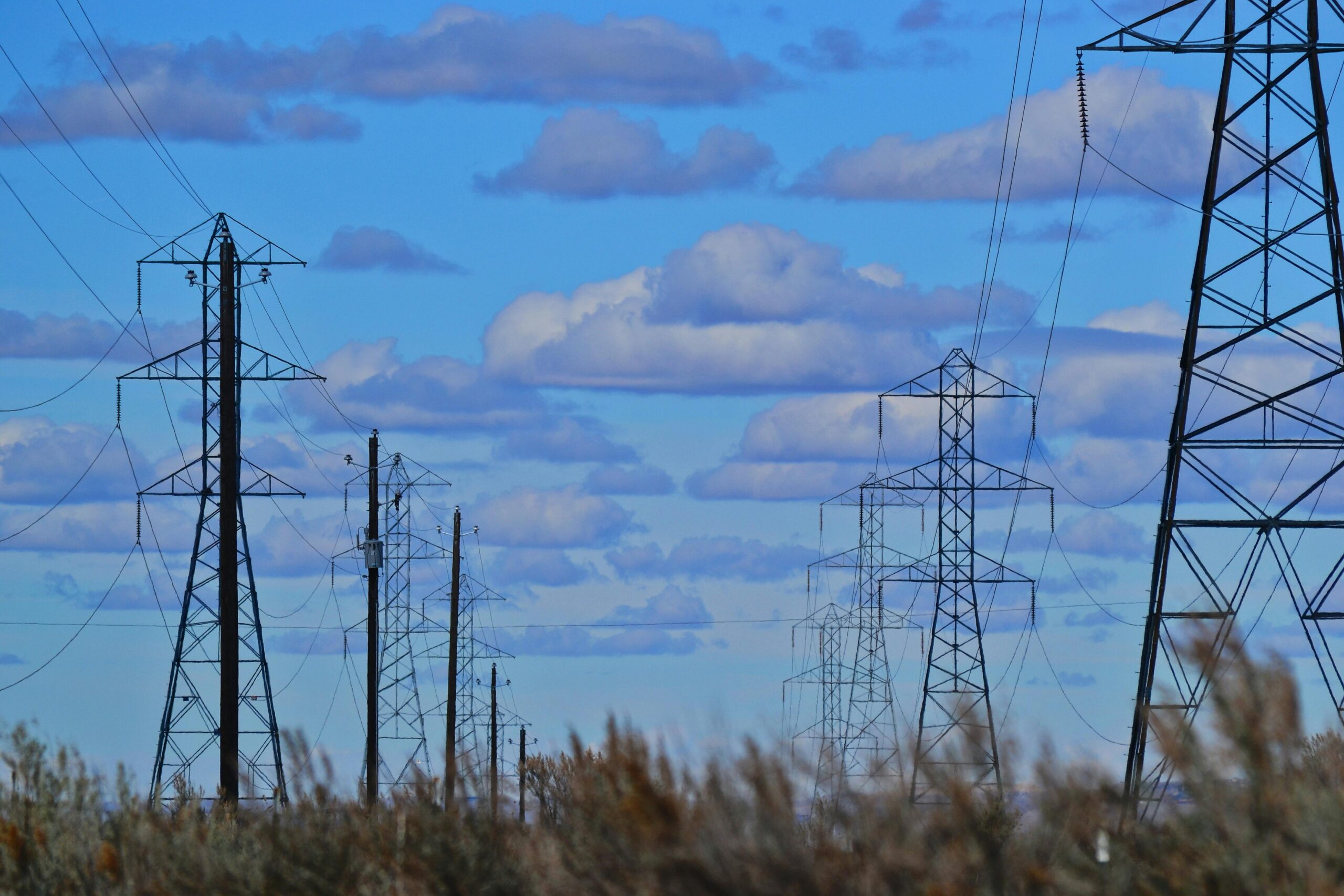
    Over the past five years, the number of data centers has doubled in the U.S.  The U.S. currently accounts for roughly 54 percent of total global data center capacity.  The number of data centers will only grow in the U.S. over time as we see more computing turning to artificial intelligence-based systems.  These data centers can bring economic benefits to the local economy but can also create additional problems in the areas where they are built.  If states make a push for data centers to develop in an area, this can increase power needs within that area, which will lead to increased infrastructure needs (such as transmission lines) to support the power needs of these data centers. New transmission lines may target your property.  With that in mind, let’s talk about what eminent domain is, why power companies have the right to utilize it, and what landowners should consider when presented with a notice.

    The power of eminent domain comes from the U.S. and state constitutions, which allow governments or companies that have been granted eminent domain power by the government to take private property for public use, with just compensation. The law requires owners to be paid fair market value.  State legislatures often provide the power of eminent domain for easements to certain entities that provide a public service.  These private entities are frequently electric, gas, and cable companies.  When the use of eminent domain results in an easement being taken for a transmission line, the analysis of just compensation will depend on the impact on the property from the taking.  This is often not an easy analysis and will require experts to determine the impacts on the dominant estate.   

    This entire process is driven by state law; it’s hard to do a basic overview for that reason.  What should landowners do when presented with notices that their land might be in a proposed transmission line path?  First, do not delay responding to the request, and look for competent legal representation with experience in eminent domain actions.  You can also talk to neighbors or other trusted advisors to get ideas on reasonable attorneys in your area.  An eminent domain attorney will understand how to assist you in intervening in any state processes to determine the route, understand the experts needed to help determine fair market value when looking at the value of the easement, and assist in drafting terms to protect the land in the easement document.

    No one wants to get the notice in the mail that their property might be taken for a transmission line easement.  As we continue to see states make pushes for the development of data centers, we may see a rise in the need for increased transmission lines.  Not sitting on the notice and talking to attorneys early can help you better protect your rights.  At the same time, it will reduce your stress and, hopefully, let you keep doing what you enjoy doing on your property.  


    Goeringer, Paul. “High Voltage, Higher Stakes: When Data Demands Your Dirt.” Southern Ag Today 5(33.5). August 15, 2025. Permalink
  • Tobacco Master Settlement Agreement Investment in Diversification of Southern Agriculture

    Tobacco Master Settlement Agreement Investment in Diversification of Southern Agriculture

    Historically, tobacco has been an important crop in several U.S. southern states. However, due to a variety of factors, including health issues surrounding the crop, international competition, and policy/regulatory changes, the U.S. tobacco industry has declined by nearly 70% over the past 25 years.  

    A previous article in Southern Ag Today, highlighted some of the major structural changes following the elimination of the federal tobacco program (better known as the tobacco buyout) in 2004. Another important part of the modern day tobacco story that has not received much attention has been the significant “investment” dollars made available for tobacco farmers and rural communities evolving from tobacco’s  Master Settlement Agreement (MSA). 

    In 1998, 46 state attorney generals signed the MSA with the major U.S. tobacco companies to settle state lawsuits to recover health care costs associated with treating smoking-related illnesses. [1] To date, the MSA represents the largest civil lawsuit settlement in U.S. history.

    Under the MSA, tobacco manufacturers agreed to make annual payments to the settling states into perpetuity, as long as cigarettes are sold in the United States. While encouraged to use these funds for tobacco cessation, tobacco control, and other health-related issues, participating states were given complete control over how to use these settlement funds. Most state governments have used these funds over the past 25 years for at least a portion of public health care expenses, but many states have opted to distribute these funds for other state priorities including funding for education, childhood development, infrastructure investment, and balancing state budgets. Given the significant impact of the MSA on tobacco economies and rural communities, three traditional tobacco-producing states, Kentucky, North Carolina, and Tennessee have elected over the years to use a significant share of their MSA dollars to fund ag diversification in their state’s farm economy.

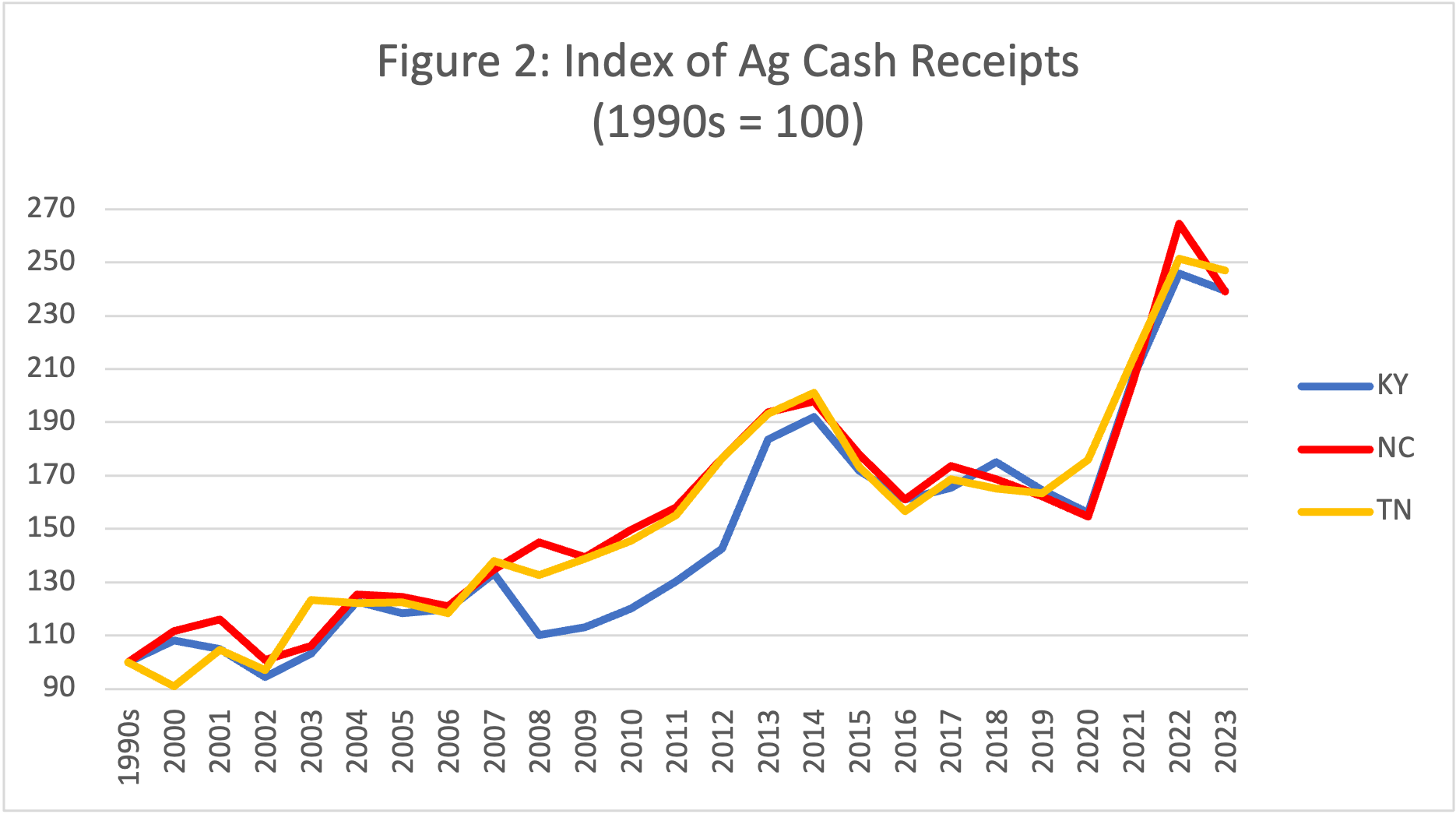
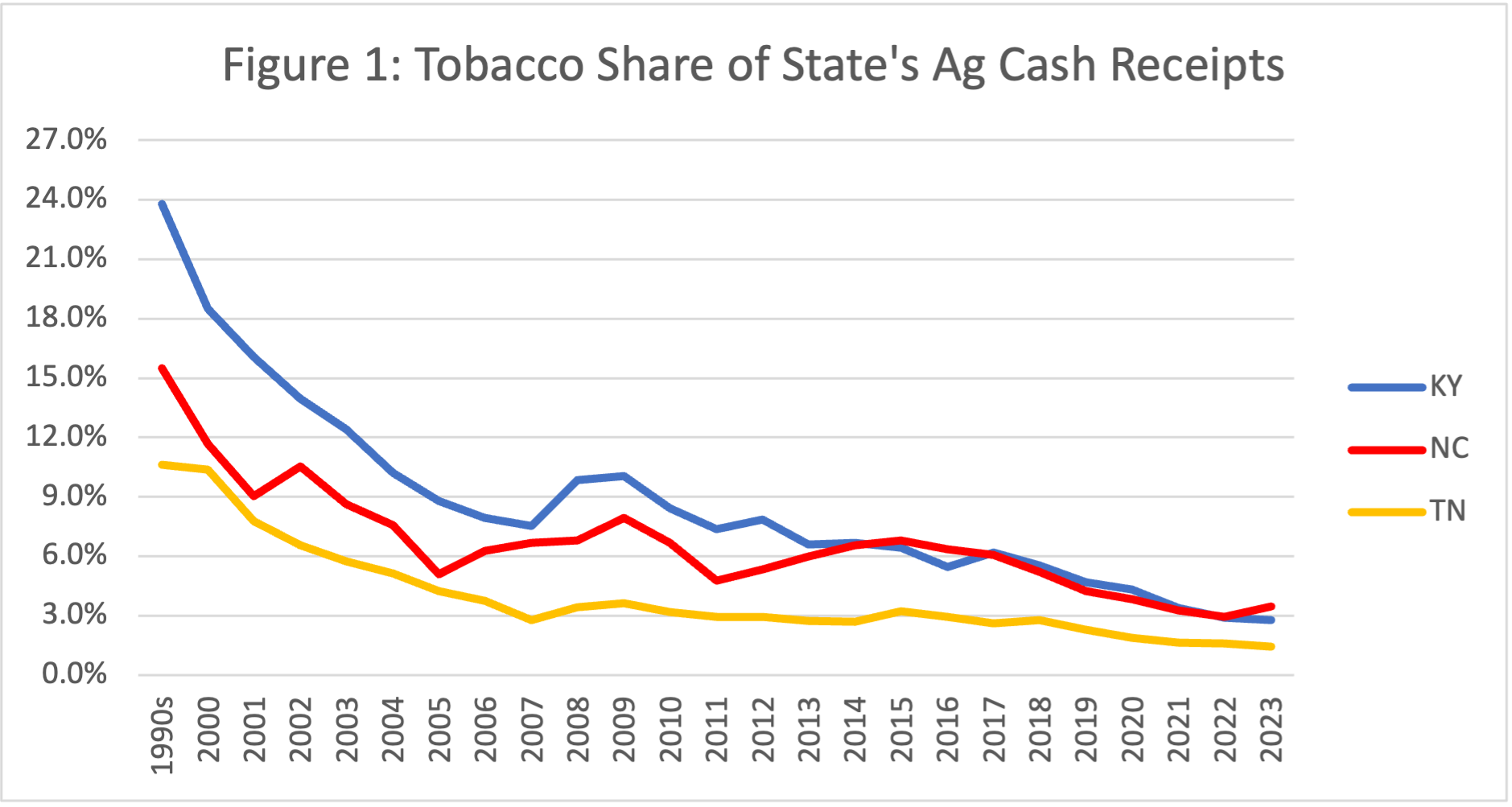
    During the 1990s, tobacco accounted for 24% of Kentucky ag cash receipts, 16% in North Carolina, and 11% in Tennessee – representing the number one cash crop in each state (Figure 1). Since the 1990s, tobacco cash receipts in Kentucky have declined by 72%, compared to a 66% loss in Tennessee and a 47% loss in North Carolina.  However, ag cash receipts have more than doubled in all three states on a nominal basis since 2000 (Figure 2) and are up around 30% when adjusted for inflation. Tobacco now accounts for only around 3% of ag cash receipts in Kentucky and North Carolina and less than 2% in Tennessee.

    Given the magnitude of the tobacco losses, the growth in ag cash receipts in these historically tobacco-dependent states has been very impressive. Imagine the outcome of any state’s ag economy losing over half of its top ag enterprise such as a mid-western state experiencing a greater than 50% reduction in their grain sales or a Wisconsin losing over half of its dairy receipts. Not only have ag cash receipts increased substantially in North Carolina, Kentucky, and Tennessee over the past 25 years, but ag sales in these three tobacco states have actually increased on a percentage basis more than the aggregate receipts in the remaining eleven states in the Southern region since 2000. Arguably, access to these diversification funds evolving from the MSA (along with tobacco buyout dollars) have contributed greatly to this growth in the ag economies in these major U.S. tobacco states.

    North Carolina has had two entities that have accessed MSA funds over the past 25 years to support agriculture and its tobacco-dependent rural communities —  the North Carolina Tobacco Trust Fund and the Golden LEAF Foundation. The Kentucky Agricultural Development Fund (KADF) also recently celebrated 25 years of existence of providing 50% of their MSA dollars to agriculture, while the Tennessee Agriculture Enhancement Program )TAEP) have utilized a portion of these MSA funds to support ag diversification since 2005. In aggregate, these entities have invested more than one billion dollars of MSA dollars among tobacco producers and their rural communities over the past 25 years, covering more than 100,000 projects. These projects are all over the board, including  funding alternative ag enterprises, farm and rural community infrastructure, programs supporting beginning farmers, improving crop and livestock marketing/management, investing in regional and local food markets, agritourism, food processing,  ag education, workforce development, leadership and ag promotion programs along with a host of other initiatives to help offset  tobacco incomes in tobacco-dependent regions in the South. 


    [1] Florida, Minnesota, Mississippi, and Texas were not signatories to the MSA as they had their own individual settlements with U, S. tobacco companies.  


    Snell, Will. “Tobacco Master Settlement Agreement Investment in Diversification of Southern Agriculture.Southern Ag Today 5(33.4). August 14, 2025. Permalink

  • USDA Projects Largest Corn Supply in History

    USDA Projects Largest Corn Supply in History

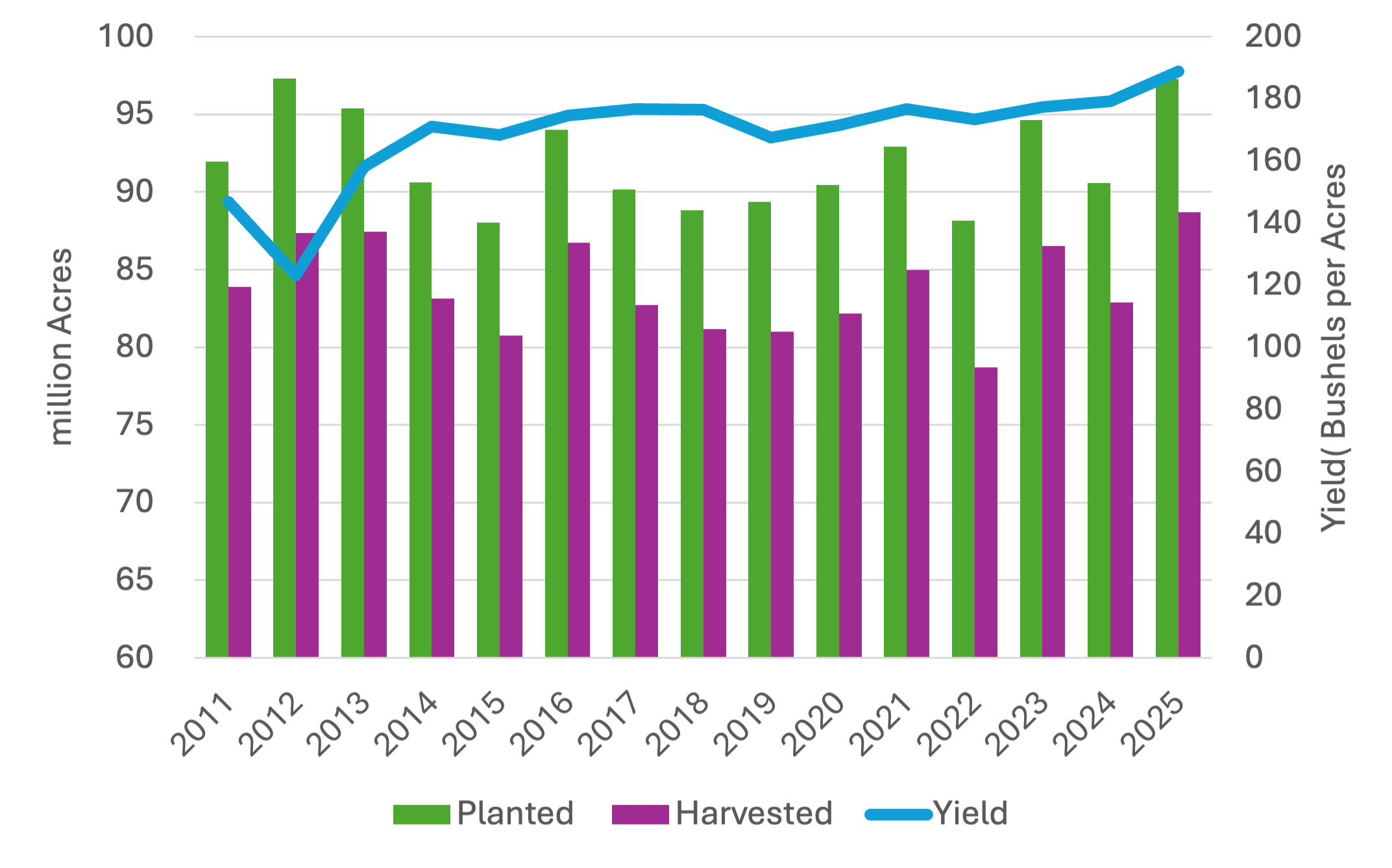
    All summer, much of the corn market conversation has focused on how strong the corn crop looks nationwide and the potential for a record-breaking harvest. The August WASDE, the first report of the year to incorporate yield estimates from the National Agricultural Statistics Service, confirmed that outlook. National corn yield was pegged at a record 188.8 bushels per acre, up 7.8 bushels from July. An additional 1.9 million harvested acres also pushed production to a forecasted 16.7 billion bushels, 1.4 billion more than the previous record set in 2023. While total U.S. corn use was raised to 16.0 billion bushels, the larger supplies still left the market facing the largest ending stocks since 2018 at 2.1 billion bushels. With that surplus, USDA trimmed the season-average price to $3.90 per bushel.                

    While corn is setting new supply records, soybean estimates were far less dramatic. USDA trimmed harvested area from 82.5 million acres to 80.1 million, but a higher yield estimate of 53.6 bushels per acre offset much of that reduction. As a result, 2025 production is forecast at 4.29 billion bushels. Lower supplies and sluggish export sales led USDA to cut export projections by 40 million bushels. Even so, the soybean balance sheet did tighten slightly, with ending stocks lowered by 20 million bushels to 290 million.

    Cotton’s supply outlook shifted sharply this month, with USDA cutting production estimates by 10 percent. Planted acres are now pegged at 9.28 million, down 9 percent from July. Persistent dryness in the Southwest pushed the abandonment rate higher, leaving harvested acres at 7.36 million. With more abandoned low-yield acres removed from the mix, the yield estimate rose to 862 pounds per acre. However, the acreage losses outweighed the yield gains and pulled production down to 13.21 million bales, 1.4 million fewer than last month. Exports were trimmed by 0.5 million bales, and ending stocks are now projected at 3.60 million bales, a reduction of 1 million from July.

    Overall, the latest WASDE report paints a mixed picture across key row crops. Corn is poised for a record harvest with ample supplies putting downward pressure on prices, while soybeans show modest tightening of the supply and demand situation. Cotton faces reduced acreage and production. As harvest progresses, market participants will be closely watching export demand and weather developments during harvest, which will play critical roles in shaping prices and supply dynamics through the rest of the year.

    Figure 1. U.S. Corn Yield, Planted Acres, and Harvested Acres, 2011–2025 (USDA – NASS)       


    Maples, Will. “USDA Projects Largest Corn Supply in History.Southern Ag Today 5(33.3). August 13, 2025. Permalink

  • Ground Beef Now or Calves in 2026?

    Ground Beef Now or Calves in 2026?

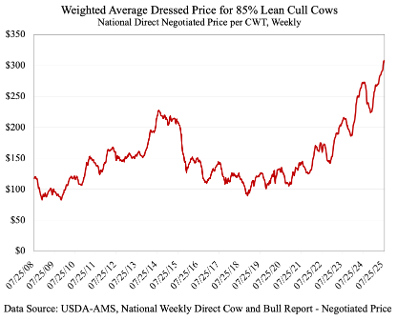
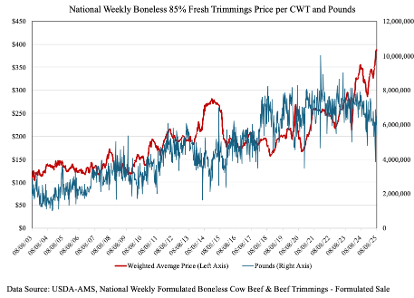
    Tight supplies and strong demand are driving all types of cattle to record price levels, including cull cows. The national direct dressed price for 85 percent lean (boner cows) cull cows topped $300 per CWT last week for the first time in history. At local auctions across the southeast, cull cow prices are topping $160, $170, $180, and occasionally even $190 per cwt, depending on type. Ground beef demand has been strong and is the product most closely associated with lean trim from cull cows. Average U.S. retail ground beef prices topped $6 per pound in June for the first time ever, according to data from the Bureau of Labor Statistics. 

    The chart below displays the price of 85 percent fresh trimmings and the pounds sold over time. This series is not comprehensive of all trims since it is just looking at formula sales for 85 percent trim and not any other percentages or sales type. However, the chart is interesting in that it highlights the inverse relationship between price and quantity. The declining availability of 85 percent trim over the past year has corresponded with sharp increases in price. This is driving the sharply higher dressed cow prices and local auction prices for cull cows. 

    Imports are a key piece of this puzzle. Beef imports are up sharply this year amid the high U.S. domestic prices. The majority of imports are lean trim that will be mixed with the fattier trim produced by domestic fed steers and heifers to make ground beef. Recent changes in tariffs will have impacts on lean trim. Brazil was the top import source for the first half of 2025, but the tariff on beef from Brazil jumped to 76 percent last week, which is sure to lead to significant reductions for as long as the tariff is in place. Meanwhile, the percentage of those imports that were lean trim will need to be filled by other import sources or domestic lean trim (i.e., cows and bulls). This is a good example of how tariffs and trade flows can impact domestic prices and supplies.

    This all leads to an important discussion about cow herd expansion. Producers making culling decisions ahead of winter will be tasked with navigating the value of the cow as a cull cow vs their expected value in producing a calf next year. As the value of domestic lean trim increases, cull cow prices also increase. There will be some producers who would not have culled cows at $150 per CWT, but will cull cows if they are able to get $200 per CWT, if their expected value of calves in 2026 is unchanged. These decisions are all interconnected. In the absence of much heifer retention, it is possible that surging cull cow values could slow expansion efforts further. 


    Maples, Will. “Ground Beef Now or Calves in 2026?Southern Ag Today 5(33.2). August 12, 2025. Permalink

  • USDA’s Livestock Risk Protection Program Use Keeps Increasing

    USDA’s Livestock Risk Protection Program Use Keeps Increasing

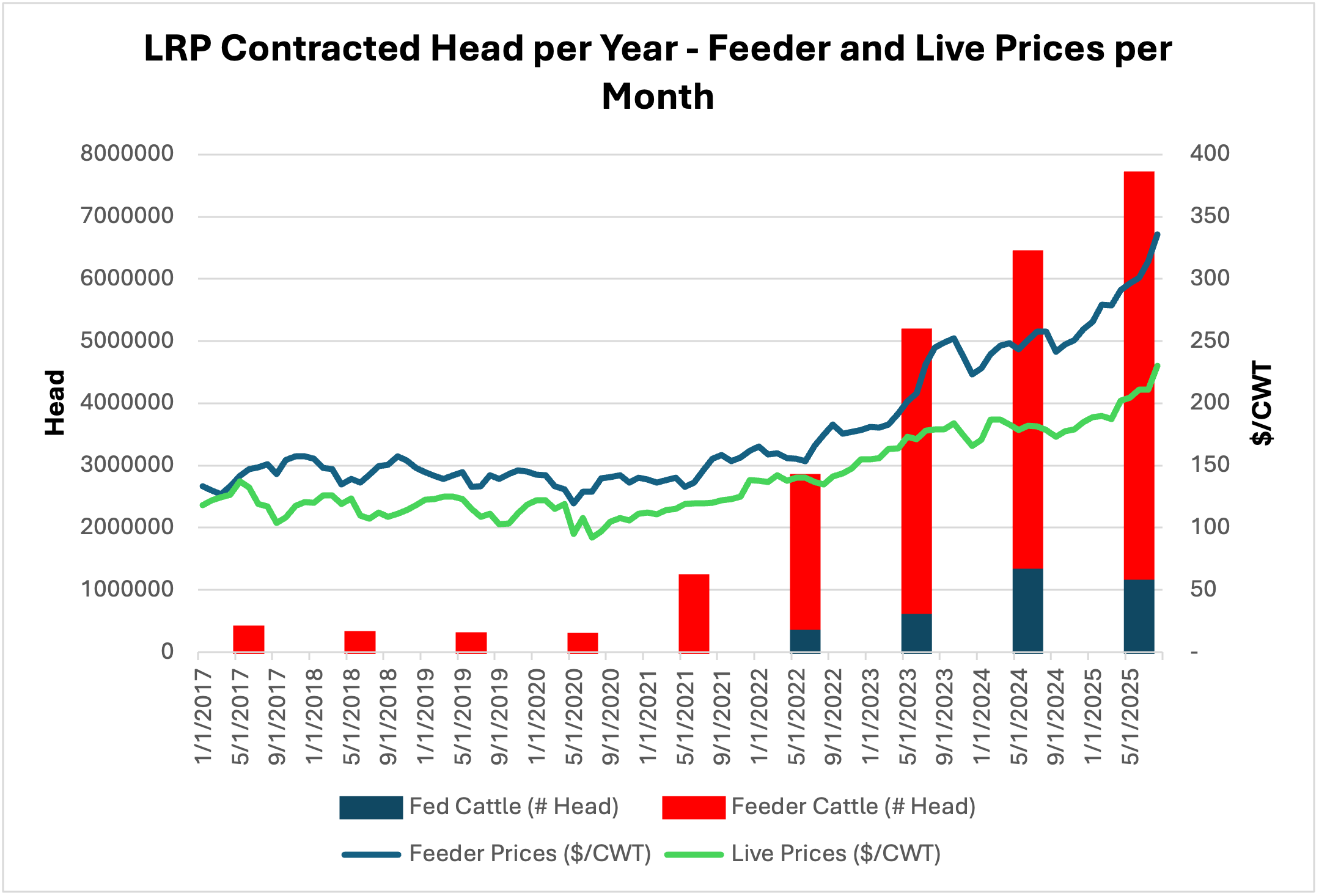
    Producers across the United States, particularly in the Southern states, are increasingly adopting the Livestock Risk Protection Program (LRP) despite a strong market and high premiums. Originally designed to protect ranchers against declining cattle prices, the LRP has experienced significant growth. The number of head covered under the program has increased from just 71,000 in 2017 to 7.5 million by July 2025. In 2024, ranchers insured prices for 6.2 million head, a notable increase from 4.97 million in 2023. This increase corresponds with changes made to the LRP program by the USDA and the substantial improvement in market prices for feeder and live cattle (see Figure 1).

    The increase in cattle prices, coupled with the narrowing margins for stockers and feedlot operations, highlights the need to implement effective price risk management strategies. The LRP helps minimize financial losses, secure profit margins, and reduce the risk of business failure, especially considering higher investment levels. The higher adoption of the LRP indicates a growing number of ranchers are integrating price risk management plans to protect their operations. By establishing a floor price for their cattle, these ranchers significantly lower the risk of business failure.

    Figure 1: LRP Usage and Prices

    In the summers of 2019 and 2021, the USDA implemented several modifications to the Livestock Risk Protection (LRP) program that contributed to this growth. These changes not only reduced the premiums ranchers had to pay but also allowed them to defer premium payments until the end of the endorsement period, making the program more accessible across all states and counties. 

    While LRP can be used to hedge many beef cattle categories, not every LRP animal category has increased at the same rate. Steer Weight 2 is the most commonly used category for price hedging. This category had an average weight of 854 pounds per head insured. So far in 2025, this category accounts for 42% of all transactions, which is slightly below the historical average of 46%. The second and third largest categories are Fed Cattle Steers & Heifers, which have a historical average weight of 1,480 pounds per insured head, and Heifers Weight 2, which have a historical average weight of 826 pounds. These two categories account for 20% and 17% of the historical transactions, respectively.

    Remarkably, the Unborn category has experienced significant growth this year. Unborn cattle represent 11% of the total number of head insured, well above the historical average of 6%. Historically, the Steers and heifers Category 1, including the Unborn category, accounts for 17% of all head insured. This past year, that proportion increased to 22%, thanks to the growth in unborn cattle.

    Figure 2: Beef LRP Usage per Animal Category

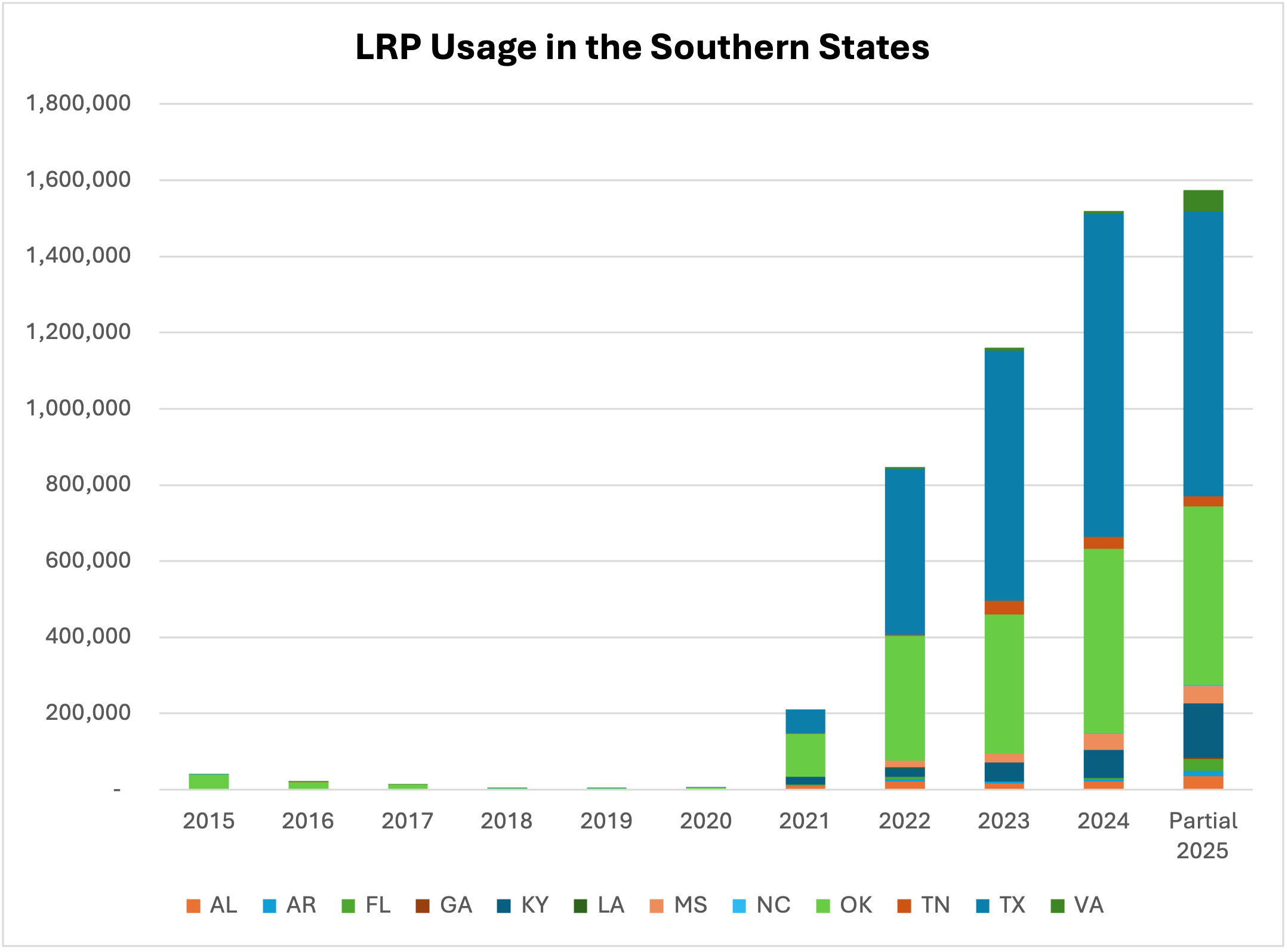
    Ranchers in the Southern region have also increasingly adopted the Livestock Risk Protection (LRP) program as an essential tool for managing price risks over the past five years (see Figure 3). As of July 2025, ranchers insured approximately 1.3 million head of cattle annually through the LRP program, with Texas and Oklahoma accounting for 47% and 30% of the total, respectively. However, in the past year, participation from Texas and Oklahoma has decreased compared to other Southern states. So far in 2025, these two states represent 77% of the total head insured in the Southern region, down from 88% participation in 2024.

    Figure 3: LRP Usage in the Southern States

    For more information on the LRP, consult the USDA Fact Sheet on Livestock Risk Protection for Fed Cattle. If you’re considering purchasing price insurance through this program, you can find a list of approved livestock agents and insurance companies on the USDA website.


    Abello, Pancho. “USDA’s Livestock Risk Protection Program Use Keeps Increasing.Southern Ag Today 5(33.1). August 11, 2025. Permalink