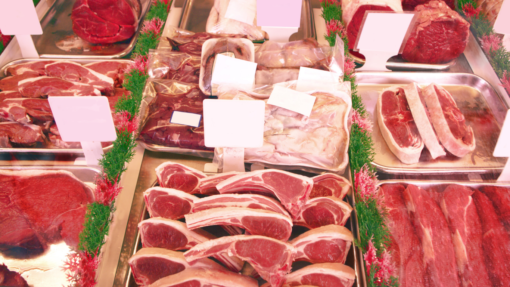
The USDA Livestock Slaughter 2025 Summary was released last week and showed U.S. red meat production declined about 2 percent in 2025 from 2024 levels. Beef production was the main driver of the overall decrease in red meat supplies at 3.6 percent below 2024. Pork production was 0.8 percent lower than in 2024, while lamb production was essentially flat. An observant reader will notice that lamb production is such a small portion of total red meat production that it does not readily show up on the attached chart of total red meat supplies.
Digging deeper into beef production and cattle slaughter highlights the impact of larger harvest weights on beef supply. Commercial cattle slaughter totaled 29.8 million head, down 6 percent from 2024. However, average live weights increased by 33 pounds. The rise in live weights provided some offset to the smaller number of cattle moving through processing plants in 2025. Average live weights have increased by 67 pounds since 2023.
The mix of steers, heifers, and cows as a proportion of total cattle slaughter shifted somewhat in 2025, although not in a way that would suggest herd expansion. Steers comprised 49.7 percent of total federally inspected cattle slaughter, up from 48.6 percent in 2024. That is not to say that more steers were slaughtered, but, as fewer cows were culled, steers made up a larger percentage of total cattle slaughter. Heifers made up 31.7 percent of cattle slaughter, down slightly from 32 percent the previous year. Cull cows represented 17 percent of total slaughter, down from 17.8 percent in 2024. Within the cull cow total, 53 percent were dairy cows, up from 49 percent in 2024.The April Cold Storage report from USDA provides a snapshot of meat supplies in freezers at the end of March. Total red meat in cold storage was down 2 percent from a year ago, with beef inventories declining 3 percent. Pork in cold storage was up 2 percent from last year, while poultry supplies were down 5 percent year over year. Within the poultry category, chicken inventories were down 3 percent, while turkey in cold storage was down 9 percent from last year.
Authors: Gracen Briges, Kelli Russell, and Mykel Taylor
In the first article of this series, we explored how farmers describe their relationships with lenders, identifying three general types of relationships: trusting and collaborative, strained and tense, and transactional and unstable. In this second article, we focus on the challenges that can disrupt or strain relationships. Drawing on 74 interviews with 98 farmers and ranchers across four states (Alabama, Kansas, Montana, and North Carolina), findings indicate that turnover, mergers, and financial pressures contribute to disruption, while concerns over trust and financial vulnerability affect how farmers engage with their lenders.
Turnover, Mergers, and Institutional Changes
“They had a lot of turnover lately, so I don’t know who I’m working with as well as I used to.” – Kansas livestock, row crop, and forage producer
Farmers frequently described turnover and institutional changes as key sources of instability in their lender relationships. Changes in loan officers at their lending institution required farmers to repeatedly rebuild relationships, reestablish credibility, and explain the details and goals of their operation. Repeated transitions to a new lender limited farmers’ ability to develop long-term trust and familiarity, which many farmers viewed as essential to a good lender relationship.
Broader institutional shifts, including mergers and acquisitions, further contributed to instability in the relationship. In many of these merger cases, institutional priorities shifted away from agriculture lending, leaving farmers feeling less understood and supported. According to the 2025 Ag Lender Survey Report from the American Bankers Association and Farmer Mac, lenders anticipate a 27% turnover rate among agricultural lending staff over the next five years, reinforcing the likelihood of ongoing disruption and repeated need for relationship-building.
Fear, Trust, and Financial Vulnerability
“They’re gonna look at numbers for access for capital. They have to– they’re regulated by that, and that’s their obligation.” – Alabama livestock producer
Farmers are uncomfortable sharing detailed personal and financial information with lenders they do not know or trust. They recognize that lenders prioritize financial performance and risk management in accordance with their institutional goals, which can raise concerns about whose specific interests were being served. This awareness makes some farmers hesitant to disclose information, especially during financial hardships. Fear of judgement, mistrust of lender’s motives, and a sense of vulnerability often shape how farmers interact with their lenders, creating a cautious guarded approach.
During periods of financial stress, these feelings are heightened. Farmers may limit the information they share, which reduces the opportunities for lenders to offer support, advice, and problem solving. Oftentimes the relationships become transactional or constrained, leaving farmers feeling at risk. Acknowledging the farmer’s mindset in these situations is essential for improving and fostering a more supportive, transparent relationship.
Conclusion
Farmer-lender relationships play an important role in agricultural operations, but they are often shaped by continuity, confidence, and risk. Turnovers, mergers, and institutional changes can disrupt relationships, requiring farmers to continuously rebuild relationships and limit the development of long-term confidence in their lenders. At the same time, farmers’ awareness of lenders’ financial and regulatory obligations can make them more cautious, especially in times of financial stress. Feelings of uncertainty and vulnerability may limit open communication, reducing the opportunity for the lender to understand and support operations.
While strong, collaborative partnerships are highly valued, they can be hard to build and maintain in an ever-changing lender environment. Strained relationships can have consequences for the farmer including missed opportunities for guidance, support, and improved financial decisions. Recognizing these dynamics emphasizes the value of fostering continuity, building confidence, managing risk, and strengthening the relationship as a whole to the benefit of both farmer and lender.
References
American Bankers Association & Federal Agricultural Mortgage Corporation (Farmer Mac). (2025). 2025 Ag Lender Survey Report. Released November 12, 2025. American Bankers Association; Farmer Mac. Summary available online.
On April 27, the United States Supreme Court will hear oral arguments in Durnell v. Monsanto, a case brought by a Missouri plaintiff who alleges that exposure to the herbicide Roundup and its active ingredient, glyphosate, caused him to develop non-Hodgkin’s lymphoma. The case is one of thousands filed over the past decade against Monsanto Company (now owned by Bayer) by plaintiffs claiming that Roundup use caused cancer and that Monsanto failed to warn consumers of the risk. Bayer argues that these state law claims are preempted by federal pesticide law and should be dismissed. After years of litigation, that question is now before the Supreme Court, and its ruling could affect not only Roundup-related cases but also future lawsuits involving other pesticides.
Roundup is among the most widely used herbicides in the United States. Since the 1990s, it has been central to Monsanto’s “Roundup Ready” system, which pairs glyphosate-resistant seeds with herbicide application to allow spraying during growing seasons. Roundup has also been widely used in home and municipal landscaping.
Since 2015, tens of thousands of lawsuits have been filed against Bayer alleging that Roundup caused cancer. These cases are typically brought under state products liability law, particularly failure to warn claims. Bayer has consistently argued that such claims are preempted by federal law. Only a small number of cases have gone to trial, and outcomes have varied widely. Some juries have ruled in Bayer’s favor, while others have awarded plaintiffs damages exceeding $2 billion. Federal appellate courts are divided: the Third Circuit has held that federal law preempts these claims, while the Ninth and Eleventh Circuits have held that it does not.
The plaintiff in Durnell filed suit in Missouri state court in 2019. A jury found that Monsanto failed to warn him of potential health risks and awarded $1.25 million in damages. The Missouri Court of Appeals affirmed the verdict, rejecting Bayer’s preemption argument. The Missouri Supreme Court declined to review the case, bringing the matter to the U.S. Supreme Court.
At the center of the dispute is the Federal Insecticide, Rodenticide, and Fungicide Act (FIFRA), the primary federal law governing pesticide regulation. Under FIFRA, pesticides must be approved by the Environmental Protection Agency (EPA) before being sold or distributed. The EPA must determine that a pesticide will not cause “unreasonable adverse effects” on the environment, defined as risks to human health or the environment balanced against the product’s benefits. This evaluation includes assessing potential carcinogenicity.
FIFRA also defines the role of states in regulating pesticides. It prohibits states from imposing labeling or packaging requirements that are “in addition to or different from” federal requirements. It further bans the sale of “misbranded” pesticides, meaning products whose labels lack necessary warnings to protect health and the environment.
Failure to warn is a state law tort commonly raised in products liability cases. It does not allege that a product is defective, but that the manufacturer failed to provide adequate warnings or instructions. To succeed, a plaintiff must show both that warnings were insufficient and that the risk was known or reasonably knowable at the time.
The Supreme Court addressed FIFRA preemption once before in Bates v. Dow Agrosciences LLC. There, the Court held that state labeling requirements are preempted if they impose obligations “in addition to or different from” FIFRA. However, state law claims are not preempted if they are equivalent to and consistent with FIFRA’s prohibition on misbranding.
Bayer relies on Bates to argue that the plaintiff’s claim is preempted because it would effectively require adding a cancer warning to Roundup’s label. Bayer contends that complying with a state judgment would force it to alter federally approved labeling, which FIFRA prohibits.
The plaintiff argues the opposite, insisting that his claim parallels FIFRA’s misbranding provisions and is therefore not preempted. Citing Bates, he maintains that state law claims consistent with federal misbranding standards remain valid.
The case includes a notable twist. Unlike many similar lawsuits, the plaintiff bases his failure to warn claim not on product labels but on Monsanto’s marketing materials from the 1990s and 2000s. He alleges that advertisements portrayed Roundup as completely safe, showing users applying it in shorts and tee shirts. Because FIFRA governs labeling rather than marketing, the plaintiff argues that his claim falls outside the scope of federal preemption.
Bayer disputes this distinction, asserting that regardless of how the claim is framed, resolving it would still require changes to product labeling, bringing it within FIFRA’s preemptive scope.
At this point, it is difficult to predict how the Supreme Court will rule. An amicus brief from the Office of the Solicitor General supports Bayer’s position, while advocacy groups such as the Make America Healthy Again movement back the plaintiff. Whatever the outcome, the Court’s decision is likely to have far-reaching consequences, shaping pesticide regulation and influencing thousands of ongoing and future cases.
Authors: Karen L. DeLong, Professor & Carlos Trejo-Pech, Associate Professor – University of Tennessee Institute of Agriculture
Southern Ag Today has reported extensively on the difficulties experienced by row crop farmers around the country given low commodity prices and persistent high input prices. America’s sugar farmers are facing those same challenges, plus a sudden increase in high-tier (Tier 2) sugar imports that is leading them to financial distress. Deliberto, Hilbun and DeLong (2025) have documented the decline in U.S. sugar farms. From 1997 through 2022, the number of U.S. sugarbeet and sugarcane farms decreased by 54% and 31%, respectively, and since 2016, sugar production in Hawaii, Texas and California has ceased to exist. Since 2000, roughly 40% of U.S. sugar mills, refineries, and sugarbeet factories have also closed (Deliberto and DeLong, 2025).
Contrary to most U.S. row crop commodities, the U.S. is a net importer of sugar (Deliberto, DeLong and Fischer, 2024). In fact, under World Trade Organization (WTO) and trade agreements, 40 sugar-exporting countries are granted access to the U.S. market through a Tariff Rate Quota (TRQ) system at a near-zero duty (Deliberto, DeLong, and Fischer, 2024). If the market needs more sugar, the TRQ can be increased to meet consumer needs. If countries want to export sugar beyond those amounts, they can do this through the “out-of-quota”, high-tier (Tier 2), sugar duty. For simplicity, we will refer to this as the Tier 2 tariff throughout the remainder of the paper.
The Tier 2 tariff is 15.36 cents per pound for raw sugar and 16.21 cents per pound for refined sugar (USDA Economic Research Service 2026a). Historically, the Tier 2 tariff was effectively prohibitive, and relatively low amounts of sugar were exported to the United States using this tariff (Figure 1). However, the world sugar market contains such large quantities of subsidized surplus sugar that foreign sugar producers are now exporting sugar to the United States through the Tier 2 tariff (USDA Economic Research Service, 2026b; USDA Foreign Agricultural Service, 2026). Figure 1 shows how Tier 2 imports have increased by over 1,400% since fiscal year (FY) 2018, going from only 64,000 short tons raw value (STRV) to 928,429 STRV by FY 2025[1]. While the reciprocal tariffs imposed by the Trump Administration have started to moderate Tier 2 imports (as shown by the decrease from FY2024 to FY 2025), the Tier 2 import volumes are still at a high level, which threatens the economic viability of domestic sugar producers. In addition, the reciprocal tariffs are now in question given the recent Supreme Court ruling against President Trump’s use of the International Emergency Economic Powers Act (IEEPA) to impose the additional tariffs. Thus, sugar farmers continue to face an influx of foreign sugar, and that is resulting in enormous financial losses to domestic sugar farmers. In fact, on April 15, 2026, the American Sugar Alliance (ASA) filed comments with the U.S. Trade Representative asking the U.S. government to use Section 301 authorities to address, “the unreasonable and discriminatory acts, policies, and practices of sugar-producing countries that have harmed U.S. sugar producers, refiners, and workers (American Sugar Alliance, 2026).”
Figure 1. U.S. Tier 2 Over Quota Sugar Imports by Fiscal Year.
Source: USDA Foreign Agricultural Service (2026)
The U.S. Tier 2 tariff rates were last updated over 25 years ago, in 2000, which likely contributes to why they are significantly less effective in preventing over-quota imports, especially since price levels have approximately doubled during that time due to inflation (U.S. Bureau of Labor Statistics, 2026). Due to the increase in Tier 2 imports, coupled with high input costs, domestic sugar prices are now significantly below sugar farmers’ cost of production (Deliberto and DeLong, 2023). As stated by the ASA (2026), “Without containing this flood [of subsidized foreign sugar imports], the U.S. industry is facing catastrophe, with [loan] forfeitures likely starting within a matter of months and closures following.”
The global sugar market is one of the most distorted global markets, driven by a variety of foreign subsidies that result in overproduction around the world (LMC International, 2021; Hudson, 2019). Congress has long regarded sugar as an essential and strategic ingredient in the U.S. food supply and has expressed commitment to maintaining a strong domestic sugar industry to ensure our nation’s food security (Cammack, 2023). While U.S. sugar policy has helped to maintain at least some domestic sugar production, DeLong, Deliberto, and Fischer (2023) explain how reports have criticized U.S. sugar policy for keeping the U.S. price of sugar above the global price of sugar.
While it is well known that consumers prefer domestically produced foods, including sugar (Lewis et al., 2016), sugar-using firms argue that they are negatively impacted by not being able to access the heavily subsidized global sugar market. Therefore, we have conducted extensive research analyzing how U.S. sugar prices affect sugar-using companies and whether changes in U.S. sugar prices affect sugar containing product (SCP) prices. In one recent study (DeLong and Trejo-Pech, 2022), we found that changes to sugar prices were not statistically significant in determining the prices of SCPs. In that study, we analyzed 379 SCPs and found that, on average, the cost of sugar represented less than five percent of the total SCP price, even though sugar consisted of 48% of the SCP’s weight. In a more recent study (Trejo-Pech, DeLong and Johansson, 2023), we found that sugar-using firms’ financial performance was superior to that of their publicly traded agribusiness peers and that U.S. sugar policy does not hinder the financial success of sugar-using firms.
Why does this matter today? As U.S. farmers call on Congress and the Trump Administration to modernize the Tier 2 tariff schedule by raising the Tier 2 tariff rates from the levels last updated in 2000, there is already speculation about whether this policy adjustment will affect the affordability of food, particularly SCPs. As we’ve shown time and again, the price of sugar has very little bearing on the prices (or affordability) of SCPs. The real question we should be asking is, “what are the implications if we allow the flood of Tier 2 imports into the country to continue? Are we willing to cause more domestic sugar farmers to go out of business?”
As previously stated, consumers overwhelmingly prefer domestically sourced sugar over foreign sugar (DeLong, Deliberto, and Fischer, 2023; Lewis et al., 2016). It’s also likely that sugar-using companies benefit from a domestically available supply of sugar (Trejo-Pech, DeLong and Johansson, 2023)[1]. If the United States fails to act promptly to address the surge of foreign sugar entering the market, both consumers and sugar-using companies will have no choice over where their sugar originates. They will soon be forced to rely on foreign countries because the domestic sugar industry is at risk of disappearing altogether.
[1] For example, one can look at the volatility of the cocoa market to see what happens when a country depends on an international market for an essential ingredient (Villacis and Dimas, 2026).
[1] This level of Tier 2 imports is substantial considering, for example, in FY24 total U.S. sugar imports were 3,840,000 STRV with 1,175,884 being Tier 2 imports. This indicates that Tier 2 imports represented approximately 31% of U.S. sugar imports in FY24 (USDA, 2026).
DeLong, K.L. and C. Trejo-Pech. 2022. “Factors Affecting Sugar-Containing-Product Prices.” Journal of Agricultural and Applied Economics, 54(2): 334-356. https://doi.org/10.1017/aae.2022.12
Hudson, D. (2019), An Examination of Foreign Subsidies and Trade Policies for Sugar, Texas Tech University, Lubbock, Texas, pp. 1-32, BP-19-01.
Lewis, K.E., C. Grebitus, and R. Nayga, Jr. 2016. “U.S. Consumer Preferences for Imported and Genetically Modified Sugar: Examining Policy Consequentiality in a Choice Experiment.” Journal of Behavioral and Experimental Economics, 65:1-8. https://doi.org/10.1016/j.socec.2016.10.001
LMC International. World Sugar Prices vs Costs of Production. Oxford: LMC International, 2021.
Trejo-Pech, C.J.O., K.L. DeLong, and R. Johansson. 2023. “How Does the Financial Performance of Sugar-Using Firms Compare to other Agribusinesses? An Accounting and Economic Profit Rates Analysis.” Agricultural Finance Review, 83(3): 453:477. https://doi.org/10.1108/AFR-08-2022-0103
Authors: Julio Bellodi Cortarelli and Grant Gardner
Brazil’s rapid expansion in corn-based ethanol production has important implications for U.S. corn markets. While Brazil has long been the world’s second-largest ethanol producer (RFA, 2025), it has historically relied on sugarcane. By 2024, roughly 20% of Brazil’s ethanol output came from corn (EPE, 2025), driven largely by expansion of the safrinha crop in the Center-West.
As more Brazilian corn is pulled into ethanol production and feed use, export availability may fluctuate. In some years, this could ease competition with U.S. corn, but it also introduces more volatility into global supply dynamics. For U.S. producers, that makes these trends worth watching. Importantly, corn is not simply replacing sugarcane one-for-one in Brazil’s ethanol sector. Rather, it is helping expand total ethanol production, especially in the Center-West, while sugarcane remains the dominant feedstock nationally.
One key distinction is how we measure this growth. The 20% figure reflects actual ethanol production. Figure 1 shows processing capacity, the maximum volume mills are designed to handle, not what they necessarily use each year.
Safrinha corn is planted after soybeans, which gives ethanol mills more flexibility throughout the year. Unlike sugarcane, which must be processed shortly after harvest, corn can be stored. That allows mills to better manage input costs and production timing and has supported the rapid growth in corn ethanol production.
That growth shows up in projected capacity. Corn processing capacity begins at roughly 23 million metric tons in 2026 and is projected to rise between 33 and 55 million metric tons by 2035, depending on investment conditions and market scenarios. Brazil’s 2025/26 corn harvest totaled 141.16 million metric tons, so projected 2026 capacity represents about 16% of total production. Domestic corn consumption grew 7.8% compared to the previous harvest, driven primarily by ethanol expansion (Conab, 2026).
Sugarcane capacity, by contrast, is expected to remain relatively stable, even though it is still much larger than corn processing capacity. As shown in Figure 1, most of the growth in ethanol capacity through 2034 comes from corn. New investment is concentrated in the Center-West, particularly in Mato Grosso, where safrinha production is concentrated.
Of the 24 operating corn ethanol plants in Brazil, 20 are located in the Center-West region, with Mato Grosso leading in both existing and planned capacity (UNEM, 2025). Figure 2 highlights this clustering. Despite record safrinha production in 2024/25, domestic corn prices have remained relatively stable. That suggests ethanol demand, particularly in northern Mato Grosso, is helping support local prices (Notícias Agrícolas, 2025). As more corn is used domestically, export availability is likely to fluctuate more than in the past, which could reshape Brazil’s role in global corn trade and reduce competition with U.S. corn in some years (Colussi, Schnitkey, and Paulson, 2025).
Corn has moved from a secondary crop to a more important ethanol feedstock in Brazil’s Center-West. Farmers are now forward contracting corn ahead of harvest, much like soybeans, reflecting confidence in sustained demand and prices. As more production is used domestically, export availability becomes less predictable, increasing the potential for volatility in global markets and U.S. corn futures.
What to watch is straightforward: ethanol investment, plant utilization, and domestic feed demand. These factors will increasingly drive Brazil’s corn balance sheet as the sector matures.
Sugarcane trends reinforce this shift but are not the main story. While more sugarcane is being directed toward sugar production in 2025/26, U.S. imports likely will depend on ongoing legal challenges to tariffs imposed by the Trump Administration. Regardless, additional supply will move into global markets.
The bottom line is that Brazil’s ethanol story is increasingly a corn story. That shift introduces new uncertainty into global trade flows and creates both risks and opportunities for U.S. market participants.
Figure 1. Ethanol Production Capacity (Sugarcane and Corn) in millions of tons. Made by the authors based on Brazilian Energy Research Company (EPE, 2025).
Figure 2. Location of Corn Ethanol Plants in Brazil. União Nacional do Etanol de Milho (2025).