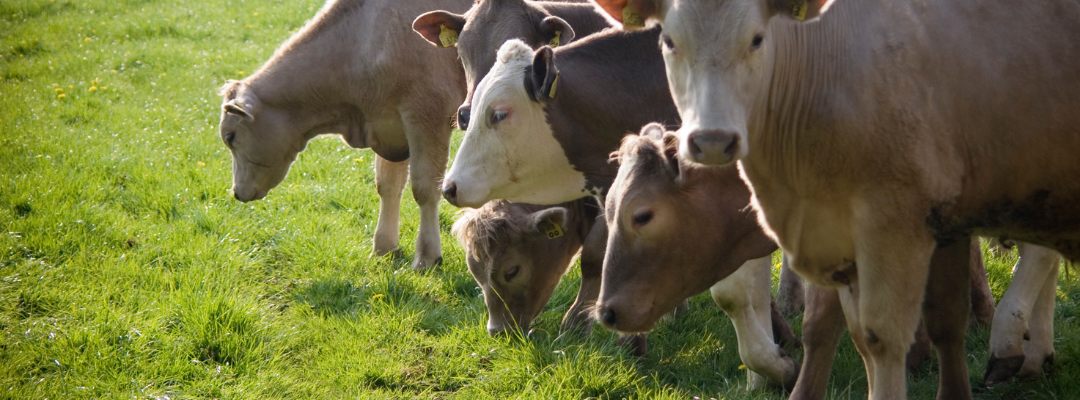
While calf and fed cattle prices have continued to set new record highs in the cash and futures market, cull cow prices have continued their slow ascent to new highs as lean beef prices keep pulling cow prices higher. Southern Plains cull cow auction prices increased to almost $180 per cwt in late April, up about $15 per cwt since January. The seasonal price increase has been smaller than normal this year. Cutter quality cows have increased about $30 per cwt, almost 25 percent, since the beginning of the year.
One overlooked boost to lean beef prices has been record large fed cattle dressed weights. Average federally inspected fed steer dressed weights have remained over 980 pounds per carcass since late 2025. Larger carcasses produce additional fat that requires more lean beef for blending to boost its value as ground beef rather than just tallow entering the fats and oils market.
After exceeding slaughter of a year ago through the first 10 weeks of 2026, dairy cow culling pulled back to year-ago levels during April. Dairy cow culling typically peaks in January and February each year, then declines into mid-year. The decline in dairy cow slaughter has pulled down total cow culling as weekly beef cow slaughter has held at steady, but low levels. For the year, total dairy cow slaughter is reported up 6 percent compared to last year while total cow slaughter (beef and dairy) is down 5 percent. Beef and dairy cow slaughter is reported weekly by region of the U.S. In recent weeks, reported regional cow slaughter data has declined due to confidentiality rules that prevent publication if there are too few buyers to prevent revealing any one operation’s actions. The lack of reporting due to confidentiality concerns has been a problem in fed cattle reporting for many years. On the positive side, the weekly national cow slaughter data includes all of the regions, including those that could not be reported regionally.
Record high calf prices are likely keeping cows on the ranch or dairy that otherwise would have been culled to get one more calf out of them. As those calves are born and move to weaning, there may be an increase in culling as those cows come to market. Cull prices tend to peak mid-year, so there is room for cow prices to continue to increase over the next couple of months. Beyond just the seasonal pattern arguing for higher prices, cow culling should continue to be lower than last year, further supporting prices. Beef cow slaughter is expected to remain well below a year ago. Better milk prices should restrain dairy cow culling even though the herd remains large.
In the first article of this series, we explored how farmers describe their relationships with lenders, identifying three general types: trusting and collaborative, strained and tense, and transactional and unstable. In the second article, we discussed the challenges that can disrupt or strain the farmer lender relationship. In this final article, we address the question of what qualities farmers value most in a lender. Many farmers emphasized that strong lender relationships can influence farm management decisions and reduce stress.
Through 74 interviews with 98 farmers and ranchers across four states (Alabama, Kansas, Montana, and North Carolina), producers consistently described important traits associated with a strong lender relationship. Farmers often described their lenders as partners, advisors, and collaborators who understand agriculture and support their operations’ success. Several key traits emerged:
Lenders as partners and advisors
Open, honest communication and trust
A strong understanding of agriculture
Long-term and personal relationships
Lenders as Partners and Advisors
“The specific loan officer that we have, it’s almost like a partnership. Like he is aware of what we’re trying to do here.” – Alabama livestock producer
Farmers consistently emphasized the importance of having a lender relationship that is more than transactional and business. Lenders were described as partners and advisors who were willing to participate in planning, provide advice, and, at times, even challenge decisions. This collaborative approach makes financial decisions feel less stressful and supports the idea that the lender is invested in the farm’s success.
Open Communication
“I want to know how he feels about it. And I want to trust him. I mean, he was hard on us when he needed to be hard on us.” – Kansas livestock, row crops, grain, and forage producer
Open and honest communication was a defining trait of a strong lender relationship. Farmers valued lenders who were transparent. For many, trust developed over years of consistent, transparent communication. When lenders are responsive and approachable, farmers feel more confident discussing concerns and questions.
Understanding Agriculture
“And he [our lender] was great. Yeah. Because he grew up in the industry. He understood it.” – Montana livestock, row crop/grains, oilseeds and pulses producer
A lender’s understanding of agriculture was another key trait farmers noted. Farming presents a unique set of financial challenges, including seasonal cash flow, production risks, and volatile markets. Lenders who understand the dynamics are better able to provide advice and suggest solutions. This knowledge of agriculture helps align financial decisions with the realities of the farming operation.
Long-term and Personal Relationships
“He [our lender] used to date my sister a long time ago. Oh, but we’ve been with Southern Bank for as long as I can remember.” – North Carolina row crops, grain, and specialty producer
Strong lender relationships are often built over time. Many farmers described working with the same lender for years or even decades, creating a sense of trust and consistency. These long-term relationships allow lenders to develop a deeper understanding of the farm and its goals, making communication more efficient and allowing for more goal-focused decisions. For many producers, these relationships extended beyond business, with some becoming personal friends outside of work. This familiarity reflects a deeper level of trust that strengthens the relationship.
Conclusion
A strong lender relationship does more than provide access to capital; it helps reduce stress and supports better financial decision-making. Farmers consistently value lenders who communicate openly, understand agriculture, and invest in long-term relationships. These qualities create partnerships that strengthen operations and support the farm’s long-term success.
Authors: Alicia Rihn, Melinda Knuth, Charlie Hall, Ariana Torres
The U.S. environmental horticulture industry, commonly referred to as the green industry, is an economically important sector that encompasses firms involved with the production and sales of horticultural products and services, including greenhouses, wholesale nurseries, turfgrass sod producers; landscape design, construction, and maintenance firms; and wholesale and retail distribution channels including garden centers, mass merchandisers, and allied trade suppliers. The Green Industry has been a consistent contributor to the U.S. economy, with national impact studies conducted since the 1980s documenting its employment, output, and GDP (gross domestic product) contributions using national surveys and IMPLAN input-output modeling (Hall et al. 2006; Hodges et al. 2011; Hodges et al. 2015; Hall et al. 2020). Between 2013 and 2018 alone, industry contributions grew by 16.2% in employment and 17.3% in output in inflation-adjusted terms (Hall et al. 2020), underscoring the sector’s resilience and economic footprint.
The present study extends this research to 2023, providing updated national estimates and a focused look at economic contributions across southern U.S. regions. In the U.S., the south includes key states involved with producing horticultural products. Eight regions were used for the analysis: Southeast, Southcentral, Appalachian, Northeast, Midwest, Great Plains, Mountain, and Pacific (Figure 1). The data presented here was collected by the Green Industry Research Consortium, which has collected data on industry-related topics for more than 30 years. The Consortium is a multi-state research project group of agricultural economists and horticulturists that conduct economic impact statements for the Green Industry in the U.S. every five years. Results from the latest data collected by the group are presented below and are based on Knuth et al. (2026). Understanding where economic activity is concentrated within the South has direct implications for resource allocation decisions, Extension programming priorities, and industry advocacy efforts at the state level.
Total U.S Green Industry Economic Impacts
In 2023, across industry sectors, the U.S. green industry supported approximately 2.9M jobs and generated $519.7B in total economic output (Table 1). Compared to 2018 estimates of 2.3M jobs and $348.1B in output (Hall et al. 2020), this represents roughly a 27% increase in employment and nearly 50% growth in output over five years, a notable trajectory for an industry that had been characterized as entering a mature, slow-growth phase in prior decades. These gains likely reflect post-pandemic rebounds in residential landscaping demand, increased consumer investment in outdoor living spaces, and growth in green infrastructure spending.
Value-added output, the industry’s direct contribution to GDP, reached $302.7B, with labor income accounting for $175.1B of that total. These figures underscore that the green industry is not only large in terms of sales volume but also generates substantial wages and benefits for millions of workers across production, services, and retail segments. The industry also contributed $69.1B in taxes across all levels of government, including $11.7B in local taxes, $15.2B in state taxes, and $42.1B in federal taxes. Federal taxes accounted for the largest proportion of the industry’s tax contribution, which is not surprising given the size of the green industry workforce.
Southern Region Green Industry Economic Impacts
Three regions will be focused on for this section, including the Southeast, Southcentral and Appalachian regions which consist of 15 states across the South. Collectively, these three regions accounted for roughly 35% of national green industry employment (1.0M jobs) in 2023, with the largest portion being in the Southeast region, followed by the Southcentral and Appalachian regions (Figure 2). The regions accounted for $174.8B in total economic output (34% of total economic output in 2023) with a similar trend where the Southeast region has the highest output ($75.9B), followed by the Southcentral and Appalachian regions. The Southeast region led all three southern regions across these economic indicators, more than the Southcentral and Appalachian regions combined. This is consistent with the concentration of nursery and floriculture production, landscaping services, and retail distribution in states like Florida, Texas, North Carolina, and Georgia, which have historically ranked among the top green industry states nationally (Hall et al. 2020).
Value-added output across the three regions totaled $103.0B, led by the Southeast region, then the Southcentral region, and the Appalachian region. The regions had $59.3B in labor income and $23.6B in total taxes. The federal taxes were $14.3B, while state taxes were $5.2B, and local taxes were $4.0B. The distribution of tax contributions mirrors the employment pattern, with the Southeast region generating the largest fiscal impact at all levels of government, followed by the Southcentral region and Appalachian region.
Summary
The U.S. green industry remains a major economic force, supporting approximately 2.9M jobs and generating $519.8B in output nationally in 2023—representing roughly 27% employment growth and nearly 50% output growth since 2018, demonstrating continued resilience despite broader economic disruptions. The industry’s $302.7B in value-added contributions and $175.1B in labor income reflect its deep integration into the broader U.S. economy, while its $69.1B in tax contributions across federal, state, and local levels underscore its fiscal significance. Southern states play a particularly prominent role, with the Southeast, Southcentral, and Appalachian regions collectively accounting for approximately one-third of national green industry employment and output. Among these, the Southeast region dominates across all economic indicators, driven by the concentration of nursery and floriculture production, landscaping services, and retail distribution in states such as Florida, Texas, North Carolina, and Georgia. These findings have direct implications for multiple stakeholders: green industry firms can use the data to inform investment decisions, business planning, and competitive positioning within their respective markets; Extension professionals can leverage regional economic profiles to prioritize programming efforts and tailor educational resources to areas of greatest industry concentration; and industry associations and advocacy groups can employ these economic impact figures to strengthen policy arguments, justify workforce development initiatives, and secure support for infrastructure investments that benefit the sector. Understanding where economic activity is concentrated also helps state and local governments recognize the green industry’s contributions to employment and tax revenues, potentially influencing decisions related to land use, water access, and labor policy.
Figure 1. U.S. Regions Used in the Economic Impact Analysis.
Note: Regions were adapted from USDA Farm Production Regions.
Table 1. Economic Contributions of the U.S. Green Industry Nationally and By Region.
While the agricultural industry in the U.S. has long relied on trade as a major demand outlet, the agricultural trade deficit ballooned to more than $100 billion in total over the last 4 years, and at the same time, the United States has been experiencing unparalleled growth in export competition. While the current administration is using retaliatory tariffs as a tool to attempt to reset the deck, we increasingly are hearing from various corners that the U.S. cannot trade its way out of the low-price scenario we are facing for row crops. While we might take a more nuanced view than that assessment, it does beg the question of what the U.S. is doing—and what more could be done—to expand demand here at home for agricultural commodities.
While much of that work falls to the private sector, the Federal government certainly plays a role, including by both directly purchasing products and by providing incentives. With respect to purchases, the U.S. government has long been a significant buyer of U.S. agricultural commodities. For example, for more than 200 years, the U.S. government has been purchasing U.S.-grown commodities to donate overseas in the form of emergency food aid. In addition, the Buy American Act (P.L. 72-428) was signed into law in 1933—a contemporary of the nation’s first farm bill—and required the U.S. government to give preference to U.S.-made products in all its purchases. As another example, the Berry Amendment is a statutory requirement originally adopted in 1941 “that restricts the Department of Defense (DoD) from using funds appropriated or otherwise available to DoD for procurement of food, clothing, fabrics, fibers, yarns, other made-up textiles, and hand or measuring tools that are not grown, reprocessed, reused, or produced in the United States.”[1]
While government purchases continue to be a significant demand source, the U.S. government has also been doing more to incentivize the private sector to purchase U.S.-grown commodities. Perhaps the most notable example is the Renewable Fuel Standard (RFS) and the impact that ethanol has had on the demand for corn and other feedstocks. That debate continues today as Congress considers whether to authorize the sale of year-round E15 and as the details are worked out on 45Z and sustainable aviation fuel (SAF). While we are all familiar with the biofuel examples, there are other examples being introduced in Congress, including the Grown in America Act of 2025 (H.R. 1707) and the Buying American Cotton Act of 2026 (H.R.7230/S.1919). Both bills are starting to pick up steam with a growing list of co-sponsors.
The Grown in America Act of 2025 was proposed by the Ag Investment for America Coalition which is made up of a broad cross-section of commodity organizations and domestic food and beverage manufacturers.[2] It was introduced in the House in the 119th Congress by Rep. David Kustoff (R-TN-8) and includes 32 bipartisan co-sponsors (including 4 original sponsors). The bill aims to expand demand for domestic agricultural commodities and encourage additional investment in domestic supply chains by establishing a tax credit for food and beverage manufacturers that source their raw agricultural inputs from U.S. farmers and ranchers. The tax credit would be equal to 25% of the value of domestically sourced agricultural commodities used in the production of a food or beverage for human consumption.
The Buying American Cotton Act of 2026 was proposed by the National Cotton Council.[3] It was introduced in the House in the 119th Congress by Rep. Greg Murphy (R‑NC-3) and includes 70 bipartisan co-sponsors (including 23 original sponsors). It was introduced in the Senate by Sen. Cindy Hyde-Smith (R‑MS) and includes 14 bipartisan co-sponsors (including 3 original sponsors), including Sen. John Boozman (R-AR), Chairman of the Senate Committee on Agriculture, Nutrition, and Forestry. The bill aims to encourage the consumption of U.S.-grown cotton, including the consumption of products made from such cotton, by establishing a tax credit for retailers. The tax credit would be equal to 18-24% of the value of the U.S.-grown cotton contained in the article of clothing (with the range depending on whether it was manufactured in a country with whom the United States has a free trade agreement in place).
These bills have 15 co-sponsors in common, including the support of Rep. G.T. Thompson (R-PA-15), Chairman of the House Committee on Agriculture. Between the America First focus of the Trump Administration and a growing bipartisan interest on Capitol Hill post-COVID in bolstering U.S. supply chains, we can envision both bills receiving favorable treatment on Capitol Hill.
Given the growth in export competition, U.S. farmers are going to need all of the domestic solutions they can get to increase prices. All of the alternatives discussed in this article will do that, and the sooner the better.
Authors: Adam Rabinowitz, Wendiam Sawadgo, Will Maples, and Sthefani Oliveira
Fertilizer is a significant input in the production of row crops for farmers that can quickly disrupt previously calculated break-even levels and marketing decisions. Since the production of fertilizer – especially nitrogen fertilizer – depends on natural gas, it is also very closely tied to oil market activities. There has been much attention in the news about the conflict in the Middle East, the blockage of the Strait of Hormuz, and oil prices. The lack of oil flowing through the Strait is affecting oil markets throughout the world and raising concerns about how farmers will be affected.
Farmer Pre-booking of Fertilizer
To better understand the challenges faced by farmers, the American Farm Bureau Federation (AFBF) conducted a survey of farmers throughout the U.S. from April 3-11. The AFBF survey asked about fertilizer and fuel purchasing and potential impacts from the recent price increases. Respondents in the Southern region reported the lowest percentage of all respondents who pre-booked fertilizer, at 19%, compared to the high of 67% in the Midwest. This means that proportionately more farmers in the South are now facing higher-than-expected input costs as planting approaches. The increase in break-even prices means farmers need to reevaluate what constitutes a “good” marketing opportunity. A price target that looked feasible during the winter may not cover updated input costs. Prior sales also need to be evaluated in this context. Bushels priced earlier in the winter, based on lower cost expectations, may now be insufficient to cover higher input costs.
Farm Input Price Trends
While the recent spike in fertilizer and diesel prices has created additional challenges, it is also important to understand the broader context of these prices over time. The U.S. Department of Agriculture’s Agricultural Marketing Service collects prices for several fertilizer and other input products in Alabama. The minimum and maximum price of each product has been reported weekly since October 2017. The area between the minimum and maximum price depicts the range in prices that farmers pay in Alabama. Figures 1 and 2 show the price ranges for urea and farm diesel.
There are two important observations to be made from these price charts. First, changes in the lowest price are not always the same as changes in the highest price. Thus, it is important for farmers to look for where they can find the best price or to consider strategies to obtain lower prices. Carefully planning the purchase (or pre-purchase) of inputs can help farmers obtain lower prices.
Second, while prices toward the end of 2025 had decreased from the peak in early 2022, they still had not returned to pre-2021 levels. This is true for both the inputs shown in Figures 1 and 2, as well as for inputs that have not seen major price increases since the start of the war, such as ammonium nitrate, DAP, and potash. Before the current price increases, we started to see the range between the lowest and highest prices shrink, a potential sign that markets were stabilizing at that time. The current increase may not maintain that trend, and seeing the bigger picture helps inform future expectations.
Takeaway Message
It is important to maintain focus on the broader issues in the farm economy. While the prices of urea and diesel have risen significantly since the end of February, simply correcting that increase will not address the longer-term issues at hand. Farmers have faced higher prices for inputs since the increases in 2021, compared to prices from late 2017 to early 2021. Given the volatility in fertilizer prices, discipline will be required in marketing decisions going forward.
Will Maples noted in a recent Southern Ag Today article that knowing cost of production to estimate breakeven costs should be the starting point for determining pricing goals as part of a pre-harvest marketing plan. When the pricing of inputs changes, it is advisable to watch those breakeven costs and maintain flexibility in marketing activities.
Farmers might also consider splitting intended sales into smaller portions and committing those bushels as price opportunities and cost estimates evolve. Thinking about sales in smaller units, such as 5,000 bushels, allows producers to remain more flexible in their marketing decisions. This approach provides the ability to adjust as conditions change.
Farmers should also have a plan for any unpriced grain that could be placed into storage. With increases in break-even costs, farmers may choose to store grain at harvest or may be forced to sell to meet cash flow or loan obligations. For Southern producers, this situation may be more challenging. The region generally has less on-farm storage capacity and, as noted earlier, fewer producers pre-booked fertilizer. Together, the factors discussed increase the need for farmers to pay careful attention to their marketing plan and maintain flexibility in their risk management strategies.
Figure 1. Urea: Quarterly Price Range in Alabama, 2017-2026
Data source: USDA-AMS. Alabama Production Cost Report (Weekly).
Figure 2. Farm Diesel: Quarterly Price Range in Alabama, 2017-2026
Data source: USDA-AMS. Alabama Production Cost Report (Weekly).
References:
Maples, William. “What Determines a “Good” Price?” Southern Ag Today 6(10.3). March 4, 2026.