As the New Year begins, tax documents are spread across kitchen tables, pulled from basement boxes, amassed in spreadsheets, and stuffed in mailboxes to CPAs across America. As the saying goes, there are two certainties in life: death and taxes. One is dreaded and the other is often neglected. As a global pandemic extends another season and reminders of our health and longevity flash across headlines, this is your friendly reminder that while you’re digging up those tax documents, revisit your estate plan. An uncomfortable truth is that if you neglect to do your estate planning, the state will do it for you. A comprehensive estate plan includes succession planning, a very different beast from estate planning. A succession plan sets forth how your enterprise (i.e. farm) will continue operating after you are no longer running the business. However, doing one without the other is like rowing a boat without an oar.
To get the most out of your estate planning effort, do these things every year:
Review your executor(s), beneficiaries, trustee(s), guardian(s), personal representative(s), and other appointed roles under your estate planning documents;
Review your assets, accounts, life insurance policies, and charitable giving wishes;
Discuss with your CPA the benefits and limitations on gifting assets during your lifetime;
Ensure that your estate plan and succession plan compliment, and do not conflict, with each other;
Ensure that your durable power of attorney and living will are consistent with your wishes.
Some of the most voluminous estate plans may fail to adequately provide for a testator’s desires if they aren’t routinely revisited and updated. Reconsider a plan that leaves your estate planning to others, such as your children or other heirs. Your assets are your responsibility. Leaving difficult decisions to your heirs can leave them vulnerable to discourse and overwhelmed, particularly when they are aggrieved. A relevant, thorough, and thoughtful estate plan may be the best gift you could ever leave behind.
Tariffs, another form of taxes, are taxes or duties that a government charges on goods coming into or going out of their country. Import tariffs are taxes charged to imported products. On January 15, 2020, the U.S. and China signed the “Phase One” trade agreement, which eased two-year trade tensions between the two countries. In the Phase One trade agreement, China agreed to purchase no less than $12.5 billion U.S. agricultural products above the corresponding 2017 baseline amount in 2020, and no less than $19.5 billion above the 2017 baseline amount in 2021.
The cotton industry was caught in the middle of the trade war. Additional 25% Chinese import tariffs were implemented on U.S. raw cotton. After signing the Phase One trade agreement, China implemented a temporary lift of the retaliatory tariff for some U.S. products, including cotton (HS code 5201).
Since then, the purchase of U.S. cotton by China has increased. As shown in Figure 1, Chinese purchases of U.S. cotton in 2020 and 2021 exceeded the number of Chinese purchases for the five-year average between 2015 and 2019. Especially in 2020, the Chinese purchase of U.S. cotton supported cotton prices, and is one of the major reasons for cotton price recovery after the pandemic lockdown implemented in most Asian countries in the earlier months of 2020. The cotton purchases by China in 2021 from the U.S. were lower than what was in 2020, primarily due to the high cotton prices.
However, China’s purchase obligation of U.S. agricultural products under the Phase One Trade agreement only lasts until the end of 2021. The Phase One trade agreement stated that the trajectory of increases in U.S. agricultural goods purchased by China will continue in 2022 through 2025. However, producers need to be aware of the uncertainty of China’s future years’ cotton purchase and adjust their risk management strategies accordingly.
Figure 1. U.S. Cotton Export to China. Data includes cotton and cotton linters. Data Source: USDA FAS.
Satellite imagery has been widely promoted as a decision-making tool in agricultural production. Many agricultural software companies, crop consultants, and farm managers have integrated satellite imagery into their data analytics for production monitoring and management. Such data and analytics show promise for supporting field zone mapping, identifying relative variations in crop yield, and monitoring water use. There are tradeoffs between satellite platforms in terms of the scale and usefulness of the data collected depending on the application at hand. There are also cases where satellite imagery can be useful for mapping the impacts of extreme events such as flooding, drought, or derechos.
In June 2021, a 100-year flood event occurred in Southeast Arkansas. When such events happen, it is imperative that impact estimates are conducted as soon as possible to identify how and where to best support producers. The public imagery typically available for agricultural applications comes primarily from the NASA/USGS Landsat or EU Copernicus Sentinel missions. While imagery from these platforms comes at sub-monthly time-steps and relatively high spatial resolutions (30 and 20 meter pixels, respectively), it often isn’t available for several weeks after the images are taken due to processing. However, commercial imagery such as that produced by Planet Labs, offers opportunities for higher spatial resolution of 3-5 meters at near daily time-steps and becomes available in hours to days. When more than 15 inches of rain dropped over Southeast Arkansas, Planet Scope imagery was used to estimate the flood extent over cropland and illustrates the potential for more rapid cropland monitoring applications.
Figure 1 shows the color-infrared (CIR) imagery, flood extent, and heavy flooding (>1 ft) by crop type based on USDA NASS’s cropland data layer (CDL). Planet Scope records four bands of multispectral data for each pixel, including red (R), green (G), blue (B), and near-infrared (NIR). Many producers are familiar with the normalized difference vegetation index (NDVI), which is derived from NIR and R bands and corresponds to crop greenness. NIR reflects strongly when vegetation is present, and absorbs heavily when water is present. This relationship is very useful, as in this case, for mapping flooded fields. Based on the flood extent identified with thresholds for NIR, the CDL, and ground reference information provided by local county extension agents, there were 254,323 soybean, 190,150 rice, 54,817 corn, and 34,864 cotton acres estimated to have heavy flooding during this event in Arkansas. This information was generated within days of the flood event for the seven hardest hit counties. After a few weeks, impact estimates were generated for the broader area including 12 counties. Economic impacts from the event were estimated at approximately $60 million for corn, $6 million for cotton, $68 million for rice, $71 million for soybeans, and $1 million for wheat at an approximate total of $206 million.
Satellite imagery applications for agriculture are most commonly thought of for in-season monitoring and post-season assessment of maximum greenness to map field management zones. However, a lesser known but useful application of satellite imagery is for flood or natural disaster mapping. When flood events, derechos, or other natural disasters occur, estimating the extent of crop damage in a short timeframe is of utmost importance to best support recovery. We often rely on conversations and phone calls with county extension agents, producers, and crop consultants to gain an initial estimate of crop impacts. Satellite imagery can provide an additional tool for making damage estimates in those critical days and weeks following an event, especially when combined with on-the-ground conversations and validation. Planet and other satellite platforms will continue to play a role in improving and supporting agricultural production as wider access becomes available. This case represents one of many opportunities for satellite imagery to increase in its adoption and applications in crop production.
Figure 1: Estimates of Flood Extent and Acreage Impacts in Southeast Arkansas, June 2021.
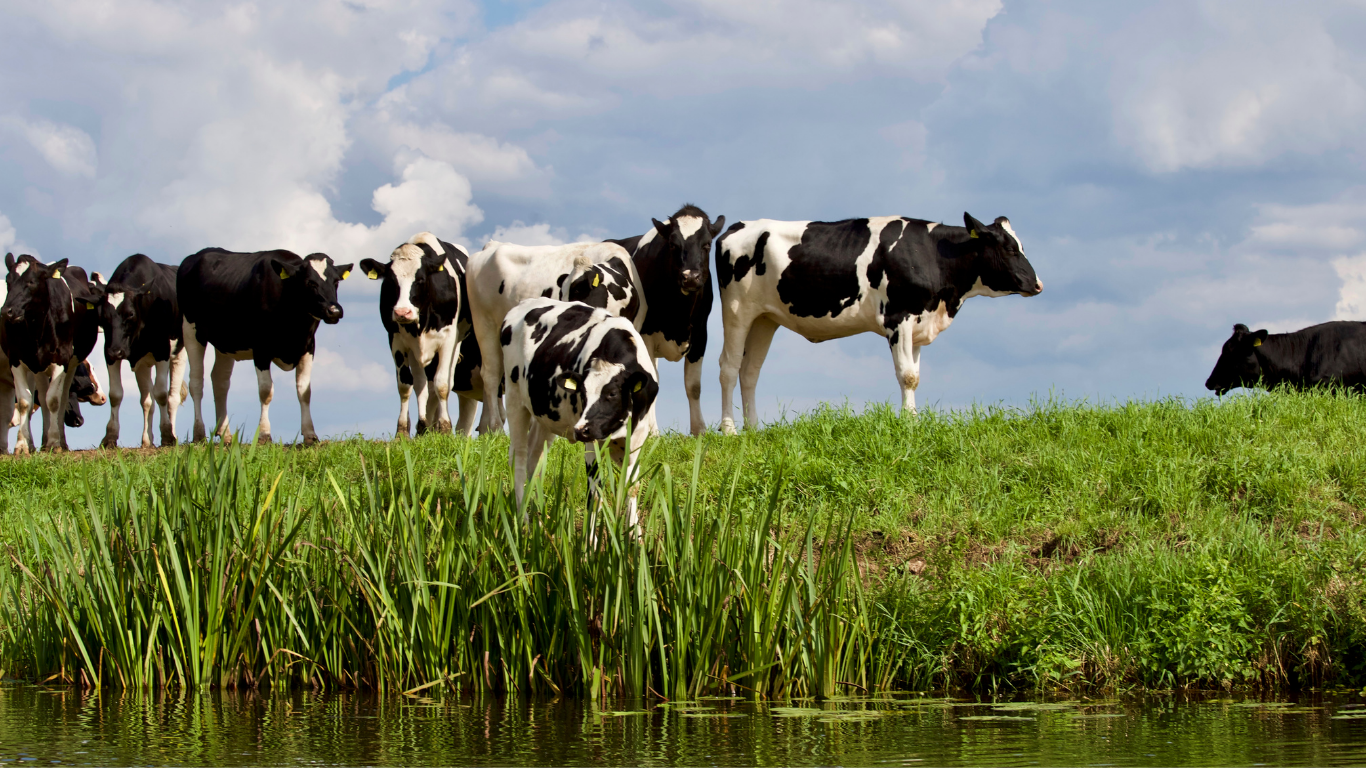
Drought conditions have troubled livestock producers in many parts of the U.S. over the past few years. According to the latest report, approximately 50 percent of cattle inventory is in an area currently in some level of drought conditions. Most of the severe drought areas are in the Great Plains and Western U.S. The Western and Great Plains regions ended 2021 with about 60 percent of pasture in poor or very poor condition. Drought has contributed to beef cow herd liquidation in severe regions.
Drought areas in the Southeast are not widespread, with many areas receiving much precipitation in recent weeks. However, some drought areas have developed in the Southeast in recent months across TX, LA, AR, and MS. Cool season forages such as winter ryegrass or winter wheat are the primary forages grown during this time of the year and will need moisture through the winter. The latest drought monitor shows approximately 65 percent of U.S. winter wheat production is in an area experiencing drought. While most of this production is in the Plains region, some is in the Southeast. Cattle producers with lower winter forage production due to lack of moisture may need to increase supplementation for cattle over winter – with higher feed and hay costs.
Historically, the harvest futures price from December 1 to March 31 can be a key predictor of planted acreage for spring crops. From 2010 to 2021, the monthly average futures price from December 1 to March 31 for soybeans (SX) divided by corn (CZ) has been 2.39, and corn (CZ) divided by cotton (CTZ) has been 5.85. A soybean-to-corn price ratio below 2.39 would tend to favor planting corn over soybeans and a corn-to-cotton price ratio above 5.85 would favor corn over cotton (Figure 1). So, with relative prices favoring corn and cotton, should we expect a reduction in soybean acres in 2022? Maybe not.
Figure 1. December 1 to March 31 monthly average futures closing price ratio for the harvest contract (December = Corn; Soybeans = November; and Cotton = December), 2010-2022*
Commodity price ratios may not dictate producer decisions on what to plant in 2022. Instead, input cost and availability may be the driving force. High input crops, like cotton and corn, are at a disadvantage compared to lower input crops like soybeans and sorghum. High input prices reduce profit margins, and potential lower input availability increases production risk.
Using fertilizer as an example, retail prices (Figures 2 & 3), are up 62-176% compared to last November. To put this in context, from 2010 to 2020 for the Mississippi Portal Region, USDA ERS estimates the cost of fertilizer to be 4.49 times more expensive for an acre of corn than for an acre of soybeans and 2.64 times more expensive for an acre of cotton compared to an acre of soybeans. As such, a doubling in fertilizer prices can add $100-150 or more per acre to producer’s production costs for corn, whereas for soybeans, fertilizer costs may only go up $20-35 per acre with a doubling of fertilizer prices. Producers will need to estimate profitability and risk for each commodity when making planting decisions.
Figure 2. Select weekly fertilizer prices November 2019 to November 2021
Figure 3. Select weekly fertilizer prices November 2019 to November 2021
Currently, the availability and cost of inputs for the 2022 crop is a major concern for producers. This is likely to continue well into 2022. Producers who purchase inputs in winter 2021/22 at high prices should strongly consider mitigating downside commodity price risk to avoid potentially catastrophic financial outcomes — inputs purchased at high prices combined with the potential sale of commodities at substantially lower prices (than are currently offered). Controlling input costs and managing output price risk this winter will be key to set the foundation for a successful 2022 crop year for midsouth producers.