Blog

  • Fewer Dairy Cows in Parts of the South

    Fewer Dairy Cows in Parts of the South

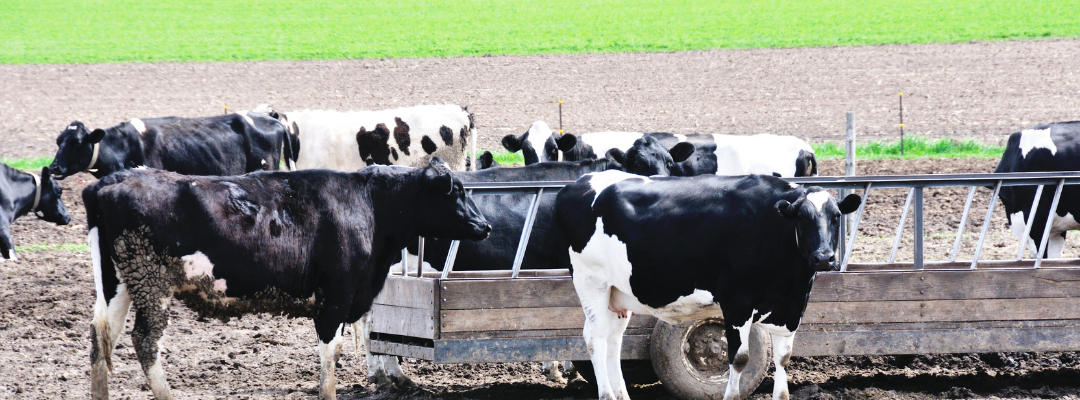
    The number of dairy cows in the U.S. declined to 9.4 million head in October, 14,000 head fewer than in October 2020.  Milk production per cow and milk production fell below last year, as well.  All three statistics are a sharp departure from the Spring when the number of cows peaked at 9.5 million head.  

    Four states in the South are included in monthly NASS reports on milk cows, production per cow, and milk production: Florida, Georgia, Virginia, and Texas.  Fewer cows were reported in Florida (-7,000 head) and Virginia (-3,000 head) in October compared to October 2020.  Georgia reported 1,000 more dairy cows.  Texas, where milk production has largely moved to the panhandle, reported 22,000 more cows.  Following cows, October milk production was lower in Florida and Virginia and higher in Georgia and Texas.

    DMC payments were triggered last month for the tenth straight month.  While all milk prices have increased in the South, prices elsewhere are below a year ago.  Feed costs continue to be high, leading to continued DMC payments.  Reduced milk production is likely to result in some higher milk prices in coming months increasing milk over feed cost margins but rising non-feed costs will keep the pressure on margins.  


    Anderson, David. “Fewer Dairy Cows in Parts of the South.” Southern Ag Today 1(50.2). December 7, 2021. Permalink

  • Current “Squeeze” Dynamics in ICE Cotton Futures

    Current “Squeeze” Dynamics in ICE Cotton Futures

    Squeeze situations in financial markets have been in the news this year.  In early 2021, the stock of the company GameStop was subject to extreme price volatility as a large number of short sellers were forced to buy back their positions while other traders were buying the stock aggressively.  Squeeze plays exist in commodity futures markets, too.  A common example of this can happen with short speculators in a rising futures market.  Assuming those speculators can’t deliver the physical commodity against their short futures position, they are left having to buy their way out of their short futures position, which contributes to upside price volatility.   

    A different version of this short squeeze situation is playing out in ICE cotton futures in the current marketing year.  The set-up for this situation involves a number of things.  First, there is a physical supply imbalance in the form of the very low level of physical “certified stocks” of cotton that are eligible for delivery against ICE cotton futures contracts, as shown in Figure 1.  Daily certified stock levels are published daily by the ICE.  

    Second, there is a historically high level of “unfixed call sales” contracts, especially on the Mar’22, May’22, and Jul’22 cotton contracts.  Unfixed call sales represent un-finalized basis contracts between merchants and mills which will eventually require buying of futures to fix the price. This situation is reflected by weekly data published by the U.S. Commodity Futures Trading Commission.  

    Third, there is also historically large, long speculative positioning in ICE futures, including both hedge funds and index funds.  With the current expectations for rising inflation, speculators who are long cotton futures may hang on to, or even expand their long futures position in ICE cotton.  This could lead to continued futures price volatility, especially during February, April, and June. 

    Chart Source:  Author compiled with data from USDA Ag Marketing Service (https://www.ams.usda.gov/market-news/cotton-tobacco ) and cotton certified stocks from the Intercontinental Exchange (https://www.theice.com/marketdata/reports/4/product/588/hub/732/isOption/false/isSpread/false ).


    Robinson, John. “Current “Squeeze” Dynamics in ICE Cotton Futures.” Southern Ag Today 1(50.1). December 6, 2021. Permalink

  • Southern States Address Solar Facility Decommission

    Southern States Address Solar Facility Decommission

    As Southern states pass their first decade of solar photovoltaic (PV) development, state policy-makers can view a horizon when many tons of solar PV equipment will require removal and disposal. Solar PV panels wear down under weather exposure, and at about twenty-four years cease useful and economic efficiency in generating electricity, and must be removed. Most solar PV facilities are developed by private companies upon leases with private landowners, which generally require the PV facility owner to remove equipment and restore land. However, such leases rarely address the specific costs of decommission, nor guarantee cash will be available to pay the costs, potentially exposing taxpayers and ratepayers to the financial burden of decommission. Land restoration has been a concern of rural communities and farm producers who have lost access to productive farmland devoted to solar PV development. 

    Though disposal of solar PV equipment is regulated under the federal Resource Conservation and Recovery Act (RCRA) (42 U.S.C. § 6901 et seq), decommission requirements are left to state authority. VirginiaLouisianaNorth Carolina and Texas have enacted solar “end of life” (EOL) disposal legislation, and South Carolina recently allocated state budget funds to regulatory development. In other states without regulation, counties may still require decommission plans as a condition for rezoning for a solar PV facility. (Such a model ordinance has been drafted in Georgia.) Indeed Virginia’s statute places upon its counties a developer requirement of financial assurance in exercising zoning approval authority. 

    Under North Carolina’s regulatory mandate, the NC Department of Environmental Quality recently completed an in-depth stakeholder study exploring costs of decommission and site restoration, future recycling markets to offset such costs, the timing of waste volume (for example, see figure 1), and waste management capacity and hazardous waste determination. The report provides a detailed window into decommission issues, which may serve as a model for other Southern regulators. Click here for more on the North Carolina Report.

    Figure 1. Timing of Solar PV Waste Volume in North Carolina (courtesy NC Department of Environmental Quality)


    Branan, Robert Andrew. “Southern States Address Solar Facility Decommission.” Southern Ag Today 1(49.5). December 3, 2021. Permalink

  • Cuba: Potential Market or Continuing Menace?

    Cuba: Potential Market or Continuing Menace?

    Passage of the Trade Sanctions Reform and Export Enhancement Act of 2000 allows U.S. firms to legally export their agricultural products to Cuba and travel there for business purposes. From modest beginnings of $140 million in 2002, U.S. exports grew to $387 million in 2004, peaking at $694 million in 2008. U.S. exports then fell to $456 million in 2012, $215 million in 2016 and $157 million in 2020 (Figure 1). Frozen poultry, soy products and corn have accounted for virtually all U.S. export in recent years. Remittances, exports and tourism are major hard currency earners for Cuba and determine market potential, and the success of U.S. exports. Market potential is hampered by strict U.S. regulations on financing and Cuban requirements to export through the state trading entity, Alimport. Cuba has the potential to be a $1.0 billion market absent government restrictions and more open trade between the two countries. Competition is keen and growing as the U.S. presence in the market has declined.


    Rosson, Parr. “Cuba: Potential Market or Continuing Menace?Southern Ag Today 1(49.4). December 2, 2021. Permalink

  • A Hot Market for Ag Land

    A Hot Market for Ag Land

    In August 2021, USDA National Agricultural Statistics Service published their annual report of state-level land values for farm real estate. The results of the report indicate a strong market in the Southeast, with Texas leading the region at a 9.7% increase in farmland values over 2020.

    What is driving this market depends on a few things. First, local market conditions are largely driven by crop yields and, in some areas, urban development influences. But there are some factors that are more macro in scale and have been affecting the land markets as well. Those include interest rates, commodity prices, and government payments. The Market Facilitation Program, which was designed to support farmers adversely affected by the trade war with China, contributed significantly to farm incomes in 2018 and 2019. In 2020 and early 2021, the Coronavirus Food Assistance Program provided financial assistance to farmers to alleviate impacts from market disruptions due to COVID-19. As a result of these government programs and increasing commodity prices in the last several months, land values have continued to stay strong in the Southeast and the rest of the United States.

    There has also been an interesting trend in farmland markets in some parts of the region where people are wanting to leave cities for smaller towns and rural areas. This has led to strong demand for small rural properties, which can escalate prices above the value implied by agricultural use alone. Not all rural areas are affected, but where they have been, the markets are very strong. The supply side of the land market is also important and strong commodity prices are prompting farmers to both look for more land and keep the land they have. This leads to a limited supply of land for sale which is driving prices up.

    So, will we see things continue into the near future with robust farmland values? That will depend on several factors, but I see the potential for higher interest rates and lower levels of government payments tempering some local markets. However, as long as commodity prices are up, and investors see farmland as a good alternative to the stock market there will be bidders for a limited supply of ag land and prices will remain strong. 

    Source: https://www.nass.usda.gov/Charts_and_Maps/Land_Values/farm_value_map.php

    Taylor, Mykel. “A Hot Market for Ag Land.” Southern Ag Today 1(49.3). December 1, 2021. Permalink