Blog

  • Christmas Dinner!

    Christmas Dinner!

    By Christmas Eve you probably have your Christmas dinner plans already made.  This article looks at wholesale meat prices for some popular celebration cuts.  Wholesale prices are used due to a lack of retail prices for many cuts.  These prices give a good fundamental look at meat prices even though a grocery store customer might have scored a deal through weekly features at their store.

    Beef

    Prime rib, a standing rib roast, or ribeyes are a great holiday dinner.  Ribeye prices increased, as usual, in the runup to Christmas.  Prices normally increase this time of the year as demand picks up for these cuts for holiday dinners.  Prices increased more than seasonally this year compared to prices last year or a 5-year average.  Wholesale, boneless, ribeyes hit $15.61 per pound before dropping to $12.00 per pound in mid-December after holiday buying hit its peak.  Strength in the primal rib value boosted boxed beef cutout values which spilled over into higher fed cattle prices late in the year.

    Pork

    Hams jumped higher while pork loins languished late in the year.  Wholesale 23-27 pound hams increased to $1.09 per pound by mid-December, well above last year’s $0.76 per pound.  That was not the high price for the year as the peak occurred in mid-year, as is often the case with pork due to normally reduced supplies during summer.  Pork loins were $0.94 cents per pound compared to $1.01 last year.  Hams, bellies, and ribs prices have boosted the pork cutout values.  If pork tamales are included in your holiday fare, pork butts have helped.  Pork butt primal values have been lower than last year through most of the Fall.  

    Lamb

    Wholesale rack of lamb prices have been about the same as a year ago, $11.44 per pound, in recent weeks. Light racks have been a little higher than last year while medium racks have been a little cheaper than the year before.  Loin prices have been about equal to a year ago throughout the Fall.  

    Turkey

    Wholesale 8-16 pound hen prices jumped higher after Thanksgiving.  They hit $1.04 per pound in mid-December compared to $0.86 per pound a year ago.  Prices remain well below the 5-year average.  Continued turkey losses from HPAI and the financial hit from low prices will likely continue to cut supplies and move prices higher in the new year.

    Whatever your holiday dinner choice, Merry Christmas and Happy New Year from all the Southern Ag Today livestock economists!


    Anderson, David. “Christmas Dinner!” Southern Ag Today 4(52.2). December 24, 2024. Permalink

  • Business Structure Basics

    Business Structure Basics

    Farm business structure is an important aspect of farming, though it can often be overlooked. Properly structuring your farm operation can lead to management, financial, and legal advantages. It is important to consider your own financial goals before choosing a structure for your farming operation.

    Sole proprietorships are businesses owned by one individual. They are the least complex business structure to start; if you have done nothing to start a business for your farm, then you are operating as a sole proprietorship by default.  While sole proprietorships are low maintenance, there are some disadvantages. Since the business and individual are legally one entity, the individual is responsible for all obligations of the business, which puts personal assets at risk. Sole proprietorships are best suited for small farms without many assets at risk and are also best if one wants full decision-making authority for the operation. To legally add another decision-maker to the operation, while still operating similarly to a sole proprietorship, one should consider starting a partnership.  

    Partnerships are like sole proprietorships but allow for multiple owners. Partnerships combine the resources of multiple people, which can make operating or obtaining credit easier. Certain partnerships allow for silent partners, who contribute resources but do not make operational decisions. Partnerships have no legal separation between the farm and owners, meaning each partner’s personal assets are at risk. Additionally, there is risk in working with others; if one partner does not uphold their end of the business, the remaining partners will be responsible. Partnerships are best for farmers that currently do or want to do business with others, perhaps a spouse or family member. Partnerships also help with farm transition and estate planning. If one wishes to pass their share of the partnership to their child after death, they should detail this in the partnership agreement to avoid a dispute that could cause the partnership to dissolve. They are best for small or beginning farmers, or farms with minimal assets at risk. 

    Limited Liability Companies (LLCs) limit the personal liability of members while offering an easier establishment than corporations; LLCs have a structure similar to partnerships and sole proprietorships. The main benefit of establishing an LLC is protecting personal assets if the farm experiences financial or legal issues. LLCs have one or multiple owners. LLCs are more appropriate for farmers interested in limiting their personal liability while maintaining a simple farm business structure. An LLC structure could be beneficial if the farm is high-risk and the members want to protect their personal assets. 

    Corporations are legal entities that are legally separated from their owners. A disadvantage of corporations is complex establishment and management. Corporations are typically more regulated than other structures, creating additional reporting. Corporations are good for large, high-risk businesses. Since the individual and the business are separate legal entities, there is no risk of losing personal assets if the corporation fails. This could be beneficial for a large-scale farm or one with a high chance of becoming delinquent on financing.  Businesses low on capital that need to raise funds could benefit from a corporation because it allows for capital to be generated from either debt or a variety of owner investment.

    While this article is not an exhaustive guide to business structures; it serves as a brief overview of each structure to help producers make informed decisions on the best business structure for their farming enterprise. It is important to consult with legal and tax professionals to evaluate the detailed advantages and disadvantages of business structure options. 

    References

    Backman, Carrie. (2015). Business Structure for Small Farms: A Quick Guide. Retrieved on March 11, 2024, fromhttps://s3.wp.wsu.edu/uploads/sites/2073/2019/01/Business-Structure-For-Small-Farms_A-Quick-Guide.pdf

    Childs, Milton. (2004). Using Family Limited Partnerships for Estate Planning. Marquette Elder’s Advisor: Vol. 5: Iss. 2, Article 5. https://scholarship.law.marquette.edu/cgi/viewcontent.cgi?article=1104&context=elders

    Internal Revenue Service. (2024). Forms, Instructions & Publications. Retrieved on March 15, 2024, from https://www.irs.gov/forms-instructions

    Tax Policy Center. (n.d.). What are pass-through businesses? Retrieved on March 13, 2024, from https://www.taxpolicycenter.org/briefing-book/what-are-pass-through-businesses

    U.S. Small Business Administration. (n.d.). Choose your business structure. Retrieved on March 13, 2024, from https://www.sba.gov/business-guide/launch-your-business/choose-business-structure#id-compare-business-structure s


    Myer, IvaNelle, and Ryan Loy. “Business Structure Basics.Southern Ag Today 4(52.1). December 23, 2024. Permalink

  • Cooperative Grocers Positioning Strategically to Deliver Community Value

    Cooperative Grocers Positioning Strategically to Deliver Community Value

    A cooperative grocer is a store format that has been around for many years and plays a unique role in community food systems.  These stores are shopper owned, shareholders that capitalize the stores initially and receive a patronage based on the amount of shopping the do.  The National Cooperative Grocers Association reports 165 member co-ops managing 240 storefronts in 37 states – a combined sales over $2.5 billion (NCG, Oct 2024).  While more stores tend to be located in the upper Midwest and coastal states, there are strong co-ops across the South.

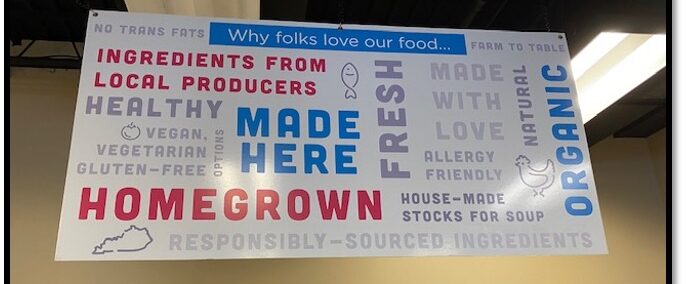
    Stores typically place a strong value on local sourcing, sustainability, wellness, and bulk buying – many had roots in older community buying clubs.  And while they tend to be much smaller than regional or national chains, they are quite nimble as they seek to serve the community and local shopper-owners.

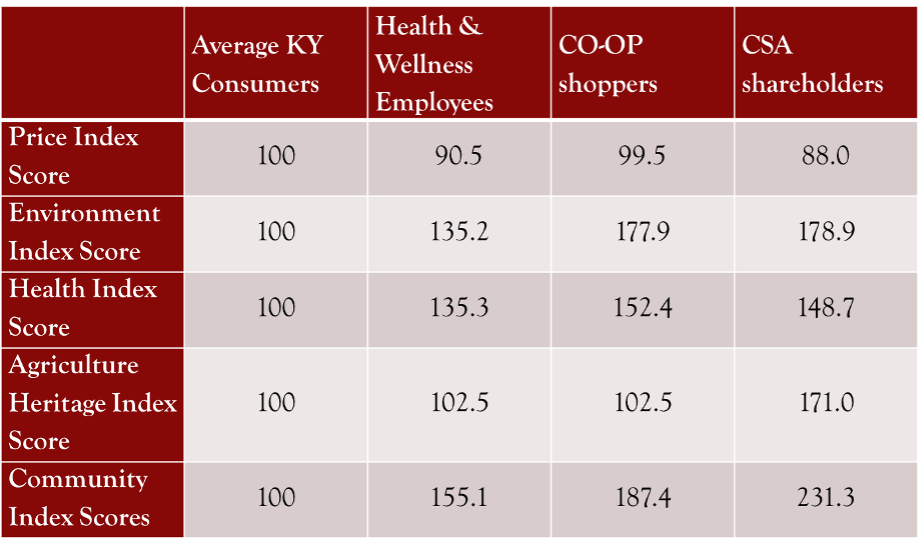
    Table 1.  Food Values from Different KY Shopper Segments

    Source:  Rossi, J., Allen, J.E., Woods, T.A. et al. CSA shareholder food lifestyle behaviors: a comparison across consumer groups. Agric Hum Values 34, 855–869 (2017).

    A recent study of shopper values in Kentucky reflects a common difference in food values seen in many food co-ops – a stronger emphasis on community, the environment, and wellness.  This generally translates into unique retail product offerings and merchandising around these concepts, including a high value for local and sustainable food connections.  Many of these stores, with their smaller size, are better suited to work with smaller supplier vendors and serve as great entry points into wholesale markets.

    These grocers, while technically independent, often work together through the National Coop Grocers on issues like governance, capitalization strategies, and advocacy issues.  Their commitment to their shopper-owners, vendors, and communities provides a unique platform for these ventures to bring value to the food world not generally found through other store concepts.

    You can learn more about the National Cooperative Grocers Association and some of the food co-ops near you at their website: https://www.ncg.coop/about-us


    Woods, Tim. “Cooperative Grocers Positioning Strategically to Deliver Community Value.Southern Ag Today 4(51.5). December 20, 2024. Permalink

  • Congress Poised to Deliver Vital Aid to the Countryside?

    Congress Poised to Deliver Vital Aid to the Countryside?

    For months, Southern Ag Today has been documenting growing economic pressure in the countryside, particularly for row-crop producers (see herehere, and here). We have also repeatedly highlighted the need for assistance to help growers shoulder losses in 2024 while preparing for a rather bleak outlook in 2025, particularly with farm bill negotiations having stalled in Congress. Following a weekend of high-stakes negotiations, Congress released its draft supplemental text on Tuesday, proposing $30.78 billion in economic and disaster assistance for the countryside. 

    In October, we highlighted the introduction of the Farmer Assistance and Revenue Mitigation Act of 2024 (FARM Act) as introduced by Rep. Trent Kelly (R-MS). Of the $30.78 billion authorized by the supplemental, $10 billion is set aside for economic assistance that hews closely to the structure of the FARM Act. The supplemental did include a few key changes. For example, the payment factor was reduced from 60% (as envisioned in the FARM Act) to 26% to fit within the $10 billion budget for the program. Additionally, the supplemental also imposed minimum payments for economic assistance (based on 8% of the statutory reference price established in the 2018 Farm Bill), which serves to raise the payment rates for several of the smaller-acreage crops along with peanuts and rice. Table 1 includes an estimate of the payment rates for economic assistance. The payments will be based on acres planted to the eligible commodity in 2024 (for harvest, grazing, haying, silage, or other similar purposes) and 50% of the acreage prevented from being planted in 2024. Separate payment limits would apply for economic assistance: $125,000 for persons or entities that derive less than 75% of their income from farming, ranching, or forestry and $250,000 for persons or entities that derive 75% or more of their income from farming, ranching or forestry.

    Eligible CommodityEstimated Payment ($/Acre)
    Corn43.80
    Soybeans30.61
    Wheat31.80
    Cotton84.70
    Rice (L/M)*71.37
    Sorghum41.85
    Oats78.42
    Barley*21.76
    Peanuts*76.30
    Dry peas*16.16
    Lentils*19.32
    Chickpeas, large*24.16
    Chickpeas, small*25.04
    Sunflower*23.38
    Rapeseed*23.23
    Canola*26.76
    Safflower*15.71
    Flaxseed*17.48
    Mustard*11.42
    Crambe*19.37
    Sesame*5.28
    *Commodities estimated to receive minimum payment, either through formula with complete data or based on assumption due to lack of publicly available data, final payment rates may vary.
    SOURCE: House and Senate Agriculture Committee staff.
    NOTE: these payment rates are initial estimates for illustration only. Congress must first pass the legislation and then USDA will publish final payment rates as they implement the program.

    In addition to economic assistance, $20.78 billion will be available for disaster assistance to help cover losses in 2023 and 2024. Out of this amount, $2 billion must be made available for livestock losses; $30 million maybe made available to crop insurance agents to help offset the freeze in administrative and operating expense reimbursements imposed by the Obama Administration; and $3 million must be made available to address concerns with circumvention of trade laws regarding molasses on the northern border. Importantly, there are a number of other items that may be funded from this amount, including block grants for various purposes.  For example, the bill allows for block granted funds to be used for agricultural producers who have suffered losses due to the failure of Mexico to deliver water to the United States in accordance with the 1944 Water Treaty. The provision closely follows Rep. Monica De La Cruz’s (R-TX) bill – the South Texas Agriculture Emergency Assistance Act – which proposed to allocate $280 million in grants to the State of Texas (via the Texas Department of Agriculture) to help offset losses incurred by border producers.

    As of the time of publishing, the path forward is not remotely clear. Yesterday afternoon, President Trump and Vice President-Elect J.D. Vance released a statement noting that “Republicans want to support our farmers…” but highlighting that “[t]he only way to do that is with a temporary funding bill WITHOUT DEMOCRAT GIVEAWAYS combined with an increase in the debt ceiling.”  While this is strong support from the incoming Administration, the current Congress and Administration must sign it into law now for assistance to arrive in time to help with the 2025 crop year.


    Fischer, Bart L., and Joe Outlaw. “Congress Poised to Deliver Vital Aid to the Countryside?” Southern Ag Today 4(51.4). December 19, 2024. Permalink

  • 2025 Crop Planning

    2025 Crop Planning

    Farming in 2025 will be challenging for many row crop producers. Low commodity prices, disappointing 2024 yields, high input costs, and policy uncertainty will require crop farmers to make important agronomic, financial, and risk management decisions. Below are a few points to consider during the planning process.

    1) Commodity prices are low and there is currently nothing on the radar that would indicate substantial improvement will occur in 2025. Drought (beyond just the southern region), production disruptions abroad, and geopolitics could improve price prospects, but at this point in time, increases in commodity prices are highly uncertain and mostly wishful thinking.

    2) Trade/retaliatory tariffs are a concern and provide the potential for substantial downside price risk in commodities that are heavily reliant on export sales, like soybeans and cotton. Protecting against downside price movements should be considered.

    3) Producers need to distinguish between cash versus non-cash costs (capital recovery) in the short term. We can farm in the short-term covering cash costs, but in the long term we need to cover total economic costs. 

    4) Input costs and profit margins need to be managed effectively – do not cut costs at the expense of yield but do not pursue the highest yield possible. Approximately 90% of cash costs are in five cost categories: land, seed, chemical, fertilizer, and operating expenses for equipment (fuel, labor, repairs and maintenance). Farmers should evaluate the efficiency of these five costs to assist in managing profit margins.

    5) Secure financing early. It will be a challenging year for many farmers to secure operating credit for 2025. Obtaining financing needs to occur as early as possible. Understand your financial position and how lenders evaluate credit applications. There are five main factors lenders consider: repayment, liquidity, solvency, collateral, and relationship. Which factors lenders emphasize, and the ratio or measure to evaluate the factor, will depend on the agricultural lender or credit provider. Talk to your primary lender early and often.

    6) Develop a marketing and risk management plan that includes crop insurance, storage analysis, contracts, futures, and options. Do not use the same marketing and risk management strategy in the current market environment as when we had higher prices and higher volatility two years ago.

    7) There is the potential for payments from the federal government (FARM Act? or other Ad Hoc legislation) and a new Farm Bill is possible in 2025. Until they are realized, it is not advised to incorporate these potential payments into the 2025 financial plan. If realized, they are a bonus.

    Due to the above challenges and the complexity of modern farming, it is essential for farmers to surround themselves with a strong support network. Important roles in farmer support networks include:

    Lawyer – Having appropriate legal advice is essential for agricultural enterprises. This can include a local lawyer for general legal matters but may also include specialized legal advice for more complex legal concerns. Paying for specialization is often cheaper in the long run. 

    Accountant – Nobody likes paying taxes, but it is essential for farmers to obtain assistance when preparing tax returns, planning purchases, or transitioning the farm to the next generation. A good accountant can save you money and assist if you have issues with the IRS. 

    Crop Insurance Agent – Crop insurance is the primary risk management tool for most crop producers. Crop insurance can be complicated to navigate and requires individual, policy-specific analysis to ensure you are receiving the most effective coverage for the premium paid. 

    Agricultural Lender – Agriculture is a capital-intensive business. Adequate and consistent access to operating and term debt is essential for most farmers. Having a primary agricultural lender that understands your operation and that will stick with you through agricultural cycles is imperative. This is not to say that all credit will be obtained through one lender. Farmers need to make sure that the cost of credit is fully analyzed and that decisions make financial sense. 

    Broker / Marketer / Grain Merchandiser – Marketing is not a strength for most farmers. However, in times of low prices and tight margins, marketing can be the difference between profit and loss. Obtaining expertise or a second opinion can be a tremendous benefit.

    Crop Consultant / Agronomist – Every production year is different and will require problem solving so a crop can be produced and sold. Yield is important; however, in periods of low prices and elevated input costs, it is essential that each input pulls its own weight economically. The cost of the input must be fully covered by financial benefits. A good agronomist can help navigate the agronomic challenges of the production season. 

    Extension Agent / Specialist – Extension provides a network to problem solve and connect producers with expertise to address problems and verify information independent of a financial motive. Searching the internet can be a powerful tool to assist in decision making. However, the internet has carpet bombed the information landscape with unreliable advice, opinions, and conspiracies, so be wary of information sources. 


    Smith, Aaron. “2025 Crop Planning.” Southern Ag Today 4(51.3). December 18, 2024. Permalink